
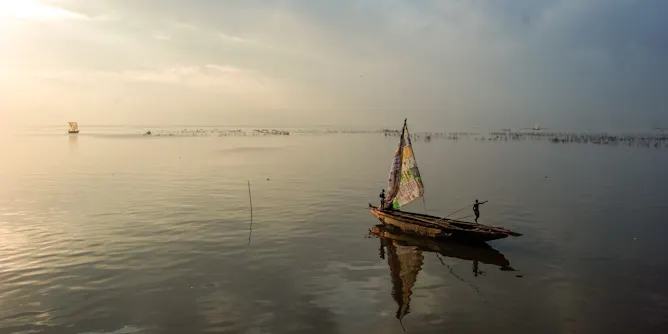
Climate change, pollution and illegal fishing by foreign boats is threatening the livelihoods of millions of people.
Articles on Overfishing
Displaying 81 - 100 of 132 articles
Aquaculture is endangering the marine environment, threatening the livelihood of small-scale fishers and food security.
Confrontation between French and British scallop fishers is a warning about the resource conflicts of the future.

When it comes to small-scale fisheries, there is no one route to sustainability. Finding success stories can help map those paths.
What would you do if you saw a fisher breaking the law? Would you report the offender to the police? Confront them? Or would you do nothing? These choices affect the future of marine protected areas.
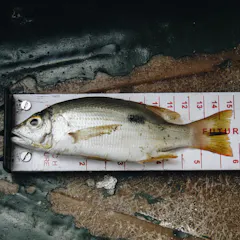
Artisanal fishers in Sri Lanka are throwing away more marine species than they keep.

Sustainable fisheries tick all the boxes. They can fill your belly and your wallet, and generate less CO2 than conventional agriculture. So why is some integral funding for marine fisheries falling?
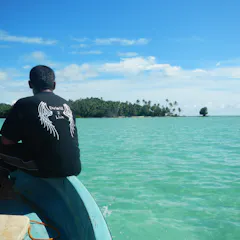
Scientists call large marine protected areas effective tools for conserving sea life. But do they benefit countries that create them? Scholars explain how Palau’s huge marine protected area seeks to protect resources for Palauans.
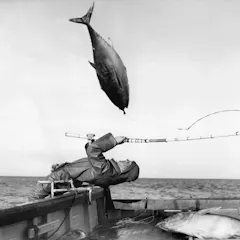
The history of fisheries exploitation in Australia reveals a staggering natural bounty, which has been alarmingly fragile without proper management.
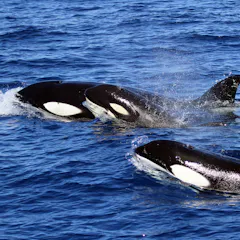
The government aims to dramatically reduce the areas offered full protection and expand zones where fishing is allowed, while also claiming that this will still deliver good conservation.
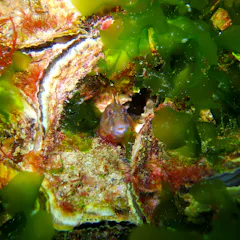
In colonial times Australia’s waters were teeming with mud oysters that provided food, cement, and cleaned the oceans. Now a 20-hectare man-made reef aims to restore some of their former glory.
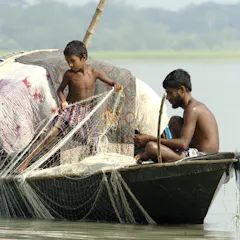
The focus of food production systems, including aquaculture, must move beyond maximising yields to consider nutritional quality too.
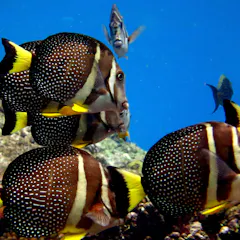
Plant-eating fish control the spread of seaweed and algae on coral reefs. New research explaining why populations of these fish vary from site to site could lead to better reef protection strategies.
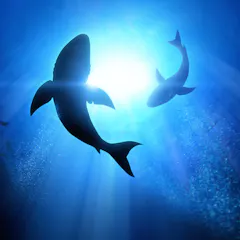
Poor management of the oceans, including the killing of crucial marine predators, could result in more greenhouse gasses.
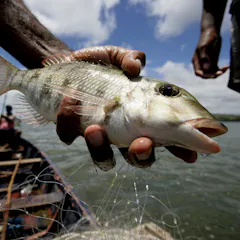
Melanesia’s oceans are worth at least US$5.4 billion, but are under increasing threat.
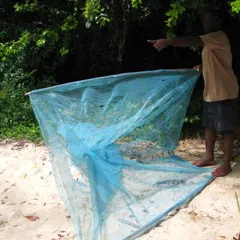
The simple use of a net intended to curb malaria by fishers has become a classic conservation problem.
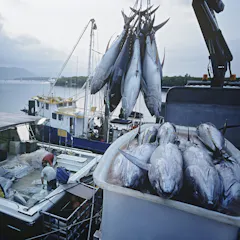
The public and political debate about marine reserves often comes down to one thing: fishing.
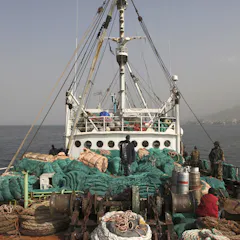
The fisheries sector in West Africa is beset with serious challenges including over-fishing and, in particular, illegal fishing.
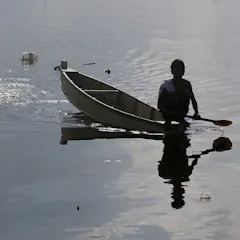
The South China Sea produces more than 10% of the world’s fish – but the catch is increasingly under threat.
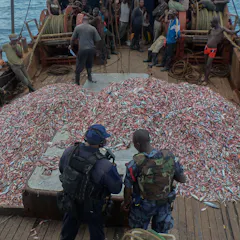
Crime on the ocean is not only about illegal fishing – it ranges from drug smuggling to human trafficking and modern-day slavery as well.
Top contributors
-

Director & Professor, Fisheries Economics Research Unit, University of British Columbia
-
Faculty Research Associate in Marine Biology, Arizona State University
-
Professor of Marine Conservation, University of Exeter
-
Principal Research Fellow, Institute for Marine and Antarctic Studies, University of Tasmania
-
Postdoctoral research fellow in Biological Sciences, Simon Fraser University
-
Researcher in Ecosystem Dynamics, University of California, Santa Cruz
-
Senior Research Fellow, Conservation Science, University of Oxford; Bangor University
-
Wen Family Chair in Conservation, The University of Western Australia
-
Professor of Complex Systems and Environmental Policy, Bournemouth University
-
Professor of Marine Ecology, University of Southampton
-
Professor, Sustainable Marine Futures, Environment Institute, Adelaide University
-
Postdoctoral researcher, marine ecology, Adelaide University
-
Lecturer in Sustainable Futures, University of St Andrews
-
Professeur et Chaire de recherche du Canada en écologie halieutique, Université du Québec à Rimouski (UQAR)
-
Affiliated Researcher, Fisheries Economics Research Unit, University of British Columbia