
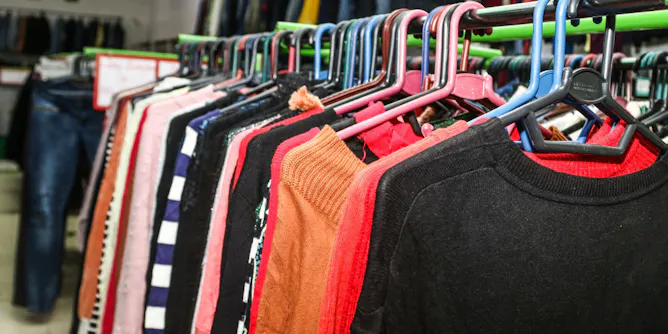
Used clothes are being repurposed but with fresh fashionable spins.
Articles on Overconsumption
Displaying 21 - 40 of 42 articles

New research shows that humans don’t necessarily have unlimited wants, and that an ‘ideal life’ costs less than you might think.

The Doomsday Clock has never before been as close to midnight as it is now. There is scant hope of it winding back on its 75th anniversary.

These shows treat the symptoms of overconsumption but not the causes.

A big part of coming to terms with consumption and climate change involves acknowledging the inordinate consumption and climate impact of the wealthy.

Humanity is destroying Earth’s ability to support complex life. But coming to grips with the magnitude of the problem is hard, even for experts.

If the tourism minister is worried about the wider social, economic and environmental impacts of visitors, he’d be better off banning cruise ships, not backpackers.

Our species has far exceeded its fair share of the planetary bounty, and Brown is right to call for the global population to peak.

Reducing our intake of discretionary foods such as cakes, biscuits, pizza and hot chips is the best way we can make our diets more sustainable.

It is easy for people in the industrialised world to blame population growth elsewhere for environmental damage. But increased consumption is just as important – if more confronting.
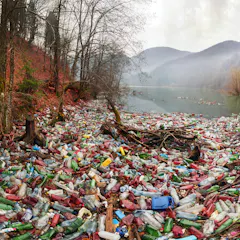
Putting all of our eggs in the net zero basket is merely kicking the can down the road.

The cost of land and, in turn, housing forces people to buy into the rules of market capitalism, making it very hard to ‘downshift’ from consumer lifestyles. But what if we rethink public housing?

Beloved film director Agnès Varda died at age 90, on March 29th. She was a pioneer of French New Wave cinema and admired for her ability to understand time and see beauty outside of mechanical norms.

Australian cities are world-leading – in the worst sense – for resource use and greenhouse emissions. China-born residents have embraced these consumption patterns, which is bad news for the planet.
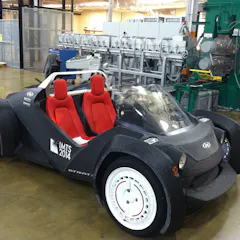
Is 3D printing better for the environment than conventional manufacturing? The jury is still out.
Under some circumstances, people may feel wealthier than they actually are and this makes them psychologically more prone to increase their spending, as well as their borrowing.

Shakespeare wrote of the ‘seven ages of man’, and our appetite for food changes as we age too – with implications for our health.

A new book about what we consume and what it is doing to us raises lots of good points, but lacks a little on the ‘what is to be done’ question.

The four scenarios in the WEF’s 2017 food report paint a bleak picture. But there are better ways.
Information is assumed to be key to changing people’s attitudes and behaviour. Sadly this isn’t the case.
Top contributors
-

Professor of Mechanical Engineering, Massachusetts Institute of Technology (MIT)
-
Postdoctoral Research Fellow, Swinburne Business School, Swinburne University of Technology
-
Personal Chair in Nutrition, The Rowett Institute, University of Aberdeen
-
Professor of Consumer Research, University of Bristol
-
Research Scholar, Resident Fellow in Industrial Ecology, School of Forestry and Environmental Studies, Yale University
-
Associate Professor, Florida Institute for Built Environment Resilience, University of Florida
-
Honorary Research Fellow, The University of Western Australia
-
Assistant Professor in Additive Manufacturing Management, University of Nottingham
-
Assistant Professor, Goethe University Frankfurt am Main
-
Former Visiting Fellow, SPRU, University of Sussex Business School, University of Sussex
-
Emeritus Professor in Sustainable Urbanism, Swinburne University of Technology
-
Professor of Housing & Social Policy, HHAUS Housing, Homelessness & Urban Studies, Swinburne University of Technology
-
Associate Professor, Social Innovation, CQUniversity Australia
-
Associate Professor and Chair, Communication, Popular Culture and Film, Brock University
-
Associate Dean and Senior Lecturer in Marketing, University of Bath