
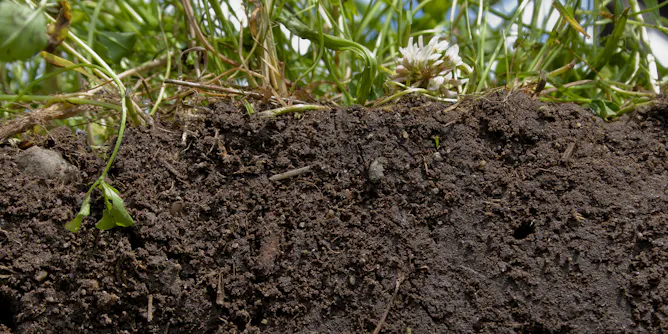
Conventional wisdom says we need industrial agriculture to feed the world. Not so, says geologist David Montgomery: Practices that focus on creating healthy soil can transform agriculture.
Articles on Organic farming
Displaying 21 - 30 of 30 articles
Is organic produce better for you? Can organic farming feed the world? Those might be the wrong questions.
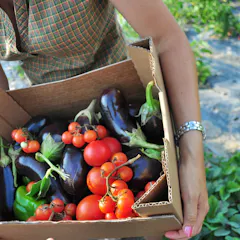
Organic farming has many benefits. It can better people’s lives and it’s good for biodiversity and the climate.
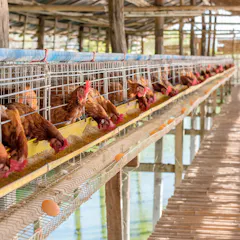
Do organic chickens taste better? Why are some eggs white and others brown? Are free range chickens healthier? There are a lot of questions about chicken production. Here are the facts.
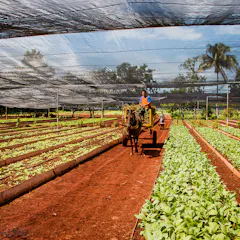
Cuban farming is a model of agroecology – growing food without heavy use of fossil fuel or chemicals. But closer relations with the U.S. could push Cuba back toward large-scale industrial farming.
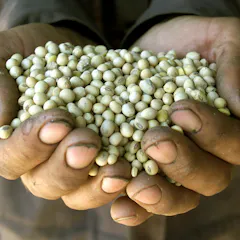
Scientists are developing GM crops that don’t need pesticides and other chemicals to help them grow. Isn’t that what organic farmers want too?
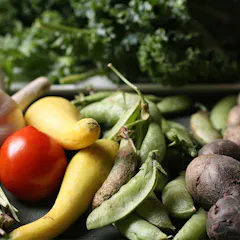
The unintended consequences of our agricultural food system – polluted air and water, dead zones in coastal seas, soil erosion – have profound implications for human health and the environment. So more…

In a world where too many go to bed hungry, it comes as a shock to realise that more than half the world’s food production is left to rot, lost in transit, thrown out, or otherwise wasted. This loss is…
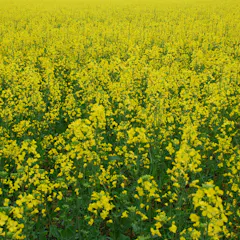
In a landmark West Australian Supreme Court decision, a farmer growing a genetically modified canola crop has been spared the blame after his neighbour accused him of contaminating his organic farm next…
Organic farming is a trade off: it prohibits the use of certain chemicals and inorganic fertilisers, which usually results in lower yields, and hence higher prices. With arguments about health benefits…
Top contributors
-

Executive Director, Swette Center for Sustainable Food Systems, Arizona State University
-
Professor of Agroecology, University of California, Berkeley
-
Doctoral candidate in Conservation Biology, University of California, Berkeley
-
Professor, Agricultural Biotechnology, Murdoch University
-
Adjunct Professor of Environmental Studies, University of Victoria
-
James Martin Research Fellow, University of Oxford
-
Associate, Sustainability Science, Harvard Kennedy School, Harvard University
-
Professor of Earth and Space Sciences, University of Washington
-
Associate Professor, Department of Plant Sciences, University of Oxford
-
PhD Candidate, Art History, Concordia University
-
Associate Professor, Soil Science & Plant Production at the School of Natural Resource Management, Nelson Mandela University
-
Lecturer in Poultry Nutrition, University of Sydney
-
Professor in Plant Molecular Genetics, The University of Queensland
-
Professor of Social Sciences, University of California, Santa Cruz
-
Assistant professor, Vrije Universiteit Amsterdam