
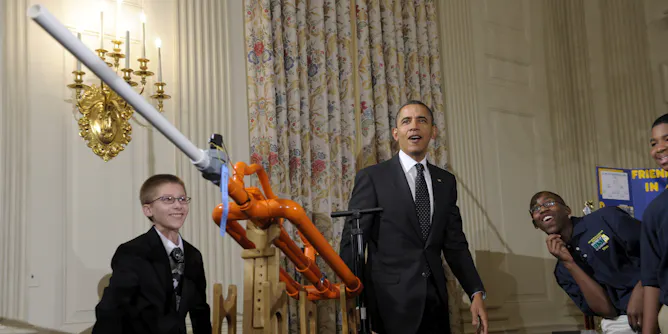
The outgoing president leaves behind some solid accomplishments in the world of science, tech and medicine. But the biggest departure from his predecessors might have been in his approach.
Articles on Open access
Displaying 41 - 60 of 123 articles
The public pays for academic research and then again to read the published results of that research. A new initiative proposes a radical Open Access model. Can it work?
Medical entries on Wikipedia are widely consulted across the world. Doctors and medical researchers need to make efforts to ensure the content on the online collaborative encyclopedia is accurate.
The public loses when their only choices are inaccessible, impenetrable journal articles or overhyped click-bait about science. Scientists themselves need to step up and help bridge the divide.
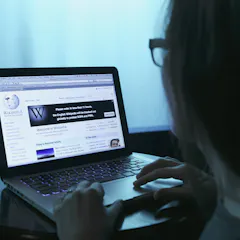
The academic medical community largely views Wikipedia with suspicion. But some traditional journals are starting to take the site more seriously – and some journals work very closely with it.
Sci-Hub, a free online repository of academic articles, is the subject of a battle at the heart of open access.

When it comes to accessing online learning materials, university students don’t think much about whether their downloads might amount to piracy or copyright infringement.
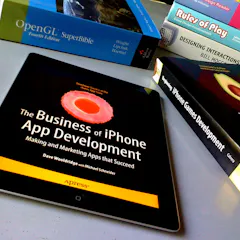
An open access textbook model is gaining traction in the US and Australia and shaking up the publishing industry.
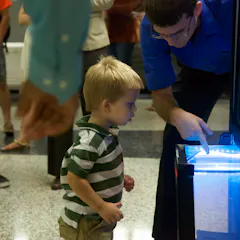
As 3D printing gets cheaper and easier to use, what might children - the next generation of innovators - make?
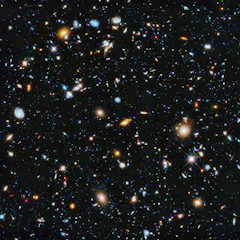
Confirmation bias, the psychological effect that makes people unconsciously interpret information to confirm their beliefs, is a big threat to cosmology.
Sales of scholarly books are dropping, even as their prices are rising. Will academia give up its resistance to an open-access digital model?
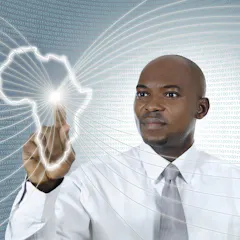
African research is largely invisible, kept in the shadows by publishing barriers and structural obstacles. A platform built in Brazil and rolled out across the developing world could be the solution.
South Africans’ access to important knowledge and research is incredibly limited. In this time of Open Access, why is this the case – and will it ever change?
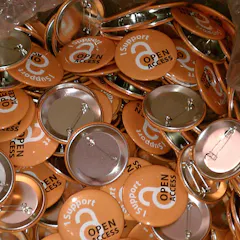
To the mark the eighth annual Open Access Week, we asked our readers what they wanted to know about the initiative. Here are their questions with answers from our experts.
If we want the best possible research, it’s not just the journal articles that ought to be openly available to all, but the data behind them as well.
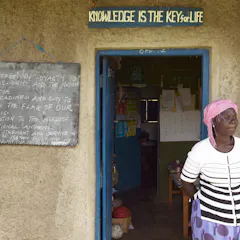
A lack of access to quality, peer-reviewed information can actually contribute to societal and educational inequality. How can Open Access help?

We have the technology and the will to expand open access to publicly funded research, but large vested interests are still putting up stiff resistance.
Open access, publication consultants and growing author lists: where is the academic-publishing industry heading?
Public engagement of academics has increased enormously in recent decades. But this new level of engagement is producing problems and conflicts for which many academics are ill-prepared.

Much of what’s being said in support of open access publishing misses one key point: that is there is always a value chain and costs are incurred. Someone somewhere is paying for open access.
Top contributors
-

Visiting Fellow, Australian National Centre for the Public Awareness of Science, Australian National University
-
Editor in Chief, Medical Journal of Australia, Queensland University of Technology
-
Professor, School of Psychology, University of Sydney
-
Associate Professor, School of Chemistry, University of Sydney
-
Dean of Research, Humanities, Curtin University
-
Emeritus Fellow, Australian National University
-
Senior Lecturer in Literature, Technology and Publishing, Birkbeck, University of London
-
Professor Emeritus, The University of Queensland
-
Researcher, University of Pretoria
-
Deputy University Librarian, University of California, Merced
-
Secretary-General, International Human Frontier Science Program Organisation; Emeritus Professor, Monash University, Monash University
-
Lecturer in History of Medicine/Life Science, The University of Melbourne
-
Former Associate Vice Provost, The University of Texas at Austin
-
Adjunct Professor Faculty of Law, Queensland University of Technology
-
Lecturer at Department of Geology, Institut Teknologi Bandung