

Scientists and science publishers are sharing information as fast as they can during the COVID-19 pandemic. Speed and openness bring new challenges, but they are the way forward for research.
Articles on Open access
Displaying 21 - 40 of 123 articles
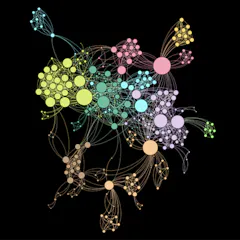
Individually, we are all helpless in the face of the coronavirus crisis. A global collaborative boom is changing the way science is done.

But there are also risks to open science.

Universities and colleges could eliminate textbook fees if they supported the creation of open educational resources.
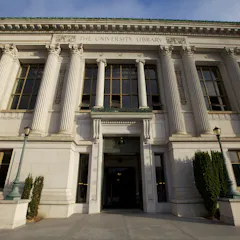
The UC libraries let their Elsevier journal subscriptions lapse and now the publisher has cut their online access. It’s a painful milestone in the fight UC hopes may transform how journals get paid.

An urgent discussion is needed around the cost of research publications.

Digital publishing hasn’t resulted in the free and open access to information many envisioned. Universities are increasingly fed up with a system they see as charging them for their own scholars’ labor.
Globally, the scholarly publishing system is in dire need of financial and legislative change.
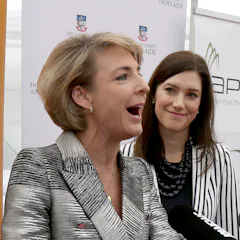
“Soft” infrastructure includes the services, policies or practices that keep academic research working and open. Without a funded, coordinated national approach the private sector may take control.

Even though you don’t think of your mobile phone as being anything like a microscope, it’s got almost all the parts you need.

Universities in New Zealand spent close to US$15 million on subscriptions to just four publishers in 2016, data that was only released following a request to the Ombudsman.
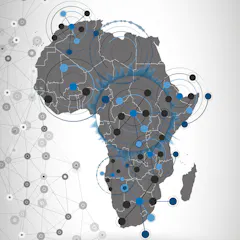
A focus on collaboration among African universities and research institutions is crucial in developing national policies that meet the principles of open data while keeping it safe from exploitation.
In our institutions of higher education and our research labs, scholars first produce, then buy back, their own content. With the costs rising and access restricted, something’s got to give.

Could the real open access please stand up? If more research was published according to true open access principles, we’d see better application of evidence for everyone’s benefit.

A critical part of attaining universal health coverage is access to published research.
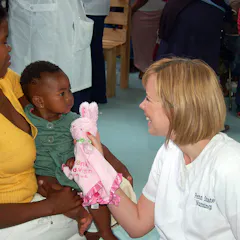
South Africa has become the first country on the continent to purchase a national licence to the Cochrane library – giving everyone access to evidence-based information about health care.

Partly in response to the so-called ‘reproducibility crisis’ in science, researchers are embracing a set of practices that aim to make the whole endeavor more transparent, more reliable – and better.
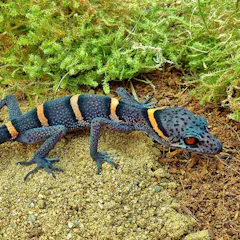
Biologists have a centuries-old tradition of publishing on rare and endangered species. But poachers are using open-access information to target valuable and fragile new species.

A leading website that monitored predatory open access journals has closed. This will make it harder to keep tabs on this corrosive force within science.
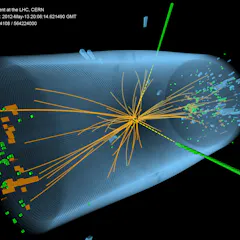
It’s not enough to do groundbreaking research if the results are kept from the public. So CERN is making its results available to everyone via open access, showing how science should be done.
Top contributors
-

Visiting Fellow, Australian National Centre for the Public Awareness of Science, Australian National University
-
Editor in Chief, Medical Journal of Australia, Queensland University of Technology
-
Professor, School of Psychology, University of Sydney
-
Associate Professor, School of Chemistry, University of Sydney
-
Dean of Research, Humanities, Curtin University
-
Emeritus Fellow, Australian National University
-
Senior Lecturer in Literature, Technology and Publishing, Birkbeck, University of London
-
Professor Emeritus, The University of Queensland
-
Researcher, University of Pretoria
-
Deputy University Librarian, University of California, Merced
-
Secretary-General, International Human Frontier Science Program Organisation; Emeritus Professor, Monash University, Monash University
-
Lecturer in History of Medicine/Life Science, The University of Melbourne
-
Former Associate Vice Provost, The University of Texas at Austin
-
Adjunct Professor Faculty of Law, Queensland University of Technology
-
Lecturer at Department of Geology, Institut Teknologi Bandung