
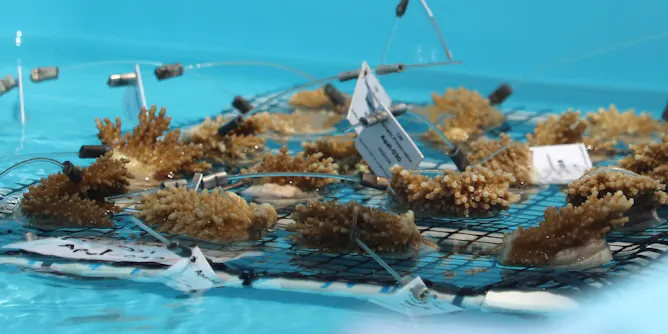
Ocean temperatures have hit record highs off the Florida Keys. Scientists and volunteer divers are racing to save these valuable creatures.
Articles on Oceans
Displaying 281 - 300 of 926 articles
Recent headlines around the supposed impending collapse of the Atlantic currents remind us of the importance of avoiding sensationalism in facing global warming.
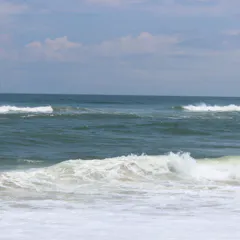
Rip currents are a leading cause of near-shore drownings, but there are effective ways to survive one. And these phenomena also play important ecological roles that are an emerging research area.
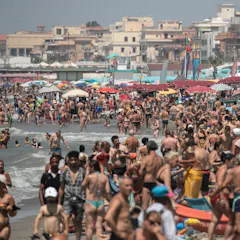
The predicted El Niño is a worry, but it doesn’t guarantee the record-breaking heat we’re seeing in parts of the Northern Hemisphere.
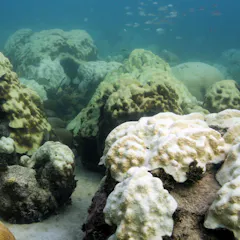
Water temperatures in the 90s off Florida in July are alarming, a NOAA coral scientist writes. Scientists in several North American countries have already spotted coral bleaching off their coasts.
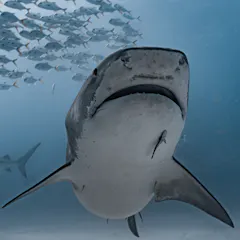
Through regulation, enforcement and monitoring, fisheries management can lead to recoveries in shark and ray populations.
The recent tragedy of the Titan submersible bore striking parallels to one of the most widely read novels about life at sea.

Rhino rays, which are close relative of sharks, are some of the most fascinating – and most threatened – fishes that you’ve never heard of.
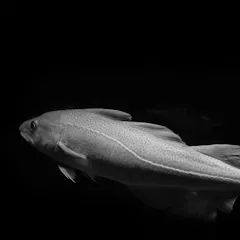
Having a flexible and adaptable management system is necessary to sustainably manage fisheries, especially in times of a rapidly changing climate.
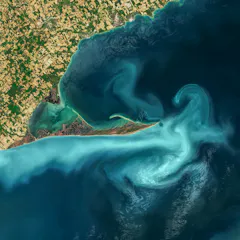
Can we engineer oceans to store more carbon dioxide in the fight against climate change? A new bill before parliament seeks to regulate such activity, but holds back on research incentives.
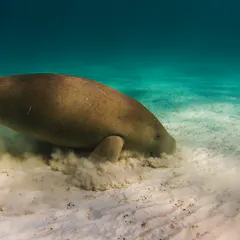
The world’s oceans are getting hotter, quicker. And our marine species are seeking cooler waters. Keep your eyes peeled and you might spot one of these species on the move.

A team of rescuers has located debris from the Titan, indicating the end of search-and-rescue efforts. Risky undertakings need to assess the cost and capacity of any potential rescue needs.
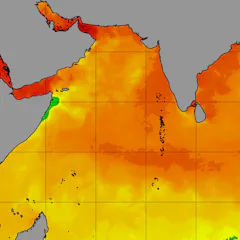
Drought in Europe, dwindling Arctic sea ice, a slow start to the Indian monsoon – unusually hot ocean temperatures can disrupt climate patterns around the world, as an ocean scientist explains.
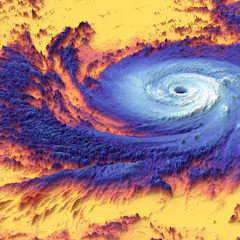
Currents can carry that deep ocean heat hundreds of miles to surface again at distant shores.
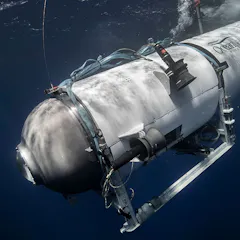
An expert explains some of the best and worst case scenarios facing the missing commercial watercraft.
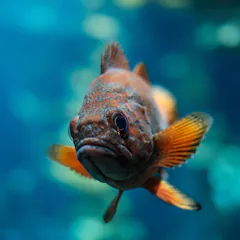
As the world gets hotter, fish are getting smaller. The future of aquatic ecosystems – and fisheries – could depend on understanding how and why it’s happening.
2016 was the world’s warmest year on record, due in part to a very strong El Niño event. But 2023 (and 2024) could beat that record – what should we expect?
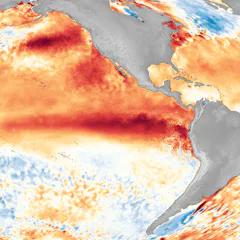
The official forecast calls for a strong El Niño by winter, but other models suggest it might dip in and out. An atmospheric scientist explains.
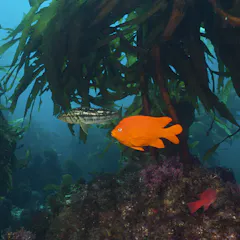
Humans rely on the ocean for food, jobs and other resources, but these systems are being stressed to the brink.
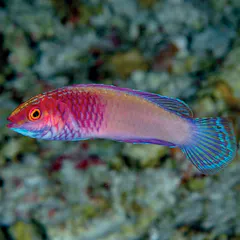
From fluffy crabs that wear sea sponge hats to worms that glow in the dark, scientists are constantly finding amazing new life forms in the ocean.
Top contributors
-

Professor, School of the Environment, The University of Queensland
-
Harold T. Stearns Professor of Earth Science, Wesleyan University
-
Distinguished Scholar, National Center for Atmospheric Research; Affiliate Faculty, University of Auckland, Waipapa Taumata Rau
-
Director of the ARC Centre of Excellence for Our Future Oceans and Scientia Professor in Oceanography, UNSW
-
Distinguished Professor of Marine Science, King Abdullah University of Science and Technology
-
Research Scientist, Stanford University
-
Senior Principal Research Scientist, Environment, CSIRO
-
Faculty Research Associate in Marine Biology, Arizona State University
-
Professor of Marine Botany, The University of Western Australia
-
Chief Research Scientist - Environment, CSIRO
-
Professor of Biology, Department of Biology, University of Victoria
-
Professor and Deputy Vice-Chancellor (Research), University of Sydney
-
CSIRO Fellow, CSIRO
-
Professor of Complex Systems and Environmental Policy, Bournemouth University
-
Associate Professor in Marine Biology, Swansea University