
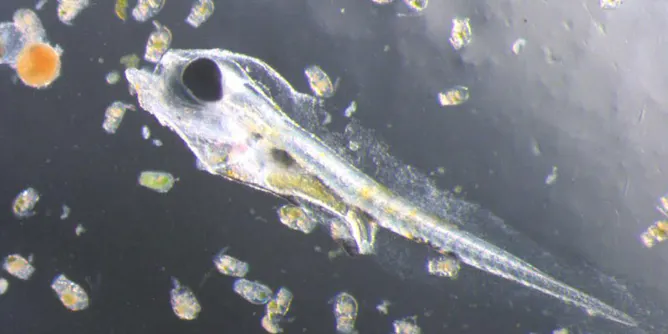
Fish can’t read maps, and their eggs and larvae drift across national boundaries. Recent research shows that local problems in one fishery can affect others across wide areas.
Articles on Ocean currents
Displaying 41 - 60 of 68 articles
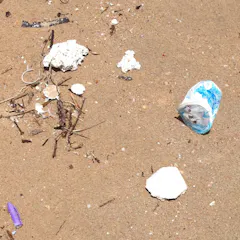
Great areas of rubbish – known as ‘garbage patches’ – are known to form in the Pacific and Atlantic oceans, but not the southern Indian Ocean. Why is that?
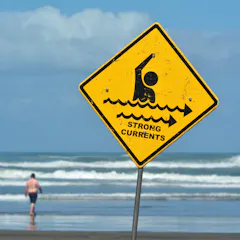
It’s good to know how currents are formed in the ocean, as they can be quite dangerous!
If you’ve ever wondered where the ocean currents flow around Australia’s coastline then we have a great map for you.
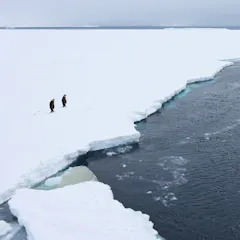
The Antarctic Circumpolar Current provides a barrier to heat that keeps warm subtropical waters away from Antarctica. Yet, there are a few places where the heat gets through.
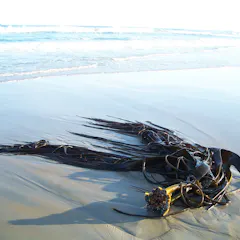
A chance discovery of some kelp that floated for 20,000km before washing up on an Antarctic beach has opened up a new chapter in our understanding of the currents that swirl around the Southern Ocean.
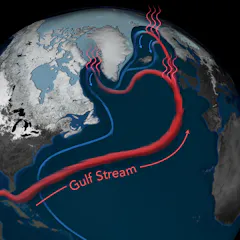
How we showed the Atlantic circulation system is its weakest for 1,600 years.
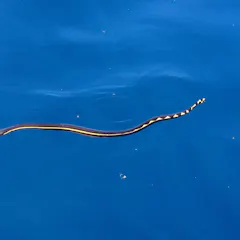
Sea snakes spend their lives in the water, giving birth to live young at sea, so why are they only found in some of the world’s oceans? The answer lies in a combination of climate and geography.
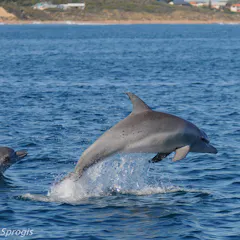
The dolphin population in parts of Western Australia more than halved one year, just as an El Niño event hit over in the Pacific. So what’s the connection?
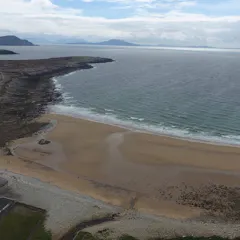
A entire beach in Ireland has returned 33 years after being washed away.

The new sub allows scientists to access some of the most remote and hazardous environments in the ocean.

The Agulhas Current is important to South Africa for a variety of reasons. Studying how it impacts the coast has been difficult using traditional methods. But gliders are changing that.

The search for MH370 has been officially suspended without having found the plane. Where could MH370 be? Was the search in vain?

Most ocean species start out as larvae drifting with currents. Using underwater robots, scientists have found that larvae use swimming motions to affect their course and reach suitable places to grow.
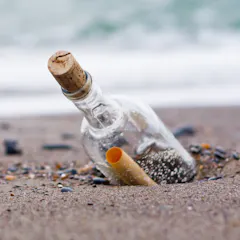
Researchers have long used such techniques to learn about currents and tides.

The 2011 Japan tsunami illustrates how more marine creatures are crossing the oceans than ever before - and not all of them are friendly travellers.
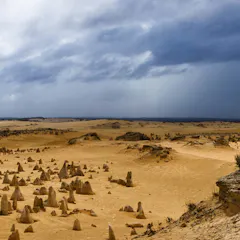
Scientists are about to embark on a two month mission to find out how Australia and its reefs coped with climate change in the past, and therefore how it should cope with any future change.
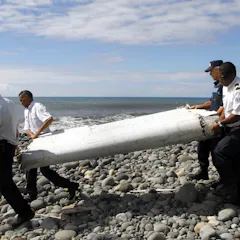
Stray debris on a distant beach could well be the first remnant found of missing Flight MH370.
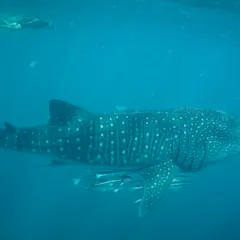
While eastern Australia trembles in the face of an El Niño, Western Australia’s oceans could finally see relief from devastating marine heatwaves.
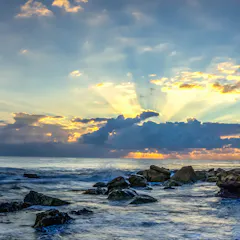
Occasional erratic bursts southward of the East Australian Current (EAC) are thought to have moderated the weather of south-east Australia this autumn and winter and they continue to introduce tropical…
Top contributors
-

Director of the ARC Centre of Excellence for Our Future Oceans and Scientia Professor in Oceanography, UNSW
-
Professor in Oceanography and Public Engagement, Utrecht University
-
Professor of Coastal Oceanography, The University of Western Australia
-
Professor in Oceanography, UNSW
-
Senior Lecturer in Climate and Fluid Physics, Australian National University
-
Associate Professor, UNSW
-
Professor and Director of ACCESS-NRI, Australian National University
-
Principal Research Scientist, CSIRO
-
Senior lecturer, UNSW
-
CSIRO Fellow, CSIRO
-
Senior Lecturer, North-West University
-
Research Associate, University of Oxford
-
Associate Professor in Earth Sciences, University of Oxford
-
Postdoctoral research associate
-
Professor, National Oceanography Centre, University of Southampton