
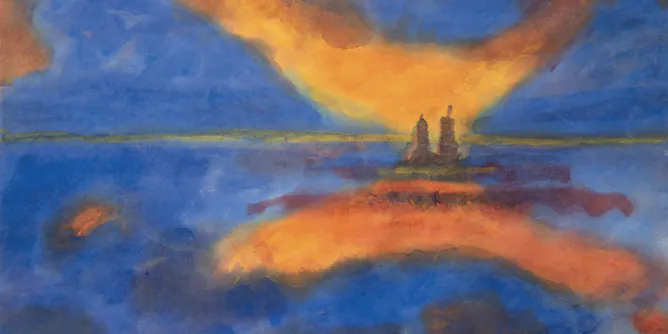
In the popular novel The German Lesson, a character based on Nolde falls victim to Nazi policies on “degenerate art”. Recent research on the painter’s life tells a more complex story.
Articles on Novels
Displaying 21 - 40 of 126 articles
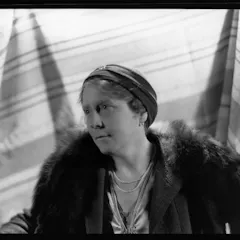
Set in a fictionalised Bristol, William explores the pressures of class, gender and modernity.
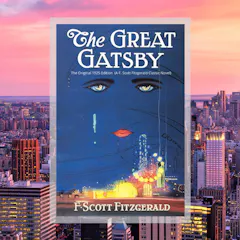
The fractured sense of time that F. Scott Fitzgerald creates challenges literary convention. It also reflects a world in flux after the first world war.
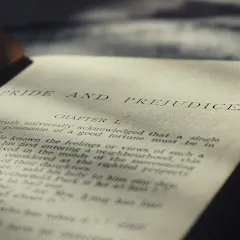
The phrase appeared on thousands of pages unrelated to Jane Austen before and during her life – and was a favorite phrase of the abolitionists.
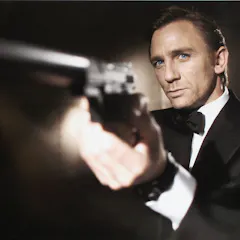
Until now, the glamorous spy has existed in many different forms across many different mediums. Could a new, more coherent universe be on the horizon?

Elegy, Southwest, by Miles Franklin shortlisted author Madeleine Watts, weaves together the themes of imminent personal and environmental collapse.

Henry James’ ‘The Princess Casamassima’ tells a story of political radicalism in a time of economic inequality. But even James ran up against the limits of putting himself in the mind of a killer.

Our Evenings is concerned with people who try to fit in, but whose experience of British life is marginal, whether on account of class, race or sexuality.
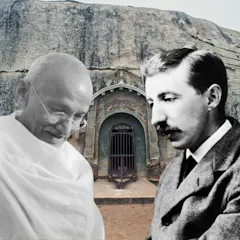
E.M. Forster’s motto was “only connect”. But what if the colonised and the coloniser cannot understand each other in any way?
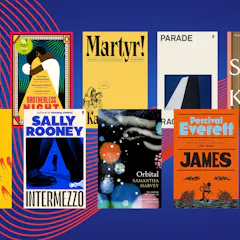
These are the ten books that made the most lasting impression on our expert reviewers

Even though her most famous work, ‘Bastard out of Carolina,’ deals with physical and sexual abuse, this merely constitutes one element of a broader emotional and physical landscape.

No Church in the Wild is an ambitious novel that traverses cultures and institutions, and prompts readers to question their values.

In its bankruptcy filing, the Romance Writers of America blamed ‘disputes concerning diversity, equity and inclusion’ for its membership declining by an astounding 80%.
In his latest novel, Andrew O'Hagan characterises almost every aspect of his society as broadly criminal, in one sense or another.
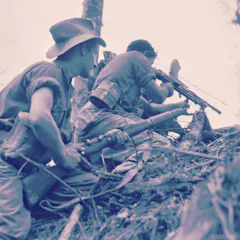
War writing can be formulaic and clichéd, but Catherine McKinnon resists glorification and the usual narrative of “us against them” .
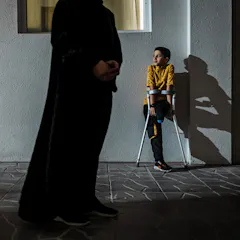
In a number of stories and novels, lost limbs represent both physical and metaphorical loss.
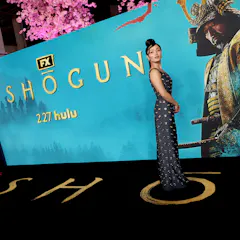
Compared to its 1980 predecessor, the new FX series presents a more authentic portrayal of early modern Japan.

When Frank Herbert sat down in 1963 to start writing ‘Dune,’ he wasn’t thinking about how to leave Earth behind. He was thinking about how to save it.
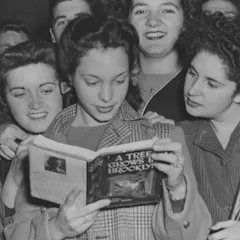
No other 20th-century American novel did quite so much to burnish Brooklyn’s reputation. But Smith rarely saw her hometown through rose-colored glasses − and even grew to resent it.
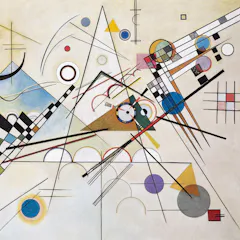
Yevgeny Zamyatin was a born loner and instinctive satirist, whose usual response to collective enthusiasm was to dissent.
Top contributors
-

Distinguished Professor Emerita of Creative Practice, Faculty of Arts and Design, University of Canberra
-
Lecturer in Publishing, Edinburgh Napier University
-
Associate Professor of Russian Literature, University of Kansas
-
Assistant Professor of Journalism, University of Colorado Boulder
-
Professor, English and Creative Writing, Adelaide University
-
Senior Lecturer in Literature, Aston University
-
Associate Dean for Research and Enterprise, Faculty of Arts, Social Sciences and Education, University of Hull
-
Lecturer, Department of French, University of Cambridge
-
Senior Lecturer in Digital Humanities, University College Cork
-
Senior Lecturer in English Literature, Charles Sturt University
-
Associate Professor in Literary Studies, RMIT University
-
Assistant Professor of Slavic Languages and Literatures, University of Virginia
-
Lecturer, Creative Writing, Adelaide University
-
Associate Professor of Postcolonial and Global Literatures, Nottingham Trent University
-
Senior Lecturer in English and American Literatures, Keele University