

From reading more to re-reading safe favourites, there are early signs that the COVID-19 has influenced how and what we are reading.
Articles on Novels
Displaying 81 - 100 of 126 articles

How writers hear their characters in their heads.
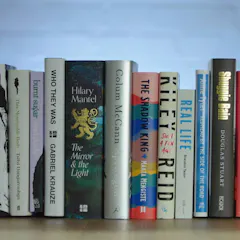
The Booker Prize has always struggled with inclusivity.

Eco-fiction to help you rethink your role in the climate crisis.
African academics draw up a reading list that speaks to the vibrancy of contemporary as well as older African literature.

A great novel transports you to a time and a place. Here are five of them.

People have changed over time, growing ever more distant and isolated from others – while at the same time finding new ways and technologies that let individuals connect and feel with others.
The group seemed to be doing all of the right things to diversify its ranks. It wasn’t enough.

We have transitioned from a literate culture to one that values speed, immediacy and the decoding of small grabs of words in search for information. But old and new ways of reading can co-exist.
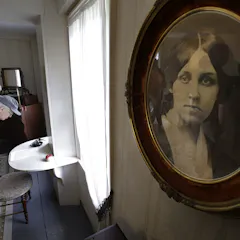
Reading books from people with diverse backgrounds is good for kids.
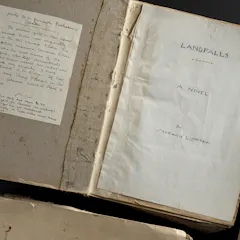
Recently uncovered Norman Lindsay novels reveal stories of love, lust and beaches.

A legal expert looks at the issue of robot rights and what makes us human.
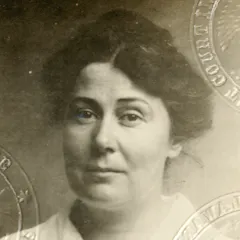
Ellen N. La Motte’s ‘The Backwash of War’ was praised for its clear-eyed portrayal of war, but was swiftly banned. Yet the similarities between her spare prose and Hemingway’s are unmistakable.
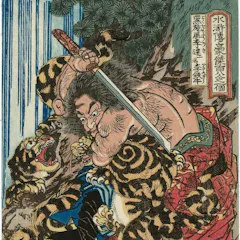
In The Water Margin, first put to paper in the 14th century, local injustice is the rule, and defence against cruel local authority is a matter of vengeance, stratagem, and violence
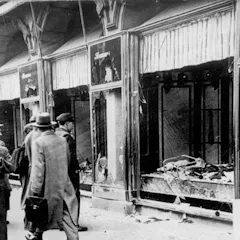
Eight decades on, the thought of the state encouraging people to attack groups of citizens is hard to believe. Here are some books that might help.

Have you ever read a novel in the second person? You probably found it strange.
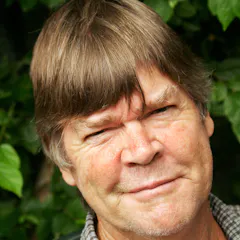
With The Dying Trade, Peter Corris introduced Australia to one of its most successful crime heroes, Cliff Hardy.

A lack of respect for history, a population conditioned to consume goods at breakneck pace, and pacification of individuals via an entertainment culture: parts of Huxley’s novel strikingly resemble our own world.

Every character in The Life To Come is complex, frustratingly unfulfilled, marked by kindness, selfishness, or dumb selflessness. But they are always, entirely, convincing.
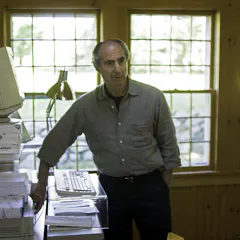
With the Holocaust still on their mind, many American Jews were highly sensitive to portrayals of Jews in popular culture. So when Roth’s sex-obsessed characters came along, the pushback was swift.
Top contributors
-

Distinguished Professor Emerita of Creative Practice, Faculty of Arts and Design, University of Canberra
-
Lecturer in Publishing, Edinburgh Napier University
-
Associate Professor of Russian Literature, University of Kansas
-
Assistant Professor of Journalism, University of Colorado Boulder
-
Professor, English and Creative Writing, Adelaide University
-
Senior Lecturer in Literature, Aston University
-
Associate Dean for Research and Enterprise, Faculty of Arts, Social Sciences and Education, University of Hull
-
Lecturer, Department of French, University of Cambridge
-
Senior Lecturer in Digital Humanities, University College Cork
-
Senior Lecturer in English Literature, Charles Sturt University
-
Associate Professor in Literary Studies, RMIT University
-
Assistant Professor of Slavic Languages and Literatures, University of Virginia
-
Lecturer, Creative Writing, Adelaide University
-
Associate Professor of Postcolonial and Global Literatures, Nottingham Trent University
-
Senior Lecturer in English and American Literatures, Keele University