

Doctors in South Africa have not been doing enough counselling of people who drink, smoke, don’t exercise and eat badly on ways to change their lifestyles.
Articles on Non-communicable diseases
Displaying 21 - 40 of 56 articles
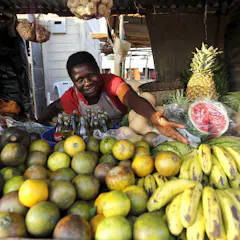
Residents in Nairobi’s urban slums are opting for fast food rather than the healthy alternatives, which is increasing their risk of developing diabetes.
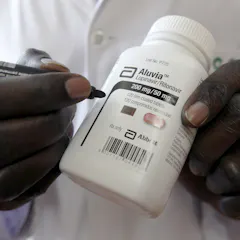
Africa’s pharmaceutical industry has mushroomed in the last ten years. But its ability to keep pace with demand is being held back by a number of factors, including a shortage of specialists.
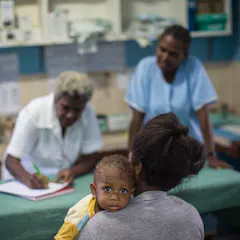
Health has secured its place as one of the 17 Sustainable Development Goals. But without clear mechanisms to report, finance or engage other sectors, could more end up as less?

As we mark World Alzheimer’s Day, research shows that tackling non-communicable diseases such as diabetes and hypertension could reduce the caseload.

Proposed regulations to have nutritional labels on the front of prepacked foods can give South African consumers a chance to make better food choices.

Legislation limiting the salt in processed foods will drastically cut the average South African’s salt intake. But how effective will it be?

The leading cause of death in the world are a group of illnesses known as non-commmunicable diseases. But a growing body of evidence shows they’re actually social contagions.

The World Health Organization (WHO) has just released its Global Status Report on Noncommunicable Diseases, the second in a series tracking worldwide progress in the prevention and control of cancers…

Ebola has focused the world’s attention on the challenges of health care in Africa. The continent has 11% of the world’s population but 25% of the world’s disease burden. It also has just 1.3% of the global…

Non-communicable diseases that you can’t catch from someone else such as stroke, high blood pressure and cancer, account for 36.1m deaths worldwide. Put it another way, this is about 63% of all deaths…

The most comprehensive global study ever undertaken for obesity was just released and the need for serious population-wide action is no longer up for debate. The study’s key findings make for grim reading…

An new analysis of world population data shows the number of people across the world who are overweight or obese has grown by 28% in adults and 47% in children in the last 33 years. Among high-income countries…

What does the Olympics stand for: is it the inspiration for a healthier, sportier community? Or is it just another way to sell junk food and booze to an ever-fatter, ever-drunker population of couch potatoes…

The secretary-general of the United Nations’ (first) Earth Summit in Rio de Janeiro, Maurice Strong, famously declared that if our planet is to remain a hospitable and sustainable home for the human species…

Researchers have been telling us for decades that being overweight is not good for our health. Medical journals are full of articles that link overweight and obesity to just about every disease and illness…
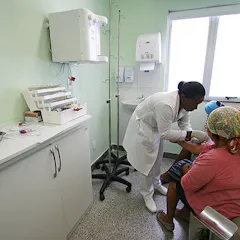
The eyes and ears of the global health world were firmly fixed on Geneva last week for the 2012 World Health Assembly, the annual meeting of the World Health Organization’s (WHO) member states. One of…

Australia’s future population is again under the spotlight. The Committee for Economic Development of Australia (CEDA) has just released a new report on Australian population futures. And focus has sharpened…

In The Conversation’s first editorial meeting editor Andrew Jaspan explained what he wanted to achieve with the site: a more informed level of debate, based on evidence, research and expert opinion. It…

This is a shorter version of an article that appears in the latest issue of Perspectives, an opinion-led journal published by Baker IDI Heart and Diabetes Institute. The prevalence of overweight and obesity…
Top contributors
-

Professor of Public Health, The University of Melbourne
-
Associate Professor, Melbourne School of Population and Global Health, The University of Melbourne
-
The University of Sydney
-
Executive Director, African Population and Health Research Center
-
Associate Professor and Director of the SAMRC/Wits Centre for Health Economics and Decision Science - PRICELESS SA (Priority Cost Effective Lessons in Systems Strengthening South Africa), University of the Witwatersrand
-
Chancellor, University of West Indies & Emeritus Director, Pan American Health Organisation
-
Professor of Public Health Policy, Deakin University
-
Emeritus Professor, Menzies Centre for Health Policy, University of Sydney
-
Professor Epidemiology & Equity in Public Health & Director, Institute Health Transformation, Deakin University
-
Nutrion Scientist, University of Pretoria
-
Professor and Head, Division of Clinical Pharmacology, Faculty of Medicine and Health Sciences, Stellenbosch University
-
D.Phil. Candidate in Population Health, University of Oxford
-
Senior Lecturer, Division of Family Medicine and Primary Care, Faculty of Medicine and Health Sciences, Stellenbosch University
-
Honorary Associate Professor in Medical Microbiology, University of Cape Town
-
Professor of Population Nutrition and Global Health, University of Auckland, Waipapa Taumata Rau