
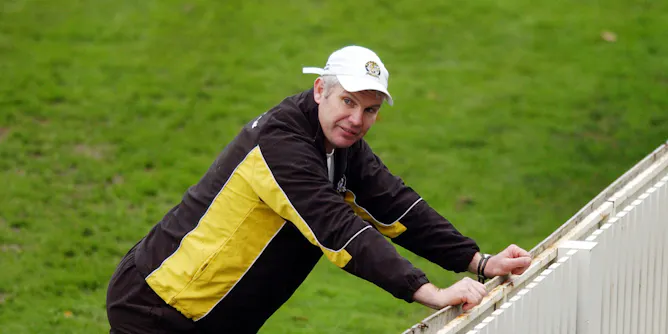
Although a great deal of research is still required, it may one day be possible to identify and treat people either with CTE, or at risk of it.
Articles on Neuroscience
Displaying 361 - 380 of 856 articles
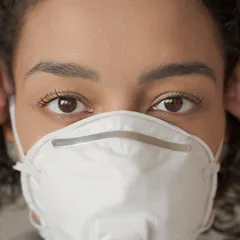
Your mouth might be obscured, but science shows you say a huge amount with your eyes.
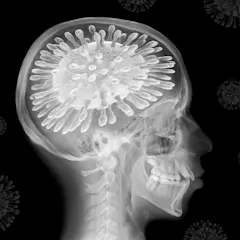
Whether you had COVID-19 or just stressed out about getting it, your brain’s hippocampus may have shrunk in the last few months.

Rats, too, struggle to learn how to do new things in new places — but it does get easier over time.
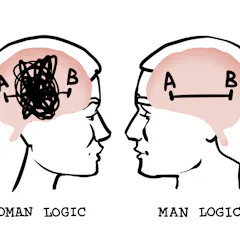
From having small brains to being better at reading, it is often argued that women aren’t well suited to do science.
Medical treatments involving neurostimulation are resurfacing and appear to be more effective than drugs in treating depression.
A bioengineer explains how a clearer picture of brain structure and function may fine-tune the ways brain surgery attempts to correct structure and medication tries to correct function.
False beliefs about the brain, called neuromyths, are ubiquitous in education. Is there any hope of debunking them?
Air traffic controllers have to process and manage large amounts of information to get airplanes to their destinations. The brain manages the incessant traffic of neurons in a similar fashion.

Brains recognize a smell based on which cells fire, in what order – the same way you recognize a song based on its pattern of notes. How much can you change the ‘tune’ and still know the smell?

How does the brain distinguish between the “self” and the “other”? A new study gives a clue.

Some blind people seem to be able to see without being conscious of it.

Psychologists have identified the characteristics of ‘moral rebels’ who make the tough choice to stand up for their principles in the face of negative consequences.

With the county facing a crisis in emotional health, we may need two vaccines: one for COVID-19 and another for toxic stress. Here’s a technique for dealing with all that stress.

Students say they have a hard time studying and cognitive science proves they’re not trying to dodge work: there’s a link between negative emotions and difficulties in concentrating.
Neuroscientist Karl Friston claims generative modelling techniques produce more valid predictions than conventional models, but the evidence so far is limited.

Research shows napping helps young children learn, as well as enhancing their emotional well-being.
When we sing together, our social brains are activated to produce oxytocin, which makes us feel more connected.

Brain regions associated with threat and aversion are activated when we feel lonely and rejected.

With dreaded, invisible germs lurking on surfaces and in people, our surroundings are seen as a minefield – and we end up dulling one of our most valuable senses.
Top contributors
-

Professor of Clinical Neuropsychology, University of Cambridge
-
Penn State
-
Postdoctoral Research Associate, Cognitive Neuroscience, University of Cambridge
-
Senior Lecturer (Adjunct), Nutritional neuroscientist, Adelaide University
-
Head of Developmental Psychobiology Lab, Deakin University
-
Postdoctoral Researcher in Cognitive Neurosciences, The University of Queensland
-
Senior Research Fellow, Uehiro Centre for Practical Ethics, University of Oxford
-
Professor of Anatomy, University of Bristol
-
Professor Emeritus of Cognitive NeuroImaging, Aston University
-
Professor of Cognitive Neuroscience, Bangor University
-
Senior Research Fellow, The Perron Institute for Neurological and Translational Science, and Faculty of Health Sciences, Curtin University
-
Associate Professor of Family & Community Medicine and Pediatrics, retired, University of California, San Francisco
-
Professor of Behavioral Neuroscience, University of Richmond
-
Lead, Cognition and Consciousness Imaging Group, Division of Anaesthesia, University of Cambridge
-
Associate Professor in Clinical Psychology and Neuropsychology, Trinity College Dublin