

Noises that aren’t nerve-wracking for most people can trigger intense stress in people with misophonia.
Articles on Neurodiversity
Displaying 1 - 20 of 73 articles

Not even experts can agree on what the term means.

Long before autism or ADHD were diagnoses, people were navigating lives outside social norms.

A growing term for a familiar feeling: how ‘waiting mode’ captures the difficulty of time and anticipation.

For some neurodivergent people, motivation isn’t just about willpower. A growing trend known as ‘dopamine menus’ offers a way to access rewarding activities.

Many focus apps fail to consider neurodivergent strengths, such as the ability to hyperfocus.

Sneaking out of a party without saying goodbye might look rude, but for some people, it’s the difference between connection and burnout.

Beyond diagnosis, the real issue is who gets heard and what counts as knowledge about autistic lives.

Research reveals a clear preference for how neurodivergent adults want to be described, though not everyone agrees.

Misrecognition of ADHD symptoms meant many not only waited years for diagnosis – it also had a serious impact on their sense of self.

Have you ever wondered whether your pet has ADHD? Research is showing the answer is complicated.

New series such as ‘Elsbeth’ and ‘Patience’ continue a long tradition of sleuths who come across as eccentric or aloof. But now there’s a name for these minds that work differently.
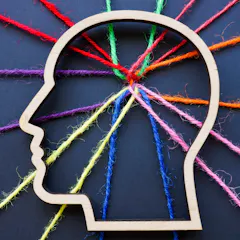
A new UK survey of more than 900 neurodivergent adults has revealed strong feelings about the language of neurodiversity.

A greater understanding and acceptance of autism creates opportunities for people with autism to thrive.
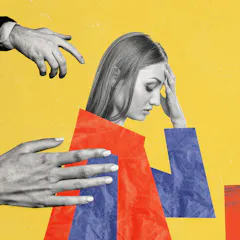
New research finds that the language and imagery used by autism charities often reinforce stigma instead of challenging it.

For around a third of autistic people, speaking is hard.

Neurodivergent people can remain invisible and undervalued in a booming job market.

The idea of autism as a single spectrum has shaped thinking for decades. But many autistic people and researchers now argue the metaphor is misleading.

Neurodivergent people may struggle with casual conversations and networking. Efforts to ameliorate workplace settings and routines only go so far.

Many neurodiverse children face misunderstanding and exclusion at school. Shifting to neuro-inclusive classrooms can help all children feel seen and supported.
Top contributors
-

Associate Professor in Public Health and Wellcome Trust Career Development Fellow, Swansea University
-
Assistant Researcher in Public Health, Swansea University
-
Assistant Professor in Psychology, Durham University
-
PhD Candidate in Access to Healthcare for Autistic Adults, Cardiff University
-
Associate Professor, Principal Research Fellow, Psychologist, La Trobe University
-
Associate Professor of Developmental Psychology, La Trobe University
-
Postdoctoral Research Fellow, UniSA Creative, Adelaide University
-
Deputy Director, The Kids Research Institute Australia, Professor of Autism Research, The University of Western Australia
-
Assistant Professor in Educational Inclusion, University of Birmingham
-
Associate Professor of Disability Studies in Education and Inaugural Chair in Student Success and Wellness, Queen's University, Ontario
-
Lecturer, International Management, University of Otago
-
Professor of Psychology, Business School, Dublin City University
-
Research Fellow, City Futures Research Centre, UNSW
-
Senior Instructor of Pediatrics and Developmental Pediatrics, University of Colorado Anschutz
-
PhD Candidate in Business Administration and Management, Concordia University