
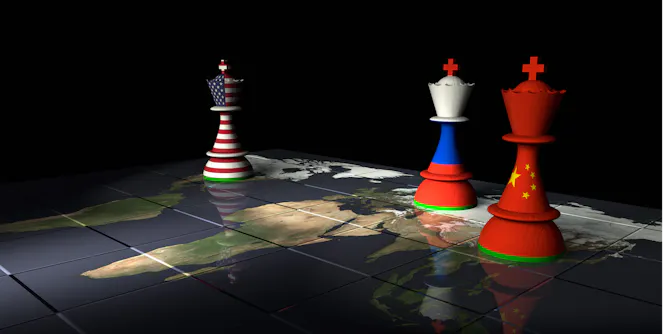
In the past 10 years, international alliances on Earth have begun to expand into space. Nations with similar interests collaborate with one another while competing with other space blocs.
Articles on NASA
Displaying 341 - 360 of 670 articles

Expanding the low-Earth orbit economy through increased commercial spaceflight will only push our planet further into its climate crisis.
The astronomy and astrophysics decadal survey for the 2020s lays out plans to search for life on distant planets, understand the formation of galaxies and solve deep mysteries of physics.
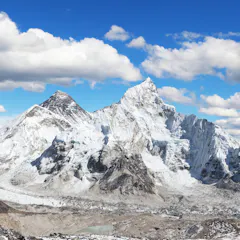
Remote sensing satellites provide the crucial data that helps scientists model disasters so that they can work on predicting avalanche patterns in future.
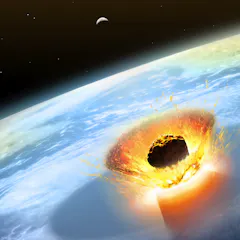
NASA has only mapped 40% of the potentially dangerous asteroids that could crash into Earth. New projects will boost that number, and upcoming missions will test tech that could prevent collisions.
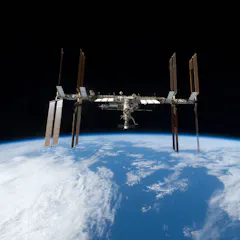
What happens to the International Space Station when tensions on Earth rise? A space policy expert explains how the ISS is run and how Russian aggression has threatened its operation in the past – and now.
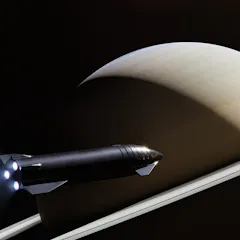
There has never been a dedicated mission sent to the “ice giants”, Uranus and Neptune. But there may be one on the horizon.
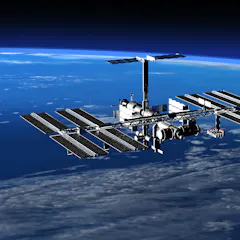
The plans to destroy a space station as large as the ISS have never been carried out before.

With about 200 orbital launches scheduled and ambitious missions on everything from lunar bases to the search for life in the works, there’s a lot to watch in 2022. An astronomer explains the highlights.

Webb is NASA’s largest and most powerful ever space telescope – set to investigate the formation of the furthest galaxies from Earth.
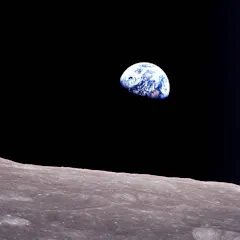
The mission is set to launch in March 2022. Here’s what you need to know.
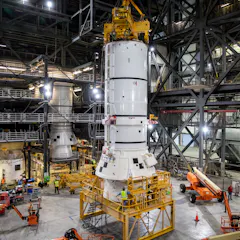
Nasa plans to test its new rocket system for the Moon, and a new rover is due to begin its journey to Mars.

Experts give us a science preview for 2022, plus what lies in store for global inequality. Listen to The Conversation Weekly podcast.
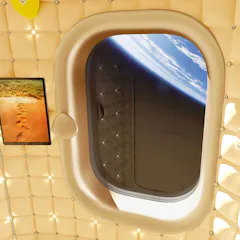
NASA is backing four commercial space station projects. The newcomers may find they have much to learn about how people really live in space.
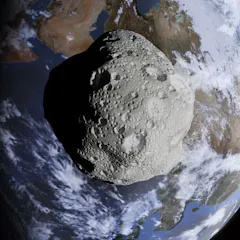
An asteroid that landed in Russia in 2013 injured 1,500 people – and was just 20 metres in diameter. What could we do if a major threat was detected?
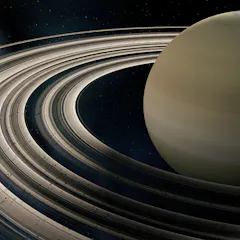
Saturn, Jupiter, Neptune and Uranus all have rings.

International space law doesn’t explicitly prohibit anti-satellite missile tests — which makes uproar over Russia’s actions all the more significant.
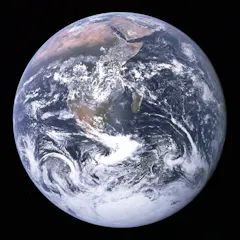
Photographing the full Earth from space could provide a profound and timely reminder of its vulnerability in the face of climate change.
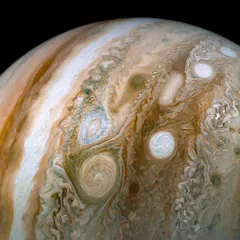
Jupiter’s Great Red Spot is deep, meaning it may persist even though it is shrinking.
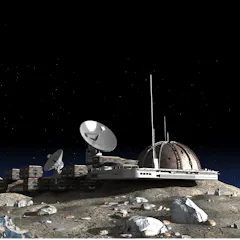
There are vast quantities of water ice on the moon that represent the potential for extraction and use in rocket fuel. But there are no practical reasons to mine this water.
Top contributors
-

Postdoctoral research associate, University of Oxford
-
Professor of Strategy and Security Studies, Air University
-
Senior Lecturer in Physics, Nottingham Trent University
-
Associate Professor in Archaeology and Space Studies, Flinders University
-
Professor of Planetary and Space Sciences, The Open University
-
University Distinguished Professor of Astronomy, University of Arizona
-
Professor (Astrophysics), University of Southern Queensland
-
Kevin Orrman-Rossiter is a Friend of The Conversation.
Sterrenkenner, History & Philosophy of Science, The University of Melbourne
-
Professor in Earth and Planetary Science, Western University
-
Associate Professor of International Affairs, Georgia Institute of Technology
-
Lecturer in Astronomy, Nottingham Trent University
-
Professor of Air and Space Law, University of Mississippi
-
Assistant Professor of Space and International Relations, Johns Hopkins University
-
Professor of Planetary Geosciences, The Open University
-
Senior Instrument Scientist, Australian Nuclear Science and Technology Organisation