
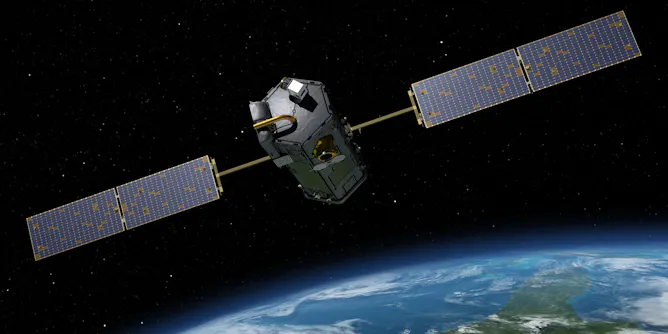
Tracking CO2 emissions with satellites can help to support emission reduction efforts under the Paris Agreement.
Articles on NASA
Displaying 301 - 320 of 670 articles
Many galaxies are too faint or small for us to observe easily – but science can help us work it out.
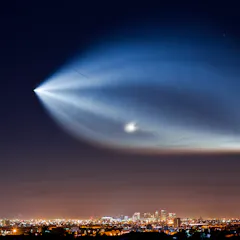
If you see something mystifying happening in Europe’s skies, get in touch with France’s Study and Information Group on Unidentified Aerospace Phenomena. They could well have a rational explanation for you.
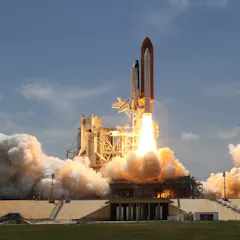
After its fourth delay, the Artemis 1 launch is now scheduled for Nov. 16, 2022. NASA has a history of missing launch deadlines, but the private sector is slowly making launches more reliable.
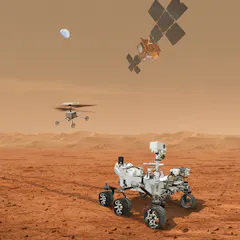
Sophisticated equipment on the Perseverance rover is helping answer some of the many questions researchers have about Mars’ geology over time.
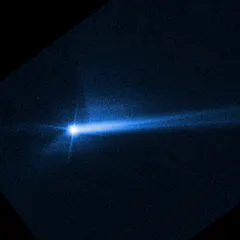
DART has forever changed the orbit of a small asteroid – and done so with much greater success than expected.
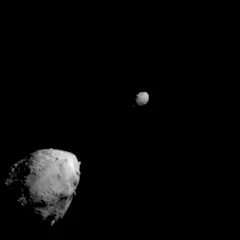
The Double Asteroid Redirection Test successfully showed that it is possible to crash a spacecraft into a small asteroid and change its orbit. This technique could save Earth from asteroids in the future.

In some African countries, astronomical research is quite developed.

The Double Asteroid Redirection Test successfully showed that it is possible to crash a spacecraft into a small asteroid. Whether the approach could save Earth from a future threat remains to be seen.
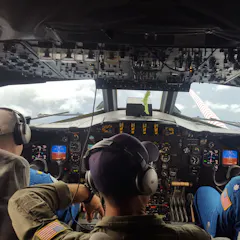
The meteorologist leading NOAA’s 2022 hurricane field program describes flying through eyewalls and the technology in these airborne labs for tracking rapid intensification in real time.
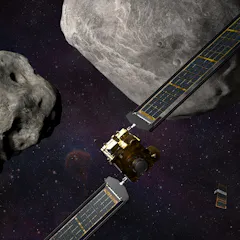
The first ever planetary defence test is about to take place 11 million kilometres from Earth. All we can do is wait and see.

We don’t know much about the target asteroid of Nasa’s imminent Dart mission, so it’s hard to predict what will happen when we crash into it.

Crashing the 1,340-pound DART probe into the small moonlet orbiting the asteroid Didymos should redirect its trajectory – and could be a model for how to save Earth in the future.

Discarded pieces of landing gear, crashed spacecraft and wear and tear have produced a lot of debris that is now scattered around the Martian surface.

Newly discovered super-Earths add to the list of planets around other stars that offer the best chance of finding life. An astronomer explains what makes these super-Earths such excellent candidates.
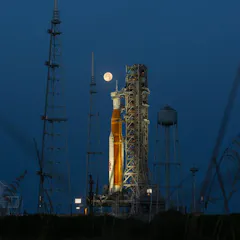
Artemis I launch has been ‘scrubbed’ a couple of times now. Why is a launch window so important, and what does scrubbing mean, anyway?

A scholar of Greek mythology explains the naming of NASA’s missions after mythological figures and why the name Artemis is indicative of a more diverse era of space exploration.
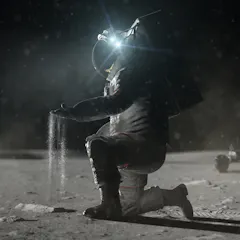
Why is humanity going back to the Moon after 50 years? Because we can, and we should.
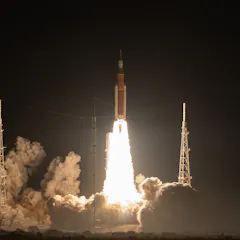
When the Orion Crew Capsule orbits the Moon there will be no one on board. But the mission will mark a key step in bringing humans back to Earth’s dusty sidekick.
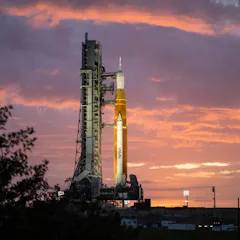
Will humans be back on the Moon by 2025? It depends on how well the imminent launch of Artemis-1 goes.
Top contributors
-

Postdoctoral research associate, University of Oxford
-
Professor of Strategy and Security Studies, Air University
-
Senior Lecturer in Physics, Nottingham Trent University
-
Associate Professor in Archaeology and Space Studies, Flinders University
-
Professor of Planetary and Space Sciences, The Open University
-
University Distinguished Professor of Astronomy, University of Arizona
-
Professor (Astrophysics), University of Southern Queensland
-
Kevin Orrman-Rossiter is a Friend of The Conversation.
Sterrenkenner, History & Philosophy of Science, The University of Melbourne
-
Professor in Earth and Planetary Science, Western University
-
Associate Professor of International Affairs, Georgia Institute of Technology
-
Lecturer in Astronomy, Nottingham Trent University
-
Professor of Air and Space Law, University of Mississippi
-
Assistant Professor of Space and International Relations, Johns Hopkins University
-
Professor of Planetary Geosciences, The Open University
-
Senior Instrument Scientist, Australian Nuclear Science and Technology Organisation