
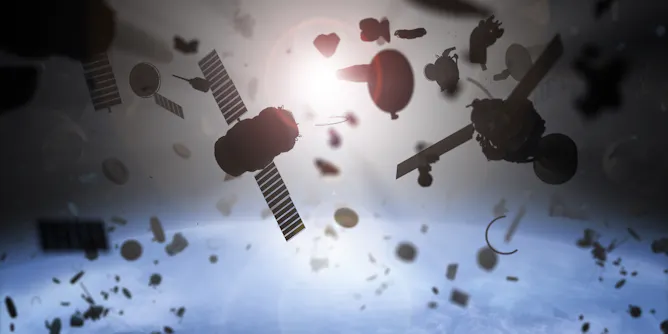
Treaties meant to ensure sustainability in space don’t currently regulate private companies, and not every country has signed on to an agreement for sustainable space exploration.
Articles on NASA
Displaying 261 - 280 of 670 articles

India’s space mission is driving economic changes and high-tech job opportunities.
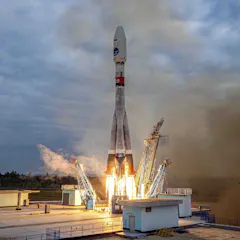
Space missions are still difficult, dangerous and risky – but it’s still early days in the human journey beyond our planet.
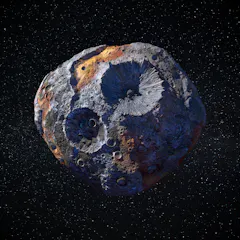
Liftoff to the distant asteroid is scheduled for Oct. 5, 2023 – the beginning of a six-year journey to one of the most unusual objects in the solar system.
A new survey catalogs Americans’ expectations about the future of space, from NASA to SpaceX. Two space policy experts describe how these results stack up against the current state of space affairs.
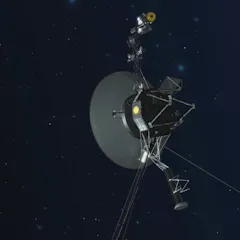
The Voyager 2 spacecraft is 20 billion kilometres away and has lost track of Earth. A radio dish near Canberra is the only channel for re-establishing communication.

If an astronaut were to die on Mars, neither cremation nor burial would be good options.
Both Stephen Alexander’s elementary teachers and televised NASA missions throughout the ‘60s influenced his journey into science. He recounts NASA’s legacy, 65 years after the agency’s inception.
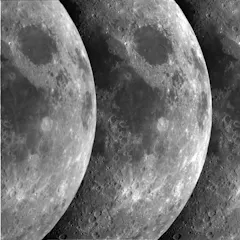
While a return to the Moon will allow the U.S. to collaborate with other nations interested in space, this endeavor is also complicated by geopolitical tensions.
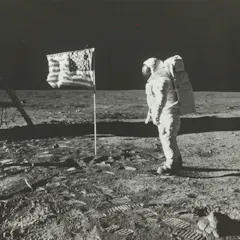
Some people incorrectly say the Moon landings didn’t happen. But the evidence – and logic – isn’t on their side.
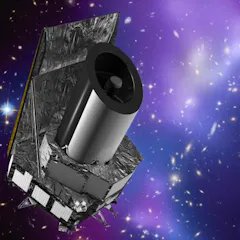
The Euclid mission is preparing to launch on July 1.

Nasa is taking reports of unidentified objects seriously, but it hasn’t found aliens yet.
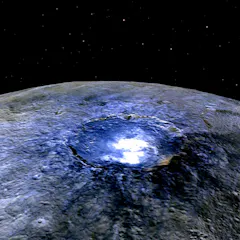
If we could go sightseeing across our cosmic neighbourhood, these would be some of the best highlights.
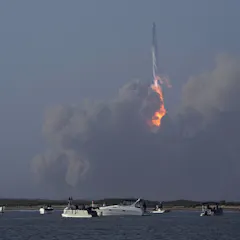
The launch of a new rocket is always an exciting event. SpaceX’s ‘go fast and fail’ approach means that even though the test ended with engineers blowing up the rocket, it was a valuable first flight.

As signatories, Nigeria and Rwanda are demonstrating their commitment to safe, sustainable use of outer space. This should have multiple benefits.

One of Jupiter’s moons, Ganymede, could contain more water than the Earth.
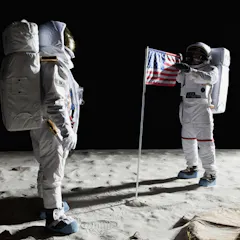
China has invested massively in its space capabilities in recent years and is now a major competitor with the US. But according to a space policy expert, the US still dominates space by most measures.
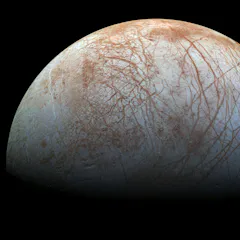
Europa Clipper and the Jupiter Icy Moons Explorer missions will arrive at Jupiter in the 2030s and provide researchers with unprecedented access to the moons orbiting the gas giant.
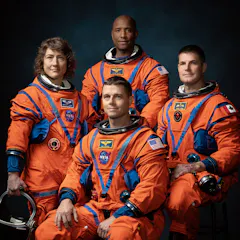
The crew of Artemis II will face new and old challenges when they return to the Moon.
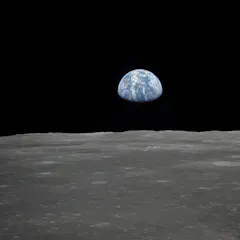
The Artemis II mission is scheduled for launch in late 2024 and is a critical step towards NASA’s goals of establishing a permanent human presence on and near the Moon.
Top contributors
-

Postdoctoral research associate, University of Oxford
-
Professor of Strategy and Security Studies, Air University
-
Senior Lecturer in Physics, Nottingham Trent University
-
Associate Professor in Archaeology and Space Studies, Flinders University
-
Professor of Planetary and Space Sciences, The Open University
-
University Distinguished Professor of Astronomy, University of Arizona
-
Professor (Astrophysics), University of Southern Queensland
-
Kevin Orrman-Rossiter is a Friend of The Conversation.
Sterrenkenner, History & Philosophy of Science, The University of Melbourne
-
Professor in Earth and Planetary Science, Western University
-
Associate Professor of International Affairs, Georgia Institute of Technology
-
Lecturer in Astronomy, Nottingham Trent University
-
Professor of Air and Space Law, University of Mississippi
-
Assistant Professor of Space and International Relations, Johns Hopkins University
-
Professor of Planetary Geosciences, The Open University
-
Senior Instrument Scientist, Australian Nuclear Science and Technology Organisation