
Various forms of testing that reduce students’ knowledge, capacities and skills to a single number cannot of themselves help inform improvement.
Articles on NAPLAN
Displaying 81 - 100 of 134 articles

The latest round of NAPLAN results show Australia’s school systems are not good at reducing the influence of a student’s background on their academic achievement.

Rather than leaping to conclusions about a failing education system, we need to look at what the data tells us about student performance at a state level to help us make more informed decisions.

The furore over Australia’s international ranking in science, maths and English obscures what we should really be focusing on.

Being able to sound out letters in words doesn’t mean you can understand them. There is no clear evidence that a new phonics screening test for children in Year 1 will help improve reading levels.
The Productivity Commission has said that education spending has substantially increased over the last decade but student achievement has shown little or no improvement. Is that true?
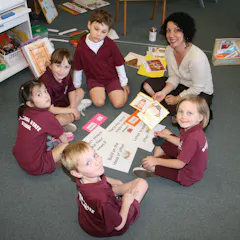
Teaching philosophy for just one hour a week can improve children’s progress in writing, maths and reading.
Claims made by politicians and the media about what does and does not improve education outcomes are repeated on a regular basis. But is there much truth in them?

It is not reasonable for politicians to say NAPLAN results have plateaued, because comparisons from year to year are not reliably accurate.

Teaching graduates are expected to meet new test standard from July 1 this year.
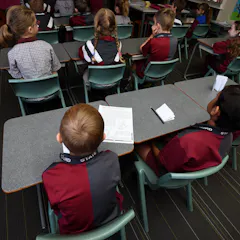
Average NAPLAN results don’t tell the full story. Diving into the details is essential if we are to understand what is going on in Australian education.

Focusing on progress – not just achievement – and investing in improving teaching practice will help to lift slipping standards in Australian schools.

Responsibility for the operation of public schools needs to be separated from the policymaking and regulatory functions and put into a separate authority.

Research shows linking teachers’ pay to performance has little impact on student achievement. Similar tests to the ones the government proposes for young children now face a backlash in the UK and US.

Students reach the middle years of high school with poor vocabularies and unable to work with language in sophisticated ways.
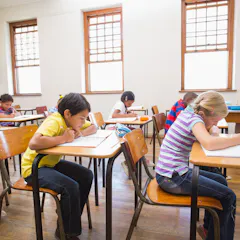
There is little evidence to suggest that testing teaching students on their literacy and numeracy will have any impact on the quality of teaching and learning in Australian classrooms.

A new report finds children in care are less likely to achieve the national minimum standards in literacy and numeracy – with the gap growing as they get older.

For the first time in Australia’s history the education levels of parents will be taken into account when funding is being allocated.
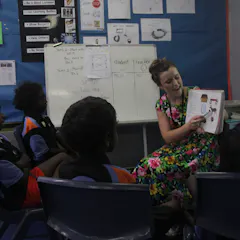
While the NT consistently performs lowest on national and international tests, with a long tail of low achievement, the ACT consistently performs highest.
Results from NAPLAN testing could actually be inflated given the high rates of absenteeism from the lower bands of achievement.
Top contributors
-

Professor, School of Education, University of Southern Queensland
-
Senior Research DECRA Fellow, Institute for Learning Sciences and Teacher Education, Australian Catholic University
-
School Education Program Director, Grattan Institute
-
Senior Lecturer in Education, University of New England
-
Professor of Education Futures, The University of Melbourne
-
Associate Professor of Education Policy, Australian Catholic University
-
Associate Professor in Language, Literacy and TESL, University of Canberra
-
Professor, Australian Catholic University
-
Vice-Chancellor's Fellow, Melbourne Graduate School of Education, The University of Melbourne
-
Professor (Curriculum Inquiry / Rural Education), University of Canberra
-
Deputy Dean, School of Education, Western Sydney University
-
Researcher, The University of Melbourne
-
Senior Fellow, National Centre for Indigenous Studies, Australian National University
-
Deputy Program Director, School Education, Grattan Institute
-
Senior Lecturer, Education Policy and Leadership, The University of Melbourne