

A survey of NSW teachers shows there is an emphasis on explicitly teaching writing in the early school years. But the amount of time spent teaching writing dips in the middle years.
Articles on NAPLAN
Displaying 41 - 60 of 134 articles

A study found no statistically significant difference between the literacy and numeracy scores of school children who had attended preschool or childcare and children who didn’t.

NAPLAN’s arrival promised inequities decreased partly from parent involvement in their child’s progress. But working class parents don’t see NAPLAN as a tool for them, and hardly find it valuable.

Too many adjectives, not enough ideas: how NAPLAN teaches bad writing
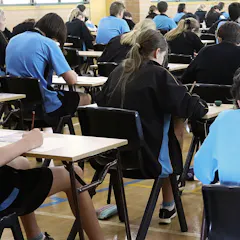
Many reports over the 12 years of NAPLAN’s existence have highlighted a plethora of issues with the test that need to be urgently addressed. And the most recent review is not exception.

Years 5-7 typically include the transition from primary to secondary but the reading slowdown can’t just be blamed on this, because numeracy progress has improved. So what’s going on with reading?

Australian parents rely on a number of factors to choose a school for their child. These include school performance, location and social connections.

The questions in the NAPLAN numeracy tests are often years behind the level of mathematics students following the curriculum are studying that year.

This week’s NAPLAN results show the writing skill of students is actually dropping as they progress from Year 3 through to Year 9.

Under no circumstances do NAPLAN scores alone indicate a student’s full potential, so linking them to any future job application is a dangerous idea.
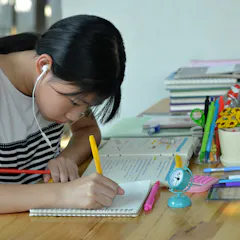
Do homeschooled children miss out on quality education from trained teachers? Research says no – homeschooled students do just as well, if not better, than those who go to school.

Caregivers using privilege to buy their children’s way into, and through, education is not a Hollywood anomaly, nor the domain of elites. The middle class have been doing it in Australia for decades.
2018 was a mixed bag for schooling policy in Australia, with new ministers, a new organisation and auspicious anniversaries. It’s worth reflecting on the year that’s been.
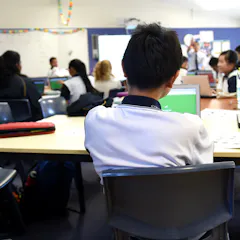
School education in Australia is generally good, but it should be better.

Girls are encouraged more often to read, despite performing better in reading assessments nationally and internationally. Here’s how parents and educators can help connect boys with books.

The current debate about comparability would be more concerning if 2018 results showed radically different trends compared to previous years, but they don’t.
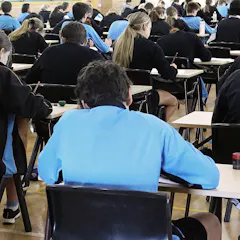
Much of the controversy over the delay in this year’s NAPLAN data comes down to its misuse and a misunderstanding of statistical comparability.
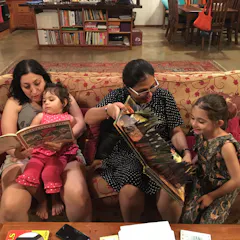
Early shared reading is linked to a number of benefits for children, including better performance in NAPLAN, reading, writing, spelling, grammar and mathematics.

To assess problem-solving, creative and critical thinking skills on NAPLAN would fit with broader movements in education internationally, but there are some questions to address first.
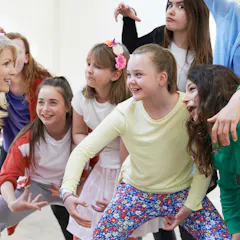
Literacy and numeracy can be assessed through creative tasks, like creating a drama performance or an electrical circuit, without hindering creativity.
Top contributors
-

Professor, School of Education, University of Southern Queensland
-
Senior Research DECRA Fellow, Institute for Learning Sciences and Teacher Education, Australian Catholic University
-
School Education Program Director, Grattan Institute
-
Senior Lecturer in Education, University of New England
-
Professor of Education Futures, The University of Melbourne
-
Associate Professor of Education Policy, Australian Catholic University
-
Associate Professor in Language, Literacy and TESL, University of Canberra
-
Professor, Australian Catholic University
-
Vice-Chancellor's Fellow, Melbourne Graduate School of Education, The University of Melbourne
-
Professor (Curriculum Inquiry / Rural Education), University of Canberra
-
Deputy Dean, School of Education, Western Sydney University
-
Researcher, The University of Melbourne
-
Senior Fellow, National Centre for Indigenous Studies, Australian National University
-
Deputy Program Director, School Education, Grattan Institute
-
Senior Lecturer, Education Policy and Leadership, The University of Melbourne