

Students who perform below standards in Year 3 require more support to catch up to their peers.
Articles on NAPLAN
Displaying 21 - 40 of 134 articles

School students can fall behind for many reasons. From missing school to learning difficulties and problems at home.

A new study looked at NAPLAN results in reading and numeracy and tracked the same students all the way from from Year 3 to Year 9.

New research looked at NSW Year 12 results in English and maths and tested if socioeconomic status or rural location impacts student results.

Our analysis reveals the participation rate is alarmingly low for some groups of students, such as First Nations kids and students from educationally disadvantaged backgrounds.

Maths anxiety is the feeling of tension and worry that interferes with a person’s ability to solve mathematical problems. It can be seen in children as young as five.

With NAPLAN moving to March and Year 11 and 12 students already in the throes of multiple assessments, exams are looming for many households with school-aged children.

My School is updated each year with information about every school in Australia to help parents understand “the performance of schools over time”.
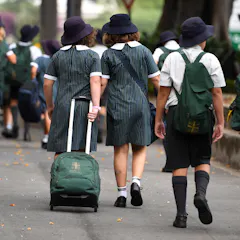
NAPLAN testing has been brought forward from May to March and results will be reported against just four levels of achievement.

Results are coming back for students in years, 3, 5, 7 and 9. It can seem like a very big deal to stressed students. In reality, it is only one indicator of how a child is progressing.

A study of thousands of students hospitalised with an injury or illness confirms they are likely to fall behind their classmates. But good management and targeted help with learning cut the risk.

A whole-school approach to literacy is far more effective for students, but few Australian schools have practical plans for building literacy across all subject areas.

Research shows the brain processes language as if it’s music, which helps explain the link between music education and gains in literacy. Unfortunately, not all states have heeded the evidence.

Motivation plays a large part in educational success. Of students who sat the PISA test in 2018, 73% indicated they would have put in more effort had the scores counted towards their school marks.

The national average in literacy and numeracy has been unaffected by 2020’s disruptions. But will have to wait until the full NAPLAN data is released to understand the affect on vulnerable students.

A survey of 268 teachers found 85% considered education news coverage to be generally negative. And 81% found it demoralising.
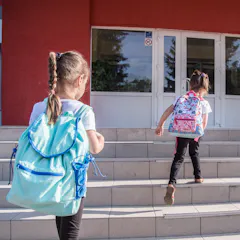
The NSW curriculum review recommends students be assigned tasks based on their ability, rather than their age. This approach recognises the progress individuals make over the course of a year.

Our children should no longer be taught formulaic writing. Writing education should encompass skills that go beyond the capacities of artificial intelligence.

Standardised tests or exams have been in place in a number of educational systems for nearly two centuries. They are rooted in reformers’ desire to regulate schooling and hold educators accountable.

NAPLAN scores are used to gauge the quality of schools. But the overemphasis on only literacy and numeracy scores stands in the way of providing a more holistic education.
Top contributors
-

Professor, School of Education, University of Southern Queensland
-
Senior Research DECRA Fellow, Institute for Learning Sciences and Teacher Education, Australian Catholic University
-
School Education Program Director, Grattan Institute
-
Senior Lecturer in Education, University of New England
-
Professor of Education Futures, The University of Melbourne
-
Associate Professor of Education Policy, Australian Catholic University
-
Associate Professor in Language, Literacy and TESL, University of Canberra
-
Professor, Australian Catholic University
-
Vice-Chancellor's Fellow, Melbourne Graduate School of Education, The University of Melbourne
-
Professor (Curriculum Inquiry / Rural Education), University of Canberra
-
Deputy Dean, School of Education, Western Sydney University
-
Researcher, The University of Melbourne
-
Senior Fellow, National Centre for Indigenous Studies, Australian National University
-
Deputy Program Director, School Education, Grattan Institute
-
Senior Lecturer, Education Policy and Leadership, The University of Melbourne