
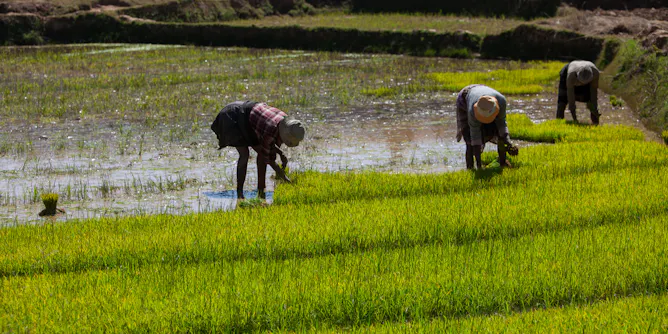
The private-sector plays an increasing role helping agriculture in sub-Saharan Africa adapt to a changing climate.
Articles on Namibia
Displaying 141 - 160 of 212 articles
For hot, dry and water-stressed countries like Botswana and Namibia, high temperatures and droughts will be more severe than the global average.
Shortcomings of Namibia’s land reforms suggest that voluntary, market-based transactions might not be suitable.
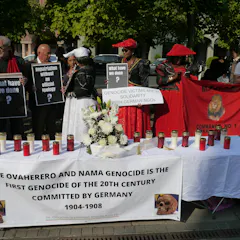
The third repatriation of human remains in August this year was another missed opportunity for reconciliation between Germany and Namibia.

In reality, cybersecurity attacks are like a disease affecting people globally.
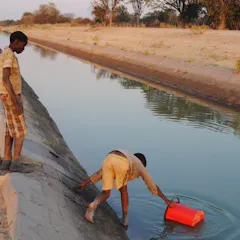
Namibia has followed a community based water management strategy.
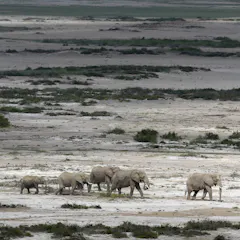
Improving livelihoods by exploring alternatives to wildlife trade would help to curb the poaching of threatened species like elephants.
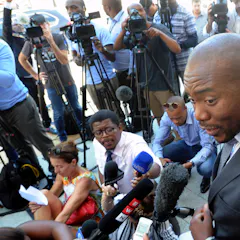
The sustainability of the news media is a precondition for good journalism in the public interest. Thus, economic questions should form part of discussions of press freedom.

Marginalised Namibians should be encouraged to take up cameras to document their lives – on their own terms.
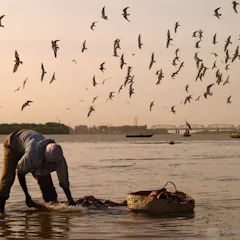
Nature based approaches to solving water problems originated in Europe and don’t take into account Africa’s huge infrastructure deficit.
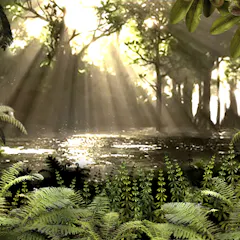
Plants, in their fossil forms, can reveal a great deal about past environments and climates.
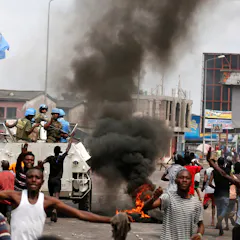
Too often developments in one country are seen in isolation. In southern Africa events in one affect others in the region.
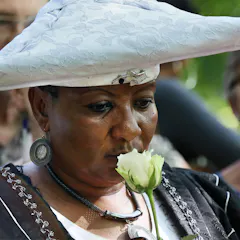
In mid-2015 the German Foreign Office after decades of denial seemingly acceded, in a very informal way, to labelling what had happened in South West Africa as genocide, is now backtracking.

A precursor to the Square Kilometre Array- the MeerKAT telescope - is being built right now and remarkable progress has been made in the last 12 months.

The ANC’s elective conference is important for the party and South Africa. This is because the person chosen to lead the governing party since 1994, has gone on to become president.
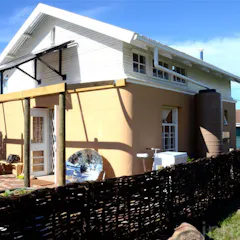
Water is increasingly becoming scarce as the climate changes. There are four changes that cities can make to adapt to water scarcity.
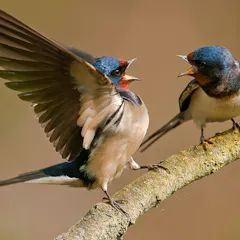
If Europe is going to reap the benefits of conservation measures at home, its experts need an understanding of where “their” birds migrate to when they head off to Africa.
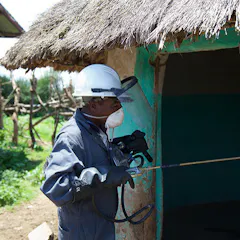
A spike in the number of malaria cases in southern Africa means that the region will not meet its initial target of eliminating malaria by 2018.
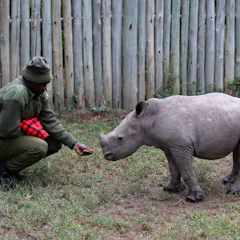
Local and indigenous communities remain mostly excluded from real benefits, and conservation often comes at a huge cost to them.
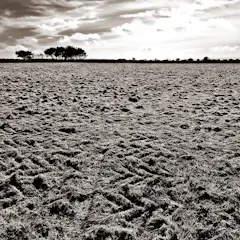
Mapping the soil with open source application is vital to understanding how to protect it.
Top contributors
-

Extraordinary Professor, Department of Political Sciences, University of Pretoria
-
Professor in Political Science, Arnold Bergstraesser Institute
-
Emeritus Professor, University of Cape Town
-
Visiting Professor, University of Kent
-
Professor of Anthropology, University of the Western Cape
-
Director of African Climate and Development Initiative, Professor in Environmental and Geographical Science, University of Cape Town
-
Researcher in TESOL & Literacy, University of Notre Dame Australia
-
Senior Lecturer, North-West University
-
Postdoctoral fellow, Johns Hopkins University
-
Professor and Programme Director, SA MRC Centre for Health Economics and Decision Science - PRICELESS SA (Priority Cost Effective Lessons in Systems Strengthening South Africa), University of the Witwatersrand
-
Afrobarometer Senior Analyst/Methodologist, University of Cape Town
-
Yarik Turianskyi is Manager of the Governance and African Peer Review Mechanism Programme at the South African Institute of International Affairs and guest lecturer in African Governance and Eastern European Politics, University of Pretoria
-
Research Fellow, Stockholm Environment Institute
-
Professor of International Human Rights Law, Centre for Human Rights, and acting SARChI Chair in International Constitutional Law, University of Pretoria
-
Senior research scientist, Stellenbosch University