

About 60% of children in South Africa under 10 years don’t live with their biological fathers. But research sheds light on those who despite the pressures remain involved in their children’s lives.
Articles on Namibia
Displaying 161 - 180 of 212 articles

Namibian crafters may be on the verge of commercial success with the carving of the Makalani nut. But they are not sure if they want to commercialise operations.

Windhoek can teach Cape Town on dealing with drought. Technology alone is not enough.
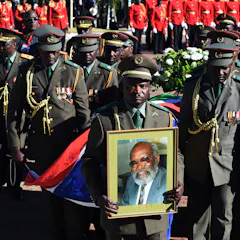
Namibian hero and former Robben Island prisoner Toivo ya Toivo was part of a generation who contributed to the struggles against apartheid and colonialism in the region.

Andimba (Herman) Toivo Ya Toivo remained loyal to what made him the personification of the desire to live in an independent country governed by, and for, its people.
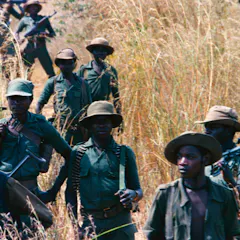
For a military battle whose outcome is still hotly contested 30 years later, the impact was so remarkably clear – independence for Namibia, peace for Angola and the death knell for apartheid.
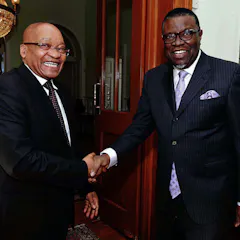
South Africa’s ANC and Namibia’s SWAPO, governing parties, enter crucial leadership elections this year, with presidents Zuma and Geingob both facing challenges.
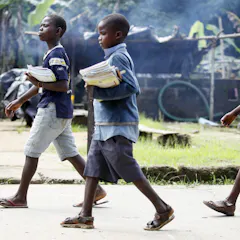
Schools that have supportive strategies in place can offer buffers. They can promote positive outcomes – for pupils and teachers.
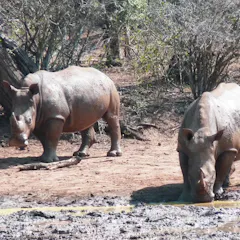
South Africa’s KwaZulu-Natal province is bearing the brunt of renewed rhino poaching efforts. This is a result of increased security and anti-poaching in the Kruger National Park.
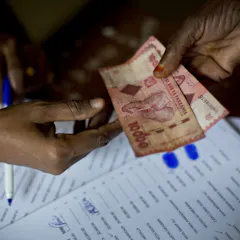
The case of Zanzibar shows that, given certain political conditions, even low-income countries in Africa can introduce and pay for a universal pension programme.

Afrikaans is very much a black language. The apartheid government’s ploy to construct it as a “white language”, with a “white history”, denied the commonality of the language across race and class.
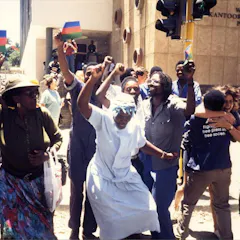
Namibia contributes a positive image to Africa in governance and other indicators. But the reality for most of the country’s 2.3 million people isn’t quite as rosy.
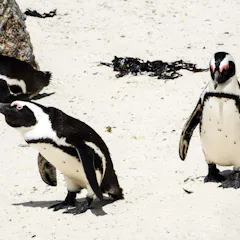
Young African penguins are following the usual cues to feeding grounds only to find that the sources of food in these places is no longer available. This is devastating for their numbers.
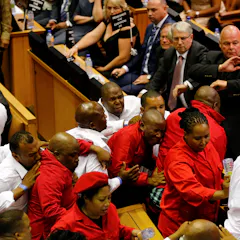
Opposition parties in sub-Saharan Africa struggle to prove themselves worthy to skeptical voters who, unlike in Western competitive systems, don’t trust them over former liberation movements.
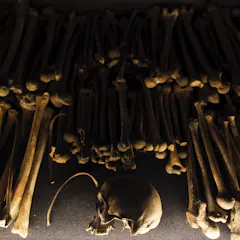
Significant links connect racial science in colonial southern Africa with the holocaust of the European Jews. Colonial racial science also contributed to the 1994 genocide in Rwanda.
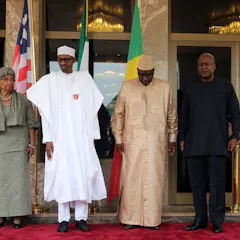
SADC’s credibility is at stake. Its lack of political will in acting decisively against despots is at odds with the African Union’s goal of promoting legitimate governance on the continent.
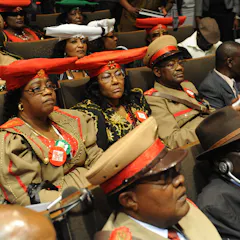
Representatives of Namibian communities affected by the 1904-1908 genocide have filed a class action against Germany in the US seeking reparations for atrocities committed by Imperial Germany
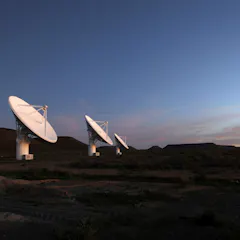
Very few African universities offer postgraduate degrees in astronomy. This gap in knowledge and training can be addressed through international partnerships and collaboration.
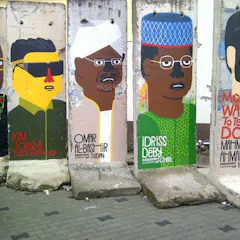
The legitimacy and credibility of those in power has been eroded by bad governance, patronage and the obsession to claim an exclusive agency representing the people.
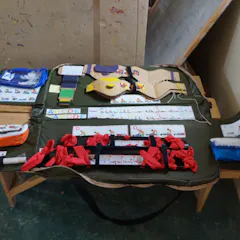
A project that aims to change the fate of accident victims in developing countries.
Top contributors
-

Extraordinary Professor, Department of Political Sciences, University of Pretoria
-
Professor in Political Science, Arnold Bergstraesser Institute
-
Emeritus Professor, University of Cape Town
-
Visiting Professor, University of Kent
-
Professor of Anthropology, University of the Western Cape
-
Director of African Climate and Development Initiative, Professor in Environmental and Geographical Science, University of Cape Town
-
Researcher in TESOL & Literacy, University of Notre Dame Australia
-
Senior Lecturer, North-West University
-
Postdoctoral fellow, Johns Hopkins University
-
Professor and Programme Director, SA MRC Centre for Health Economics and Decision Science - PRICELESS SA (Priority Cost Effective Lessons in Systems Strengthening South Africa), University of the Witwatersrand
-
Afrobarometer Senior Analyst/Methodologist, University of Cape Town
-
Yarik Turianskyi is Manager of the Governance and African Peer Review Mechanism Programme at the South African Institute of International Affairs and guest lecturer in African Governance and Eastern European Politics, University of Pretoria
-
Research Fellow, Stockholm Environment Institute
-
Professor of International Human Rights Law, Centre for Human Rights, and acting SARChI Chair in International Constitutional Law, University of Pretoria
-
Senior research scientist, Stellenbosch University