
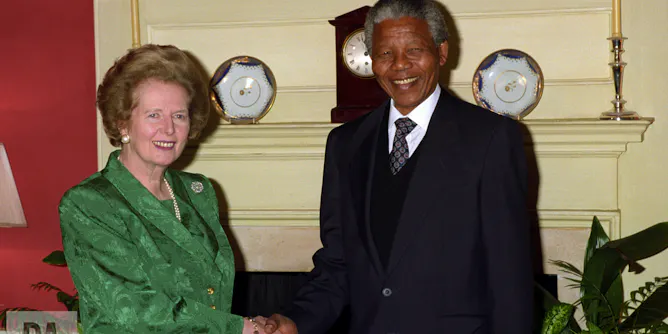
To get Nelson Mandela released and save Namibia’s independence elections, Thatcher proposed a massive aid programme.
Articles on Namibia
Displaying 181 - 200 of 212 articles
A deal intended to help southern African countries develop could instead turn them into an EU dumping ground for cheap goods.
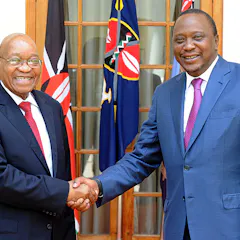
Ironically the campaign to withdraw from the ICC was mainly initiated by the very same governments and heads of state that had earlier referred cases to the ICC when it suited their own interests.

As life gets faster and working hours get longer, it’s tempting to think the Sandman is paying us ever shorter visits.
To improve, African countries need to find a balance between political and economic matters. This is where leadership becomes particularly important. But this is currently lacking on the continent.
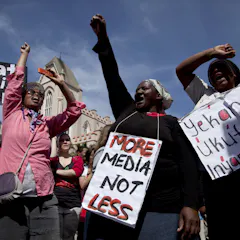
While some African countries have shown an improvement in press freedom and freedom of expression ratings, others, including South Africa, are seeing worrying trends and a drop in rankings.
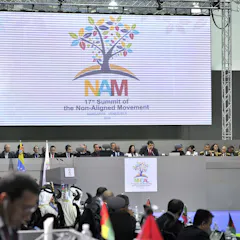
The Non-Aligned Movement member states enjoy cohesion on few issues. Historically, their heterogeneity ranged from absolute monarchs to socialist presidents.
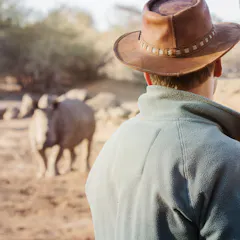
Military responses to combat poaching are a problem. They marginalise communities where poachers come from and can have longer term implications.
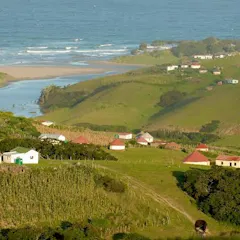
Poor people with disabilities living in rural South Africa are particularly disadvantaged when it comes to accessing health care.
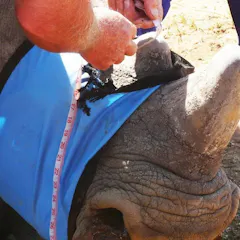
A few national parks and reserves want to dehorn rhinos and there is a lobby for a regulated and closely monitored legal trade in rhino horn. But this is met by opposition from many.
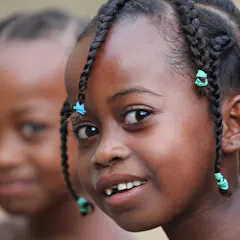
Hair has long been modified for aesthetic and other ends. But skewed power structures have meant that women, particularly women of colour, have borne the brunt of stereotyping and prejudice.
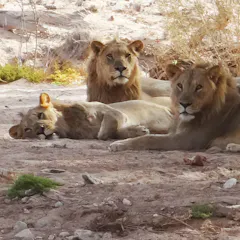
Ongoing drought means increased encounters between people and lions in north-west Namibia.
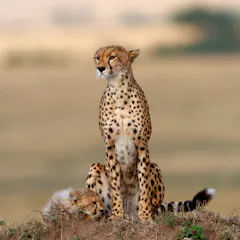
60% of the world’s largest carnivores and herbivores are classified as being threatened with extinction
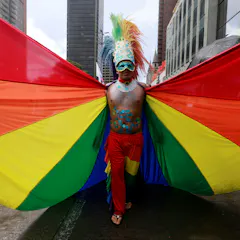
The strongest resistance to the United Nations resolution to promote LGBTI rights came from Muslim and African states. Many of these countries still criminalise same-sex relationships.
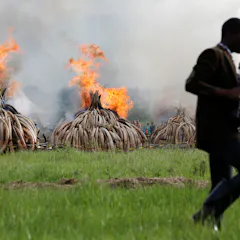
EU officials argue that while the ban on ivory trade is right for some countries, it shouldn’t be all-encompassing. It has called on African range states to reach agreement on the issue.
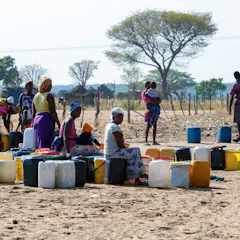
Understanding how drought is impacting on livelihoods and local governments can help in the development of longer term climate adaptation responses.
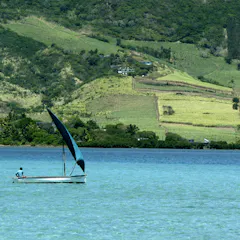
The Fragile States Index leaves more questions than it answers. Like similar global surveys, its credibility hinges on reliable data. But how sound are its statistics and their interpretation?
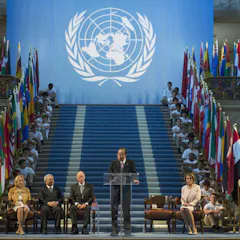
The ‘functional immunity’ granted to UN officials made good sense when the body was founded after World War II. But as its organisational functions have expanded, so has this immunity.
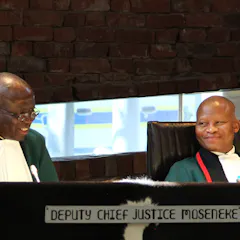
The retirement of Dikgang Moseneke, one of South Africa’s eminent judges and the Constitutional Court’s deputy chief justice, is a moment to reflect on the court’s place in society and his legacy.
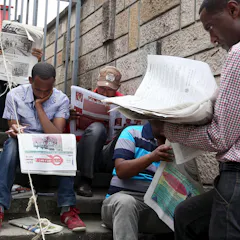
Press freedom has changed little in the past decade. If the African Union is to commit to the principles of democracy, it needs to do more to uphold freedom of expression and protects its journalists.
Top contributors
-

Extraordinary Professor, Department of Political Sciences, University of Pretoria
-
Professor in Political Science, Arnold Bergstraesser Institute
-
Emeritus Professor, University of Cape Town
-
Visiting Professor, University of Kent
-
Professor of Anthropology, University of the Western Cape
-
Director of African Climate and Development Initiative, Professor in Environmental and Geographical Science, University of Cape Town
-
Researcher in TESOL & Literacy, University of Notre Dame Australia
-
Senior Lecturer, North-West University
-
Postdoctoral fellow, Johns Hopkins University
-
Professor and Programme Director, SA MRC Centre for Health Economics and Decision Science - PRICELESS SA (Priority Cost Effective Lessons in Systems Strengthening South Africa), University of the Witwatersrand
-
Afrobarometer Senior Analyst/Methodologist, University of Cape Town
-
Yarik Turianskyi is Manager of the Governance and African Peer Review Mechanism Programme at the South African Institute of International Affairs and guest lecturer in African Governance and Eastern European Politics, University of Pretoria
-
Research Fellow, Stockholm Environment Institute
-
Professor of International Human Rights Law, Centre for Human Rights, and acting SARChI Chair in International Constitutional Law, University of Pretoria
-
Senior research scientist, Stellenbosch University