
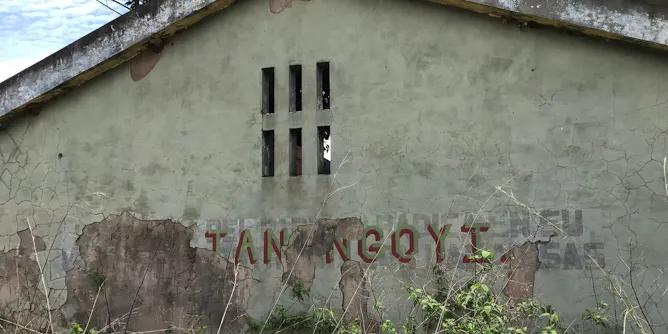
The sites provide a rare tangible record of the international solidarity that existed during the Cold War.
Articles on Namibia
Displaying 61 - 80 of 212 articles

Africa contributes less than 1% of research worldwide on movement behaviours in children. This means that research on movement behaviours has largely excluded over 16% of the world’s population.
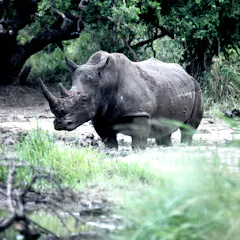
To what extent should the costs of protecting globally valued rhinos be carried by their local custodians?

How Swapo and the ANC respond to any further decline in electoral support will define the future of democracy in both countries.

Carter’s work in Zimbabwe forms a significant and under appreciated part of his legacy

He failed to understand that the struggle for justice and freedom in southern Africa was changing the world - and diplomacy itself.

The genocide of the Herero people lives on in today’s Namibia and Perivi Katjavivi’s film illustrates this.

Archaeological discoveries show the different options that have solved human problems over time.

Simply put, southern Africans are experiencing heat stress more often than in 1979.

The findings suggest that poaching rates are lower where there is strong national governance and levels of local human development are higher.

The erasure of indigenous people living in Windhoek before the German colonisers arrived has angered activists.

External changes, including the end of the Cold War, helped lead to the ending of apartheid. Gorbachev played a major role in that process.
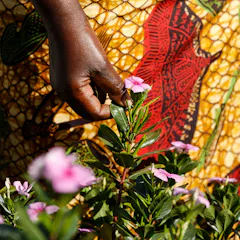
Thousands of plant species are used in African traditional medicine. Extracts from some of these plants are part of important pharmaceutical drugs.
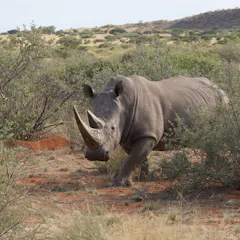
Legal hunting helps rhino conservation for biological and socio-economic reasons.

With a growing number of younger Namibian voters born after independence, the struggle narrative became increasingly anachronistic.

Namibia’s refusal to condemn Russia undermines the credibility of its claims to support sovereignty, territorial integrity, and self-determination of all nations.

Saponins from plants can destroy viruses and other microorganisms in the same way commercial soaps and detergents do.

The problem is that communities who continue to be most affected by the violent past have not been involved in negotiations.
The moth cocoons are the first archaeological evidence of shamanic ritual paraphernalia in southern Africa.

Africans are stereotyped as having no regard for time and timing. This is a myth.
Top contributors
-

Extraordinary Professor, Department of Political Sciences, University of Pretoria
-
Professor in Political Science, Arnold Bergstraesser Institute
-
Emeritus Professor, University of Cape Town
-
Visiting Professor, University of Kent
-
Professor of Anthropology, University of the Western Cape
-
Director of African Climate and Development Initiative, Professor in Environmental and Geographical Science, University of Cape Town
-
Researcher in TESOL & Literacy, University of Notre Dame Australia
-
Senior Lecturer, North-West University
-
Postdoctoral fellow, Johns Hopkins University
-
Professor and Programme Director, SA MRC Centre for Health Economics and Decision Science - PRICELESS SA (Priority Cost Effective Lessons in Systems Strengthening South Africa), University of the Witwatersrand
-
Afrobarometer Senior Analyst/Methodologist, University of Cape Town
-
Yarik Turianskyi is Manager of the Governance and African Peer Review Mechanism Programme at the South African Institute of International Affairs and guest lecturer in African Governance and Eastern European Politics, University of Pretoria
-
Research Fellow, Stockholm Environment Institute
-
Professor of International Human Rights Law, Centre for Human Rights, and acting SARChI Chair in International Constitutional Law, University of Pretoria
-
Senior research scientist, Stellenbosch University