
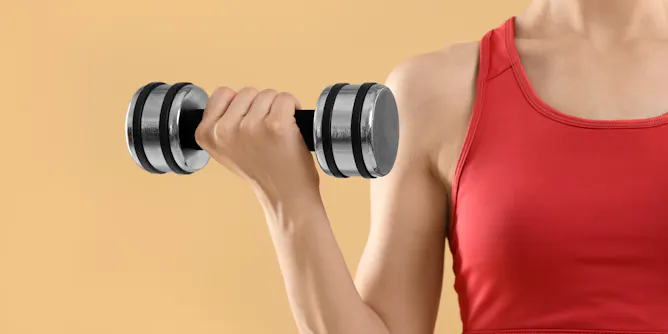
Muscle strength is crucial for good health.
Articles on Muscle mass
Displaying 1 - 20 of 32 articles
You don’t have to live in a special “blue zone” to be live longer.
A new study has highlighted how remarkably resilient human muscle is.
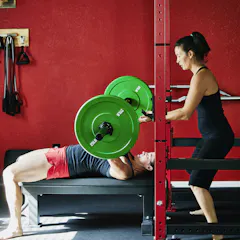
To make your muscles grow, you need to keep increasing their load. But there are different ways to do this.

Social media influencers tout creatine supplements for athletic performance and to boost brain health. Here’s what the evidence says.

A simple test of your ‘grip strength’ can give you insights into your risk of type 2 diabetes, depression and even provide a picture of your longevity.
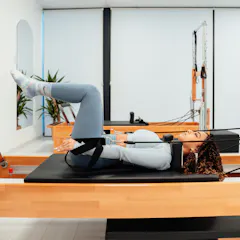
Unlike mat pilates, which only uses your body weight, the reformer adds resistance, so you can change the difficulty according to your level of fitness. But there are also cheaper options.

For healthy aging, it’s crucial to distinguish between lifespan and healthspan: the amount of time for which a person is healthy within their lifespan. Maintaining muscle is key to a longer healthspan.
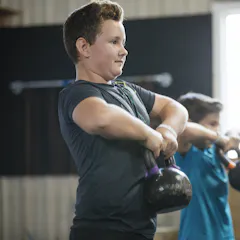
Strength training programs for young people can improve muscle tone, prevent obesity and develop good exercise habits that last into adulthood.
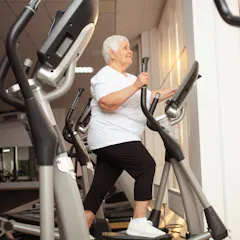
Sarcopenic obesity can creep up on us gradually over time. People might not appear frail or thin, but may have in fact already lost quite a lot of muscle through lack of use.

There are ways to incorporate strength-training components into walking to improve your muscle strength and balance.

Our metabolism naturally slows down as we age and becomes dysfunctional after dieting. Here’s what you can do to give yours a boost.

It’s never too late to start.
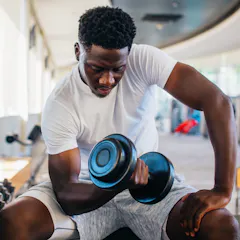
‘Time under tension’ may be a popular weightlifting technique, but research shows it’s no better than exercising at your normal pace.

Months not eating or moving don’t result in muscle wasting and loss of function for animals that hibernate. New research found gut microbes help their hosts hold onto and use nitrogen to build proteins.

Many think of muscle mass loss as a problem that mostly affects older people, but even people in their early 20s can experience rapid muscle loss under certain conditions.

The average person is likely to be able to survive on a hunger strike for two months, provided they are drinking water. Here’s how the human body can manage for so long without food.
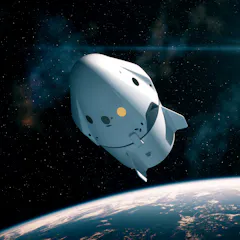
Exercise is important for astronauts to prevent weak muscles.

Loss of muscle mass is a growing concern for the tens of millions of older Americans. It leads to falls and increased isolation, already a huge problem during coronavirus.

There are some factors you can’t change about your metabolism. But there are things you can do to influence how much energy your body uses over the course of the day.
Top contributors
-

Lecturer in Exercise Science, Adelaide University
-
Associate Professor (Research) and NHMRC Emerging Leadership Fellow, Deakin University
-
Research Group Head, Embryology and Placental Biology, Hudson Institute
-
Senior Lecturer in Exercise and Sports Science, Edith Cowan University
-
Hudson Institute
-
Assistant Professor in Physiology and Biochemistry, University of Nottingham
-
Research Assistant, University of Aberdeen
-
Personal Chair in Nutrition, The Rowett Institute, University of Aberdeen
-
Senior Lecturer in Sport, Health & Exercise Science, University of Stirling
-
Professor of Sport, Health and Exercise Sciences, Durham University
-
Professor of Clinical, Metabolic & Molecular Physiology, University of Nottingham
-
Private tutor and research consultant in psychology and spaceflight biomedicine, Northumbria University, Newcastle
-
Professor of Stem Cell Biology, Liverpool John Moores University
-
Space Medicine Systematic Review Expert, Northumbria University, Newcastle
-
Professor of Clinical Exercise Science College of Sport & Exercise Science and Deputy Director Research Training Institute for Health and Sport (IHES), Victoria University