
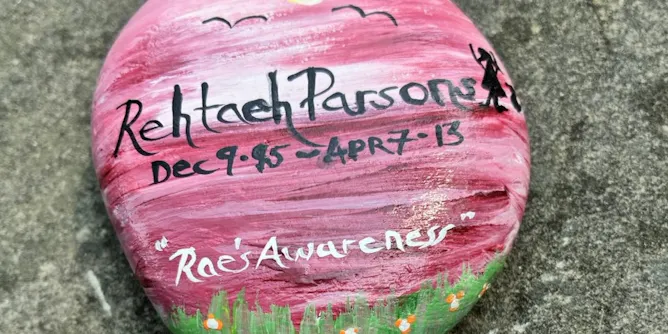
In her new book, media and technology academic Nicolette Little examines the impact of five Canadian grassroots multi-media projects.
Articles on MMIWG
Displaying 1 - 20 of 33 articles
Black children who go missing are often labeled as runaways, which excludes them from the Amber Alert system.

Violence is interpreted through a double standard when it comes to trans people and cis men, allowing masculinity as a structural driver to remain unexamined.

Pierre Poilievre’s recent 100-minute interview with controversial media commentator, Jordan Peterson, provided some clues about the Conservative leader’s political ideology.

Improving the intercommunity mobility of First Nation Peoples is a road to more inclusive and safer futures. This calls for recognizing Indigenous agency and sovereignty when developing solutions.
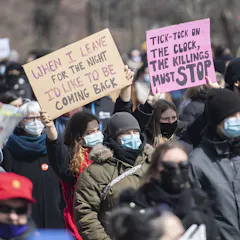
The Teaching About Gender-Based Violence Toolkit offers lesson plans and other teaching materials, and is designed to meet Grades 8-12 Ontario curriculum expectations.

Manitoba’s provincial government has declined to support a search for three murdered Indigenous women, citing health and safety concerns. An ethicist explains why this decision needs to be rethought.
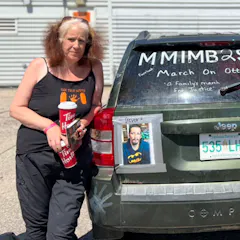
This summer, one family is marching from Regina to Ottawa, hoping to raise awareness about the vulnerabilities and systemic inequalities faced by Indigenous boys, men and Two-Spirit People.

Manitoba’s refusal to fund the search for the remains of three Indigenous women is met with denouncement from the Assembly of First Nations.
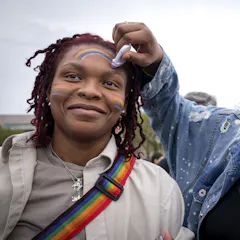
This year, there are more than 400 active anti-trans bills across the U.S. What do things look like in Canada? Are we a safe haven or are we following those same trends?

Few Canadians know about the doctrine of coverture and how it stripped Indigenous women of their agency.
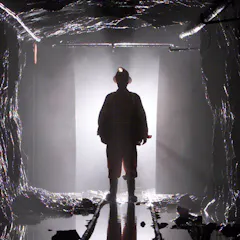
In today’s episode, we hear from two women who talk about how diamond mines in the Northwest Territories have negatively impacted women and girls and perpetuated gender violence.
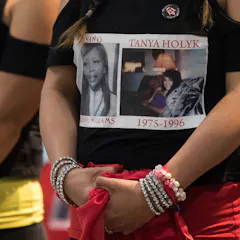
The government needs to implement its proposed action plan. The families of the missing and murdered put their trust in a federal inquiry process, but have yet to receive that justice.
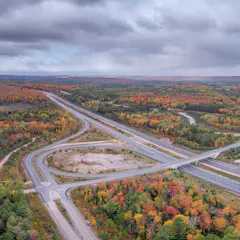
Mobility justice — the right to access spaces and means of movement — means that transportation planning should address marginalization.

Projects that are easy to participate in, reproduce and that make people feel like they are part of a community that cares are important.
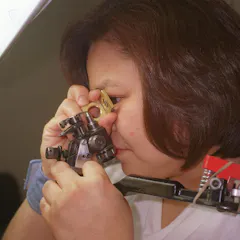
While marketing has made diamond rings a symbol of heteronormative happy endings, women from the Northwest Territories tell a different story about their experiences with the diamond mines.

Reconciliation can help address the interrelated global problems of climate crisis, interspecies displacement, gendered and racialized violence and white supremacist structures.
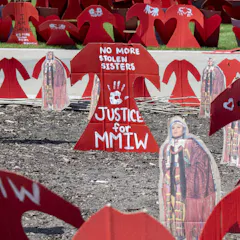
Thousands of cases of missing and murdered Native Americans remain unsolved. A scarcity of reliable data is only part of the problem, a tribal justice scholar explains.

The MMIWG Inquiry two years later: What’s changed and what still needs to be done?
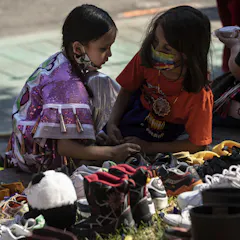
An Indigenous lawyer makes the case that what happened to Indigenous children who went to residential schools is genocide and the case should be tried by the International Criminal Court.
Top contributors
-

Professor of Political Science, University of Guelph
-
Assistant Professor, Global Development Studies, Queen's University, Ontario
-
Adjunct Assistant Professor, Media and Technology Studies, and Director of the Feminist Collaboratory and Data Visualization Centre, University of Alberta
-
Associate Professor and Director of the First Nations House of Learning, University of British Columbia
-
Assistant Professor, Sociology Department, University of Lethbridge
-
Associate Professor, Family Relations and Human Development, University of Guelph
-
Associate professor, Department of Media and Communication, Erasmus University Rotterdam
-
Community partner, Co-ordinator of Music for the Spirit & Indigenous Visual Arts
-
Post-doctoral Fellow, Interim co-Director of ALiGN Media Lab, Carleton University
-
Canada Research Professor, School of Journalism and Communication, Carleton University
-
Professor, Sociology & Criminology, University of Manitoba
-
Acting Dean and Associate Professor, Law, University of Windsor
-
Associate Professor of Criminal Justice, University of North Dakota
-
PhD Candidate, Political Science, Queen's University, Ontario
-
Director American Indian Education, Elk River District