

Automated content moderation using algorithms are quick and cheaper. But, they’re not necessarily better than human beings. They are prone to errors and can impose bias in a systemic scale.
Articles on MMIWG
Displaying 21 - 33 of 33 articles

Budget 2021 includes significant investment in Indigenous communities. Moving forward, post-pandemic recovery and future budgets need to address systemic inequalities.
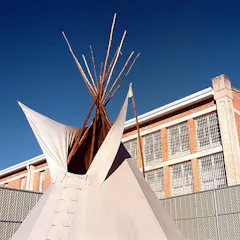
To release anyone, particularly Indigenous women, transgender and Two-Spirit individuals without a plan is irresponsible and dangerous and does not demonstrate a commitment to reconciliation.
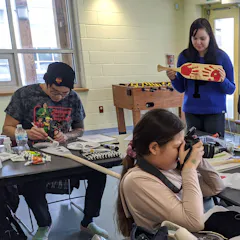
Collaborative research sought to document Six Nations youth perspectives shared through art and story to inform principles for water management in the lower Grand River.
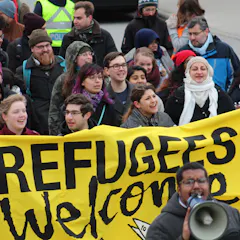
Online social movements are not leaderless. On the contrary, leadership duties are often assumed by identifiable individuals committed to doing leadership work.
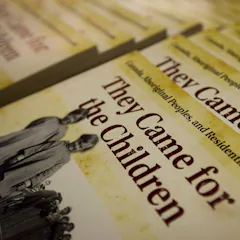
To make meaningful progress on the Truth and Reconciliation Commission of Canada’s Calls to Action, all provinces and territories should promptly follow B.C. and ban discriminatory ‘birth alerts.’
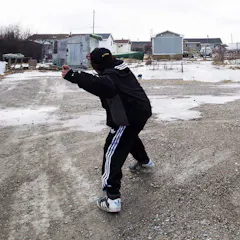
The MMIWG report didn’t address the poverty that has had such a devastating effect on First Nations. Encouraging active participation by the Indigenous in the Canadian economy is a win-win for everyone.
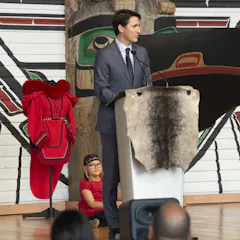
Political scientists concern themselves with ideas of democracy. Now that Canada’s PM has accepted the finding of genocide, this changes how and what political scientists need to discuss.

The final MMIWG report says that genocide does not refer only to the deliberate murder of some or all members of a particular social group. It also refers to the destruction of a group as a social unit.
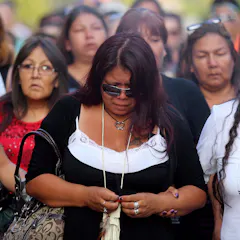
The tireless grassroots efforts of Indigenous activists unearth colonialism’s hidden secrets and the stories of the land and people to bring the murdered and missing women and girls home.
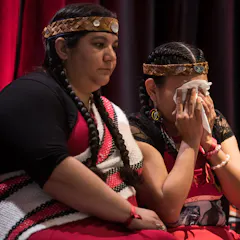
The attempt to grapple with genocide by the MMIWG commission is about more than simply applying international law to the facts. It’s also about decolonizing the international law of genocide itself.
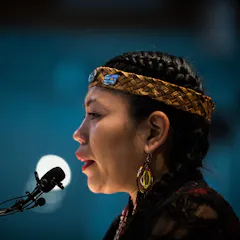
Understanding genocide as a process can help people grapple with the ongoing threat faced by Indigenous people in Canada, as named in the report into missing and murdered Indigenous women and girls.
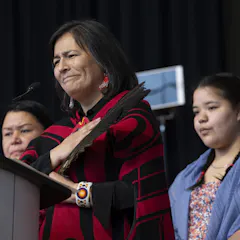
The United States could learn from Canada’s national attention being put on the epidemic of missing and murdered Indigenous women and girls.
Top contributors
-

Professor of Political Science, University of Guelph
-
Assistant Professor, Global Development Studies, Queen's University, Ontario
-
Adjunct Assistant Professor, Media and Technology Studies, and Director of the Feminist Collaboratory and Data Visualization Centre, University of Alberta
-
Associate Professor and Director of the First Nations House of Learning, University of British Columbia
-
Assistant Professor, Sociology Department, University of Lethbridge
-
Associate Professor, Family Relations and Human Development, University of Guelph
-
Associate professor, Department of Media and Communication, Erasmus University Rotterdam
-
Community partner, Co-ordinator of Music for the Spirit & Indigenous Visual Arts
-
Post-doctoral Fellow, Interim co-Director of ALiGN Media Lab, Carleton University
-
Canada Research Professor, School of Journalism and Communication, Carleton University
-
Professor, Sociology & Criminology, University of Manitoba
-
Acting Dean and Associate Professor, Law, University of Windsor
-
Associate Professor of Criminal Justice, University of North Dakota
-
PhD Candidate, Political Science, Queen's University, Ontario
-
Director American Indian Education, Elk River District