
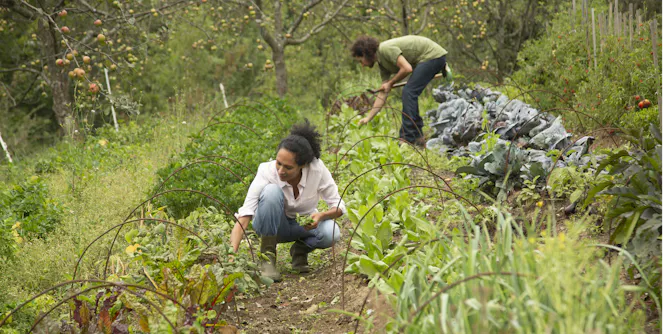
Permaculture – a mashup of ‘permanent’ and ‘culture’ – is a way of doing agriculture that’s inspired by the resilience and biodiversity of healthy natural ecosystems.
Articles on Mitigation
Displaying 21 - 38 of 38 articles

A report found the amount of funding needed to adapt to climate change exceeds what has so far been delivered by 80%.
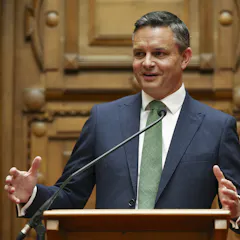
New Zealand has announced a more ambitious pledge to cut emissions, but the commitment relies on buying credits from offshore. There is no system for doing this yet, or for ensuring genuine cuts.
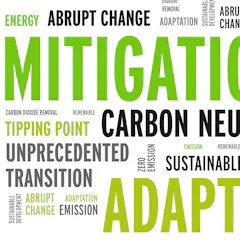
The language around climate change can feel overwhelming. A psychology and public policy expert breaks it down in plain English.
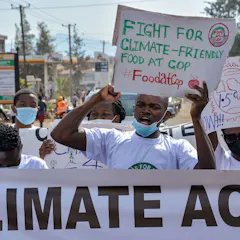
Five aspects need attention if African governments are to be able to mitigate, adapt to and manage climate change in the coming critical decade.

Being able to identify communities that are susceptible to the pandemic ahead of time would allow officials to target public health interventions to slow the spread of the infection and avoid deaths.
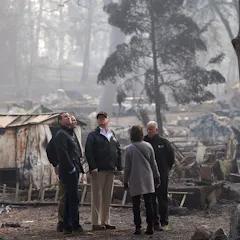
Forest management is not a cure-all for wildfires, although it can help reduce the chances of massive burns. Making this happen will require broad collaborative efforts and more money.

Risk has to do with uncertainty; people struggle to conceptualise and manage that which they’re unsure about. This is true in the higher education sector, too.

Talk of adapting to climate change is less polarizing to conservatives than the idea of slashing emissions.

In response to disasters like Superstorm Sandy, engineers are developing new building codes and tools to calculate the value of upgrades. National policy should encourage builders to use these tools.
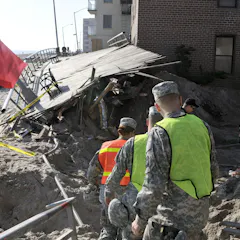
As Atlantic hurricane season opens on June 1, eastern U.S. cities can prepare by updating laws, codes and ordinances that hamper rebuilding after storms.
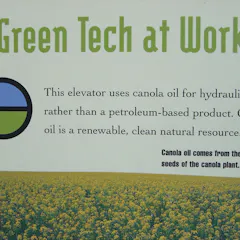
Without a functional international climate policy, and a set of Australian policies that look set to be repealed, it might seem that business offers the greatest hope for mitigating climate change. Business…
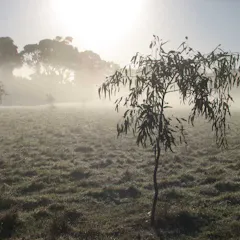
Australia’s agriculture and forestry - land-based abatement - can make a valuable contribution to lowering Australia’s greenhouse emissions. The scale of contribution has been widely discussed. But the…
Researchers have discovered a new bushfire phenomenon called “fire channelling” that occurs only on steep slopes facing away…

The latest emissions data from the International Energy Agency suggest that our current methods for dealing with climate change have not worked. This means we will have to adapt to climate change, for…

The world has been fiddling while the forests burn, or are otherwise lost. One proposal to keep what’s left intact is REDD – essentially, paying countries to conserve their forest carbon stocks. REDD (Reducing…

Energy efficiency is globally seen as the biggest and best option for cheaply reducing greenhouse gas emissions and dealing with rising power bills. But in Australia it still struggles for recognition…
There’s been a boom in sustainable products and packaging from keep cups to green bags - but how important is sustainable design in reducing our global footprint? Sustainable design can play a critical…
Top contributors
-

Senior Lecturer Sustainable Design, Lancaster University
-
Professor of Forest and Natural Resource Policy, Colorado State University
-
Emeritus Professor Department of Mechanical Engineering, Monash University
-
Master of University House and Professor of Forestry, Australian National University
-
Manager Centre for Applied Risk Management (UARM) and Associate Professor Risk Management, North-West University
-
Professor Emeritus of Organizational Behavior, University of Virginia
-
Senior Industry Fellow, Environment and Planning, RMIT University
-
Assistant Professor of Law, Georgia State University
-
Assistant Professor of Commerce, University of Virginia
-
Researcher in Environmental Engineering & Technology Policy, Massachusetts Institute of Technology (MIT)
-
Adjunct Associate Professor, Monash University
-
Sr. Associate Vice President for Research and Research Professor, University of Oregon
-
Professor of Organisational Studies, University of Sydney
-
Researcher in Climate and Inequality, University of the Witwatersrand
-
Mission Lead Towards Net Zero, CSIRO