
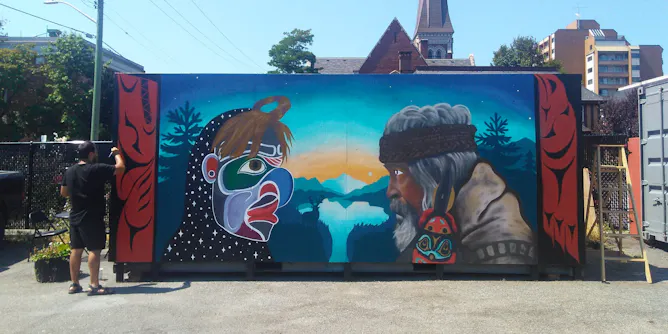
The Aboriginal Coalition to End Homelessness opened British Columbia’s first culturally supportive housing on Vancouver island — a model that can be replicated across Canada.
Articles on Métis
Displaying 21 - 40 of 62 articles

The DIALOG network forms a bridge between scientific and Indigenous knowledge. It renews the relationship between the university and the Indigenous world, which has for too long been one-sided.
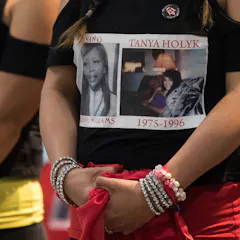
The government needs to implement its proposed action plan. The families of the missing and murdered put their trust in a federal inquiry process, but have yet to receive that justice.

Incorporating lessons from Ryerson University’s renaming process could help Canadian institutions address colonization.
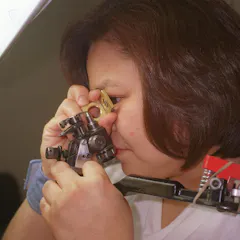
While marketing has made diamond rings a symbol of heteronormative happy endings, women from the Northwest Territories tell a different story about their experiences with the diamond mines.

This National Indigenous Languages Day, let’s celebrate the community-led initiatives that focus on building capacity and sustainability for future generations.
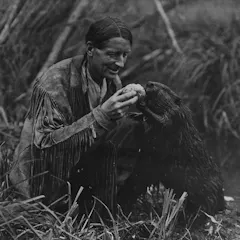
Those quick to call-out are often not clamouring for Indigenous nations’ jurisdiction over citizenship, nor are they demanding “pretendians” be held accountable to Indigenous nations.

In this episode, two Indigenous scientists running collaborative labs to address our climate crisis offer some ideas for environmental justice, including a redefinition of pollution.
Colonialism is manifested by the way pollution impacts the lives of Indigenous peoples in Canada. Two Indigenous environmental scientists discuss how they’ve overcome obstacles in their research.

Indigenous people who vote are reminding Canada of the nation-to-nation relationships that continue to exist and to bring change from within the very structure that has been used to erase them.
As people recognize the value in weaving together knowledge systems and move towards reconciliation, Indigenous Peoples are being increasingly approached.
Was participating in ceremony despite pandemic restrictions an act of Indigenous resistance and resurgence and did it reflect reassertion of nationhood and self-determination?
Transcript for Don’t Call Me Resilient Podcast EP 8: Stolen identities: What does it mean to be Indigenous?
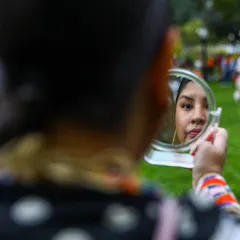
In recent years, some prominent people have been called out for falsely claiming Indigenous identity. Why would someone falsely claim an identity? And what does it mean to be Indigenous?
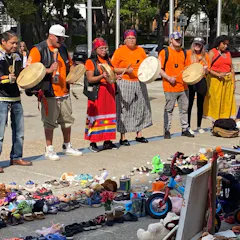
Here’s what the education system needs to do to help teachers address, repair and heal education towards and beyond reconciliation.

This federal election, think about which parties are proposing to give power to Indigenous Peoples and their governments.
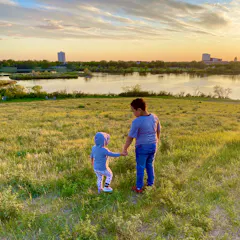
There is an urgent need to combat historically fuelled vaccine hesitancy within Indigenous communities. The best way to do this is through evidence-based knowledge and community-led work.

Indigenous people and communities are not monolithic. How they react to and deal with tragedy will be different. Acknowledging that will help us all heal.

It may be possible to expand people’s circle of moral concern and, in turn, promote reconciliation through connecting people to nature.

Variations on the myth of “good intentions” are invoked as a tool against the truth that the legacy of the IRS tells. Here’s why that needs to stop.
Top contributors
-

Professor of Geography and Environmental Science, Memorial University of Newfoundland
-
Professor, Technoscience studies + History, University of Toronto
-
Assistant Professor in Aboriginal and Indigenous Law, Dalhousie University
-
Associate Professor, Indigenous Studies Department & Department of Health, Aging and Society, McMaster University
-
Executive Co-Director, UNU Hub on Empowering Communities to Adapt to Environmental Change, United Nations University; University of Calgary
-
Assistant Professor, Faculty of Native Studies and Department of Political Science , University of Alberta
-
Associate Professor & Canada Research Chair, Indigenous Peoples' Health and Well-being, Dalhousie University
-
Senior Lecturer in International Law, The University of Western Australia
-
Assistant Professor, Global Development Studies, Queen's University, Ontario
-
Associate Professor, Department of Indigenous Studies, Simon Fraser University
-
Indigenous community partner, Coordinator of Indigenous Education at Thunder Bay Catholic District School Board
-
PhD Candidate in Community and Regional Planning, University of British Columbia
-
Professeure titulaire, INRS, Institut national de la recherche scientifique (INRS)
-
Assistant Professor/Associate Director, Waakebiness-Bryce Institute for Indigenous Health, University of Toronto
-
Adjunct professor, Theological Studies, Concordia University