
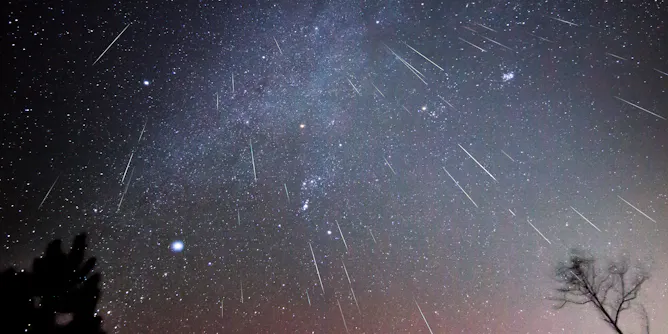
Every day about 50 tons of rocks from space fall on Earth. An examination of these meteorites has inspired a new theory about how exactly these rocks formed.
Articles on Meteorites
Displaying 61 - 80 of 93 articles
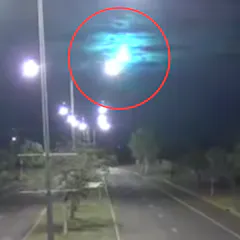
Security cameras captured two separate fireballs over Australia this week. So what’s responsible these bright flashes?
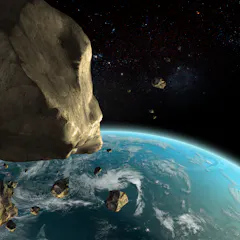
The source of water on Earth, the Moon and planets in our solar system is hotly debated. Some in the planetary science community argued that it came from asteroids and comets. Now they have proof.
If you’ve never heard of a form of wave called a ‘seiche’ – which can occur in swimming pools during earthquakes – this is your chance to catch up.
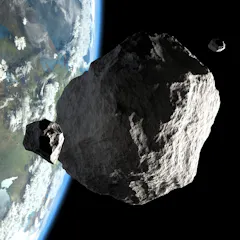
We’re finding more near-Earth objects all the time, and the challenge is to identify those that could potentially hit us. So how come we missed one that caused a huge blast in December?
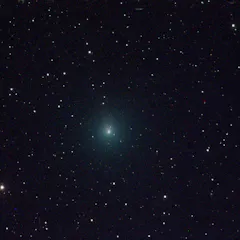
The comet 46P/Wirtanen is just 1.2km in size but it should be visible in the night sky this Saturday as it makes a close approach to Earth this year. And don’t forget the Geminids meteor shower.
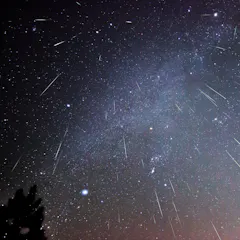
Expect a spectacular display of 120 or more meteors per hour – some of them brightly coloured.
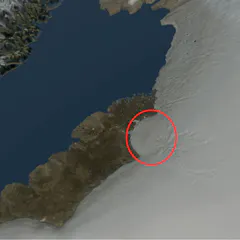
Meteorite impacts have fundamentally shaped the history of our planet.

A meteorite hitting Earth at many kilometres per second puts ‘ground zero’ target rocks under immense pressure. A shock wave faster than the speed of sound can result – and new materials created.
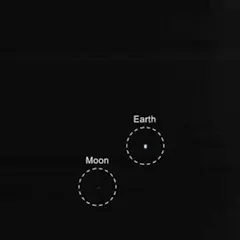
Space mining has the potential to provide a greater supply of resources either for being exploited locally for construction or being sent back to earth.
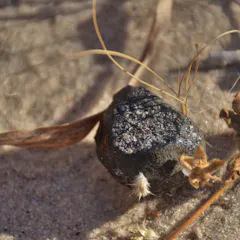
Each meteorite is a piece of the puzzle to understanding our solar system.
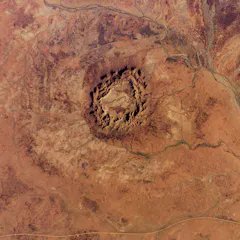
Large asteroids have hit Australia over many millions of years and the evidence is in the landscape, if you know where to look.
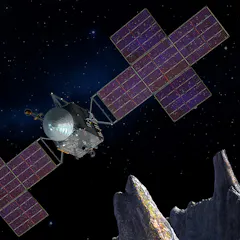
A new trajectory means the mission to uncover core facts about the asteroid belt will happen sooner than planned.
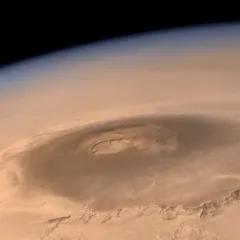
They erupted for billions of years and make Earth’s volcanoes look like molehills. Here’s what we know and what we don’t know about them.
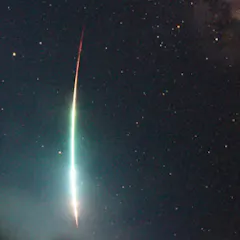
Ten new remote cameras will soon be scouring the British night skies for meteorites.

The pioneers of Australian scientific research, education and communication have been recognised in the 2016 Australian Museum Eureka Prizes.
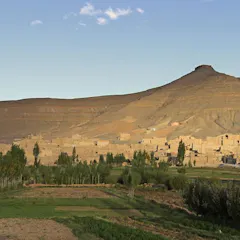
High in the mountains of Morocco, scientists have discovered something remarkable and rare: a spot that was struck by two meteorites, possibly millions of years apart.
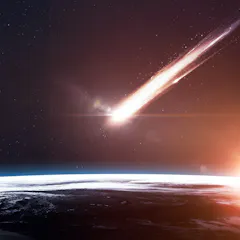
The discovery of the second oldest known asteroid impact site in the world can give us tantalising hints of the Earth’s early crust.
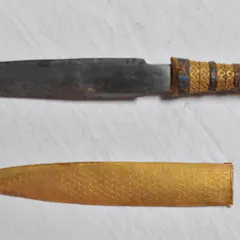
Research has confirmed a knife found in the ancient Egyptian pharaoh’s tomb was made with metal from the heavens.
Hunting for meteorites in the vast Pilbara is hard work, but even a tiny speck can tell us a great deal about the sky billions of years ago.
Top contributors
-

Professor (Astrophysics), University of Southern Queensland
-
Professor of Planetary and Space Sciences, The Open University
-
Geologist, Monash University
-
Senior Curator (Astronomy), Museums Victoria Research Institute; The University of Melbourne
-
Professor of Structural Geology and Metamorphic Petrology, University of the Witwatersrand
-
Adjunct professor, UNSW
-
Professor of Geochronology, Curtin University
-
Senior Lecturer, School of Earth and Planetary Sciences, Curtin University
-
Post Doctoral Researcher in Achondrite Meteorites, The Open University
-
Professor, School of the Environment, The University of Queensland
-
Postdoctoral Fellow in Planetary Sciences, NASA
-
Senior lecturer, University of KwaZulu-Natal
-
Lecturer in Planetary Science, The Open University
-
Associate Professor in Astronomy, Monash University
-
PhD Candidate in Astronomy, University of Southern Queensland