

People who work in emergency services, such as firefighters, are more likely than others to develop symptoms of anxiety, depression and post-traumatic stress.
Articles on Mental health apps
Displaying all articles

Mental health chatbots promise therapy at your fingertips, but can AI ease anxiety and depression, or are we confusing conversation with care?

AI-powered mental health chatbots have the advantage of being easily accessible. However, users may overestimate their therapeutic benefits and underestimate their limitations.
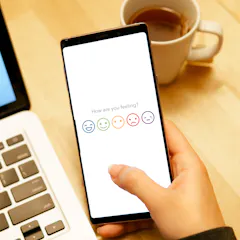
Have mental health apps lived up to their promise to offer tailored support in a challenging public health context? The answer is mixed.
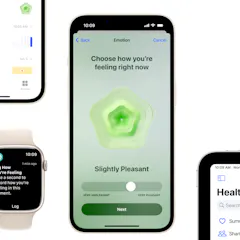
The iPhone already has an accelerometer, gyroscope, light meter, microphone, camera and GPS. Why does Apple now want you to tell it how you’re feeling?

New features on Apple iOS 17 aim to give users insights into their mental health, but they may also shape how people see themselves.

Claims regarding on these apps’ effectiveness are often based on less than robust findings.

Despite a reported 6,500% global increase in doctors recommending mental health apps to patients, research suggests they can never substitute for traditional person-to-person care.

Individuals who experience suicidal thoughts can show signs of this in the language they use. We analysed more than 100 suicide notes to find these language patterns.

The four million Australians who suffer from mental illness have a shorter life expectancy.

Can today’s crisis in mental health be seen as the result of neoliberalism, the 2007/08 financial crisis and the austerity policies that followed?
While some respectable organisations have lists of recommended apps, very few of these apps are supported by experimental evidence.
Top contributors
-

Senior Lecturer in Law, University of Kent
-
Professor, Wellbeing Science, The University of Melbourne
-
Doctor of Clinical Psychology Candidate, Monash University
-
PhD Student, The University of Melbourne
-
Associate Professor, La Trobe Law School, La Trobe University
-
Associate Professor, School of Psychological Sciences, The University of Melbourne
-
Professor of Clinical Psychology and Rehabilitation at the Institute of Psychiatry, Psychology & Neuroscience, King's College London
-
PhD Student, Philosophy Department, Western University
-
Professor of Law (consumer protections and credit law), The University of Melbourne
-
Health Policy Lead, Mitchell Institute, Victoria University
-
Principal Research Scientist, Australian eHealth Research Centre, CSIRO
-
Lecturer, Monash University
-
Master of Science Student, Health Sciences, Simon Fraser University
-
Senior Lecturer, Computing and Information Systems, The University of Melbourne
-
Associate Professor of Psychology, The University of Melbourne