
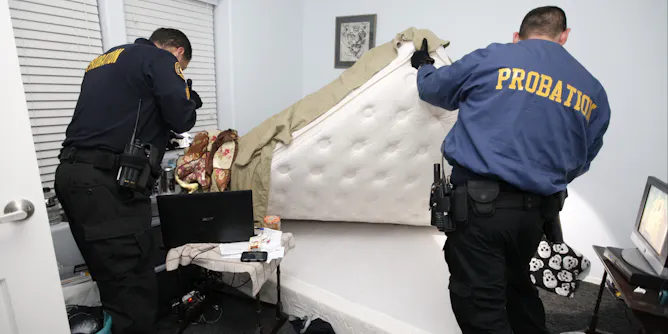
Programs that allow individuals to be supervised in the community instead of in prison are growing in a way that is not sustainable and is contributing to mass incarceration rather than relieving it.
Articles on Mass incarceration
Displaying 41 - 58 of 58 articles

These partnerships between investors, governments and nonprofits are a new way to pay for programs and services that help people in need and address intractable problems like mass incarceration.

Just as with so many other criminal justice policies, pretrial detention disproportionately affects African-American men and women, destabilizing black families in the process.

Digitized state records help to tell the stories of African-American prisoners in the 19th and 20th century.

After a fire killed 66 inmates at a Venezuelan jail in March, news stories portrayed the country’s prisons as lawless. The real backstory of this deadly riot is more complex — and maybe a bit scarier.
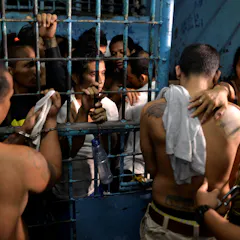
Just seven countries worldwide regularly execute people for drug crimes, most of them authoritarian regimes. Nothing suggests that this brutal policy actually curbs drug use.
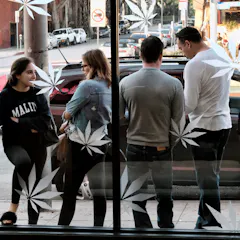
The attorney general’s memo portended an end to a hands-off approach to this enforcement conundrum. It could backfire.

Mass incarceration harms the health of prisoners, their families and the people who work in detention centers.

A study of 100,000 convicted felons shows why rethinking parole may be the key to reversing mass incarceration.

As hard-line Pentecostalism spreads across Brazil, some drug traffickers in gang-controlled areas of Rio de Janeiro are using religion as an excuse to attack nonbelievers.
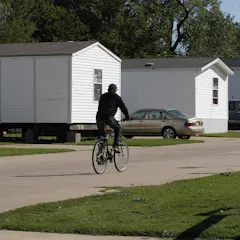
Beginning in the 1990s, all 50 US states and Washington, DC created public sex offender registries. Do they do more to help or hurt?
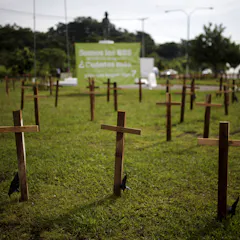
Latin America’s murder rate is the highest in the world, accounting for one in every four homicides on the planet.

Tupac’s sensitivity, intelligence and creativity confronted the hostile forces that antagonized black youth across the country in the 1970s and 1980s.

Jeff Sessions wants prosecutors to ‘charge and pursue the most serious, readily provable offense.’ That’s a step back to our failed experiment in mass incarceration.
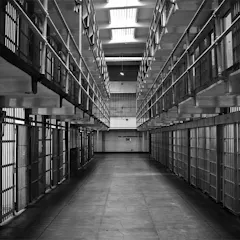
The White House is pushing for more private prisons. But do the industry’s promised benefits hold up to scrutiny?
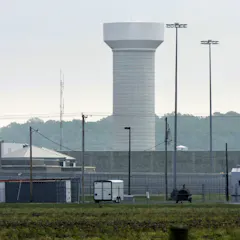
The number of prisons in the US swelled between 1970 and 2000, from 511 to nearly 1,663. Here’s the story of why one town in Arkansas welcomed a correction facility.

In Brazilian prisons, overcrowding, corruption and gang infiltration are a combustive combination. But it all started with bad drug policies.
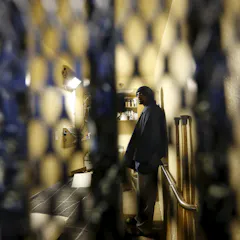
New research from Vanderbilt University looks at the effects of mass incarceration on a little studied population: formerly imprisoned African-American men.
Top contributors
-

Associate Professor of Criminal Justice, University of Baltimore
-
Associate Professor of Latin American Studies, Sociology and Criminology, University of Florida
-
Research Specialist and PhD Candidate in Urban and Social Policy, The New School
-
Associate Professor, Boston University
-
Assistant Professor of Justice Studies and Sociology, Norwich University
-
Assistant Professor of Political Science, University of Pittsburgh
-
Assistant Dean of Graduate Programs, Kroc School of Peace Studies, University of San Diego
-
Associate Professor of Law, Rutgers University - Newark
-
Richard von Weizsäcker Fellow na Bosch Academy e Co-fundador, Instituto Igarapé; Princeton University
-
Professor of Psychiatry and Medical Ethics, Baylor College of Medicine, Harvard University
-
Assistant Professor of Sociology, University at Albany, State University of New York
-
Coordinator, Center for Studies on Public Security and Citizenship (CESeC), Universidade Candido Mendes (UCAM)
-
Professor, University of California, Merced
-
Professor and Shapiro Chair of Public Policy and Public Administration, Trachtenberg School, George Washington University
-
Associate Professor at the Implementation Science & Practice Advances Research Center, UMass Chan Medical School