

Possessing heroin, cocaine, meth and other drugs for personal use is no longer a criminal offense in Oregon. The idea is to get people with problem drug use help, not punishment.
Articles on Mass incarceration
Displaying 21 - 40 of 58 articles

Reform-minded prosecutors across the US notched victories against traditional law-and-order candidates by running on progressive platforms to reduce mass incarceration and tackle police misconduct.

Violence in the criminal-justice system isn’t limited to police. It’s time to pay more attention to violent deaths within state prisons.

More than 40,000 restrictions, most imposed by states, leave rights, benefits and opportunities out of reach for Americans with past convictions.
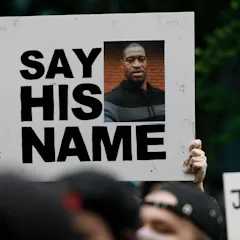
Half a century after the federal government voided Jim Crow laws, the criminal justice system still discriminates against African Americans.

In the 1790s, penal reformers rebuilt America’s squalid jails as airy, hygienic places meant to keep residents – and by extension society – healthy. Now they’re hotbeds of COVID-19. What went wrong?
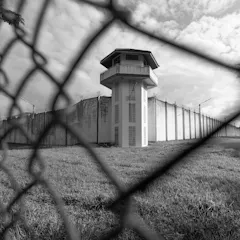
This year’s oversight report into the penitentiary system shows that long-standing problems have become entrenched in Canada’s federal prisons.

More and more district attorney candidates are running on reversing the government’s traditional approach to crime and punishment. And they’re winning.
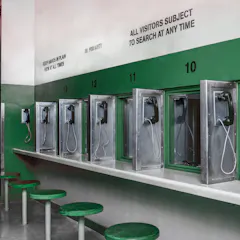
Putting more people in prison is not the answer to reducing crime. New fair and bias free assessment tools may help.

Several presidential hopefuls have offered proposals to close the racial wealth gap, from baby bonds to reparations. A simulation suggests policies short of direct aid to blacks won’t do the trick.

Muslims make up 9% of France’s population and half of all its prisoners – many convicted on drug charges. But social justice isn’t part of the country’s growing debate on legalization.
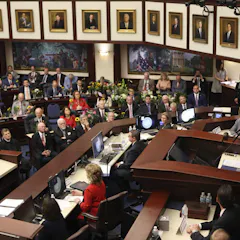
This state law is leaving up to a million people unable to participate in elections who might have gotten relief through an amendment voters approved. Critics call it a modern-day poll tax.

A study of over 700,000 state and local drug arrests shows that two out of three cases involve a small amount of illegal drugs.

Scudder’s approach was grounded in trust and mutual respect. There would be no guards, no weapons, no walls and no uniforms.

The first truth commission to research lynchings has been established in Maryland. It has the potential to educate the public about and support racial reconciliation. But it also faces obstacles.
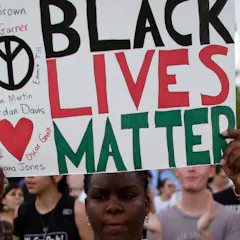
Half a century after the federal government voided Jim Crow laws, the criminal justice system still discriminates against African Americans.
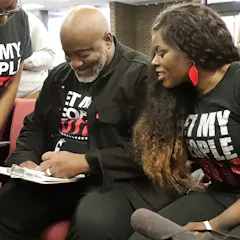
Legislation requiring that all criminal debt associated with a citizen’s conviction be repaid would leave thousands of people unable to cast ballots.
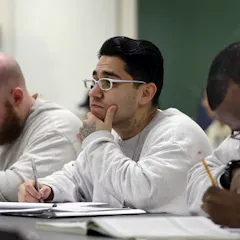
Through stories of redemption, a professor who oversees a Maryland prison education program says the time has come to restore federal financial aid for America’s incarcerated.
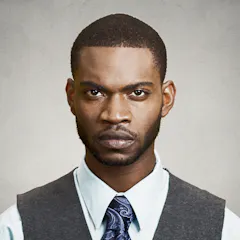
Negative statistics about black students may be prevalent, but they are often out of context, misleading or just plain wrong, a professor of counseling psychology argues.
A historian reminds us that protests in prisons are often followed by retaliation.
Top contributors
-

Associate Professor of Criminal Justice, University of Baltimore
-
Associate Professor of Latin American Studies, Sociology and Criminology, University of Florida
-
Research Specialist and PhD Candidate in Urban and Social Policy, The New School
-
Associate Professor, Boston University
-
Assistant Professor of Justice Studies and Sociology, Norwich University
-
Assistant Professor of Political Science, University of Pittsburgh
-
Assistant Dean of Graduate Programs, Kroc School of Peace Studies, University of San Diego
-
Associate Professor of Law, Rutgers University - Newark
-
Richard von Weizsäcker Fellow na Bosch Academy e Co-fundador, Instituto Igarapé; Princeton University
-
Professor of Psychiatry and Medical Ethics, Baylor College of Medicine, Harvard University
-
Assistant Professor of Sociology, University at Albany, State University of New York
-
Coordinator, Center for Studies on Public Security and Citizenship (CESeC), Universidade Candido Mendes (UCAM)
-
Professor, University of California, Merced
-
Professor and Shapiro Chair of Public Policy and Public Administration, Trachtenberg School, George Washington University
-
Associate Professor at the Implementation Science & Practice Advances Research Center, UMass Chan Medical School