
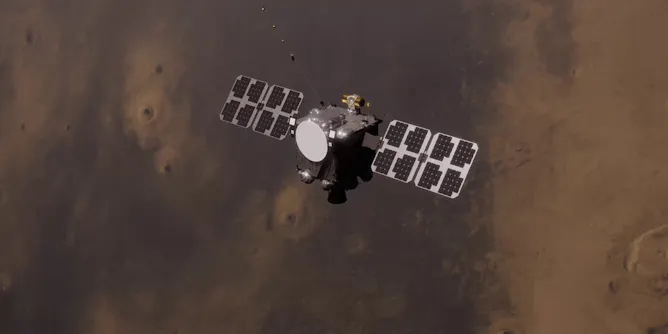
The twin spacecraft Blue and Gold could open a new era in space exploration and planetary science, powered by commercial partnerships and innovations.
Articles on Mars
Displaying 21 - 40 of 348 articles
Spaceflight rewires the human body. Muscles shrink, bones thin and fluids shift towards the brain – but these changes may help improve life on Earth.

A planetary scientist who has participated in analog missions describes their value for planning space exploration – and learning about extreme environments on Earth.
Earth is the only home humans have ever known. But that might not be the case for much longer.
Microbial life might survive today underground, in caves or under ice sheets.

Biosphere 2 isn’t just the site of a famous human experiment. Today, scientists there work to understand how life emerges in barren environments.
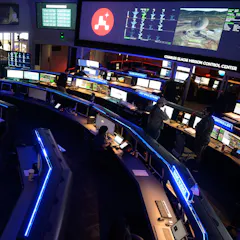
A planetary scientist walks through the sensors and systems that went into the recent detection of potential biosignatures.
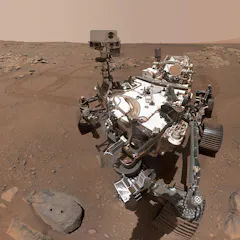
Unique, spotted rocks in Mars’ Jezero Crater could indicate that the planet once hosted life.
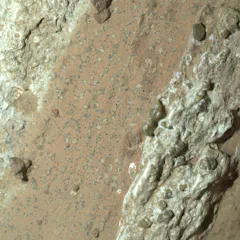
The rock is peppered with spots that could have been formed by microbes four billion years ago.
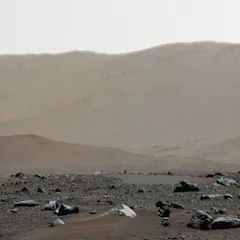
The Viking missions paved the way for future Mars missions and helped researchers understand the red planet’s climate and geology.

It turns out that Mars has a similar interior structure to Earth.

Growing a baby in space sounds like science fiction. Here’s why it might stay that way.

Understanding the similarities and differences of the deserts on Earth and Mars will help space travelers survive future missions to the red planet.
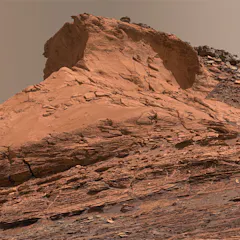
Mars isn’t a bright, fire-engine red, but the iron oxide in its rocks makes it appear redder than other planets, especially from afar.
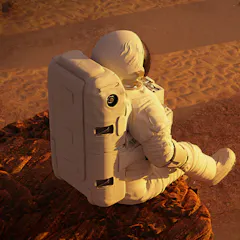
From confinement to food, lessons learned behind bars could be key to surviving on the red planet.
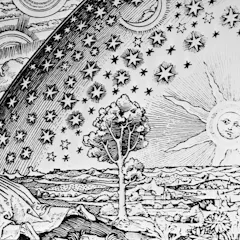
In the 19th century, astronomers could see Mars through telescopes, but not clearly. Some used their imaginations to fill in what the blurry images couldn’t convey.
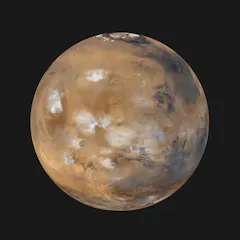
There is growing evidence for the existence of life on other planets.
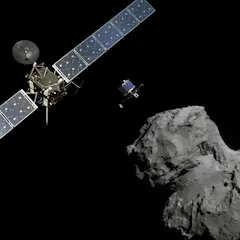
The space agency faces major competition from rising space powers such as China and India.
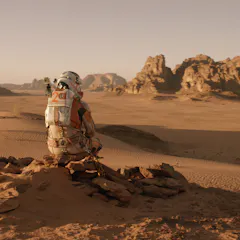
NASA hasn’t landed humans on Mars yet. But thanks to robotic missions, scientists now know more about the planet’s surface than they did when the movie was released.

Lithium carbon dioxide batteries could be a gamechanger for everything from renewable-energy storage to colonising Mars.
Top contributors
-

Postdoctoral research associate, University of Oxford
-
Professor of Planetary and Space Sciences, The Open University
-
Professor of Planetary Geosciences, The Open University
-
Professor of Physics, Deputy Director (Solar System) at the Mullard Space Science Laboratory, UCL
-
Senior Lecturer in Physics, Nottingham Trent University
-
Senior Instrument Scientist, Australian Nuclear Science and Technology Organisation
-
Senior Curator (Astronomy), Museums Victoria Research Institute; The University of Melbourne
-
University Distinguished Professor of Astronomy, University of Arizona
-
Scientist, Max Planck Institute for Solar System Research
-
Professor of Strategy and Security Studies, Air University
-
Professor of Planetary Science, University of Leicester
-
Professor in Earth Sciences, Nanyang Technological University, Singapore, and Emeritus Professor of Mineral Physics, University of Cambridge
-
Kevin Orrman-Rossiter is a Friend of The Conversation.
Sterrenkenner, History & Philosophy of Science, The University of Melbourne
-
Earth Sciences Postdoctoral Scientist and Adjunct Associate, Dartmouth College
-
ARC Future Fellow, School of Earth and Planetary Sciences, Curtin University