
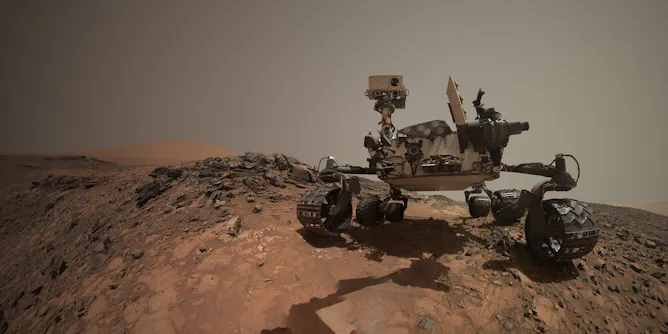
Recent high-profile disappointments make it tempting to this our efforts to explore Mars are cursed. But landing anywhere in space is hard – not least on the Red Planet.
Articles on Mars
Displaying 261 - 280 of 348 articles
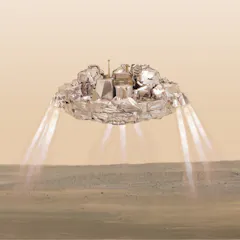
ESA’s second mission to Mars has become prey to the curse of the Red Planet – although the orbiter is heading for success, the Schiaparelli lander seems to have disappeared.
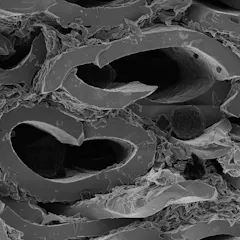
Rocks on Mars are surprisingly similar to those on Earth.
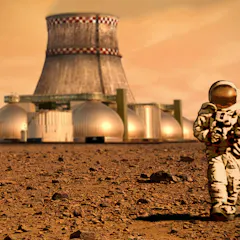
Musk’s know-how cannot be dismissed but there are significant challenges standing between him and his dream of colonising Mars.
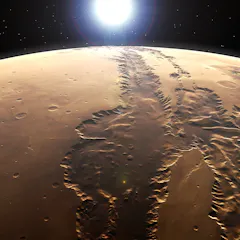
A true plan for the colonisation of Mars should include both the social and technical feasibility of living there. Unfortunately, Musk left that bit out.
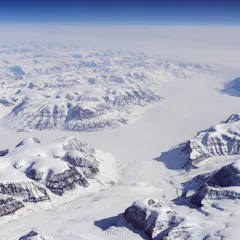
Scientists say they’ve found fossils showing life existed on Earth 3.7 billion years ago. How good is the evidence? And what does it mean for the search for life elsewhere in our solar system?
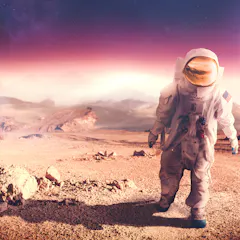
Speaking with: Juan Francisco Salazar about colonising Antarctica and Mars
The Conversation, CC BY-NC-SA19.5 MB (download)
Dallas Rogers speaks with Prof Juan Francisco Salazar about studying the research community in Antarctica to learn about what colonising Mars and other planets might look like.
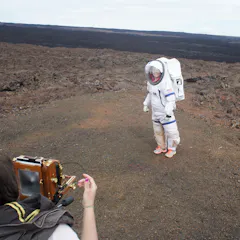
What’s the best way to find out how people will cope with the journey to Mars and life on another planet? Lock a test crew up for a year in a simulation right here on Earth.
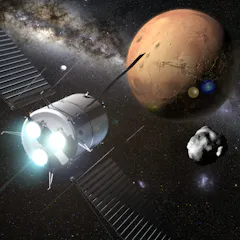
Getting to Mars with current rocket technology will use massive amounts of fuel to move very small cargoes. There is a more fuel-efficient way.
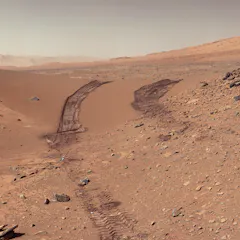
Scientists are excited about sending a microphone to Mars for the very first time.
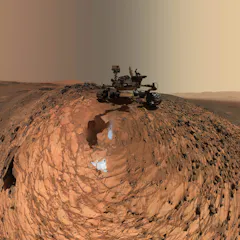
A philosopher argues that now is the time to figure it out, before we make the inevitable discovery of extraterrestrial life.
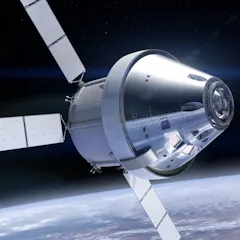
From inflatable space stations to trips to asteroids and maybe even Mars, the next decade of human spaceflight will include many exciting firsts.
There is a curious paradox at the heart of the food group’s new nutrition scheme: the less consumers trust Big Food, the less attention they will pay to the labels.
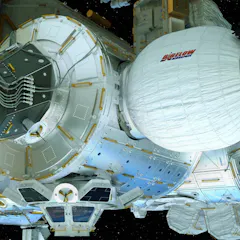
Inflatable space habitats, like the one installed on the International Space Station this week, could see wide application in space and planetary exploration.
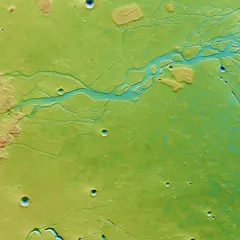
Working out how Mars’s carbon dioxide was turned into rock could help with carbon capture efforts on our own planet.
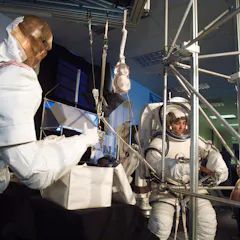
People and machines need to be able to interact and communicate effectively. Right now we – and they – can’t. But without that, we risk missing the potential benefits of collaboration.
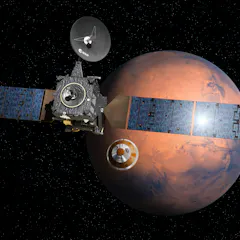
If we do find life on Mars, it will be difficult to prove that we didn’t bring it there from Earth. An insider talks us through what’s at stake.
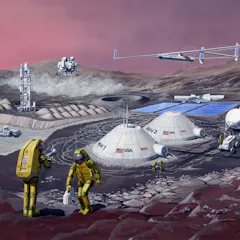
We already have much of the technology we’d need to start a colony on another planet.

Missions including ExoMars, Juno and Rosetta could make some major discoveries in 2016.

From a flyby of Pluto to the search for extrasolar planets and gravitational waves, 2015 was a monumental year for space news.
Top contributors
-

Postdoctoral research associate, University of Oxford
-
Professor of Planetary and Space Sciences, The Open University
-
Professor of Planetary Geosciences, The Open University
-
Professor of Physics, Deputy Director (Solar System) at the Mullard Space Science Laboratory, UCL
-
Senior Lecturer in Physics, Nottingham Trent University
-
Senior Instrument Scientist, Australian Nuclear Science and Technology Organisation
-
Senior Curator (Astronomy), Museums Victoria Research Institute; The University of Melbourne
-
University Distinguished Professor of Astronomy, University of Arizona
-
Scientist, Max Planck Institute for Solar System Research
-
Professor of Strategy and Security Studies, Air University
-
Professor of Planetary Science, University of Leicester
-
Professor in Earth Sciences, Nanyang Technological University, Singapore, and Emeritus Professor of Mineral Physics, University of Cambridge
-
Kevin Orrman-Rossiter is a Friend of The Conversation.
Sterrenkenner, History & Philosophy of Science, The University of Melbourne
-
Earth Sciences Postdoctoral Scientist and Adjunct Associate, Dartmouth College
-
ARC Future Fellow, School of Earth and Planetary Sciences, Curtin University