
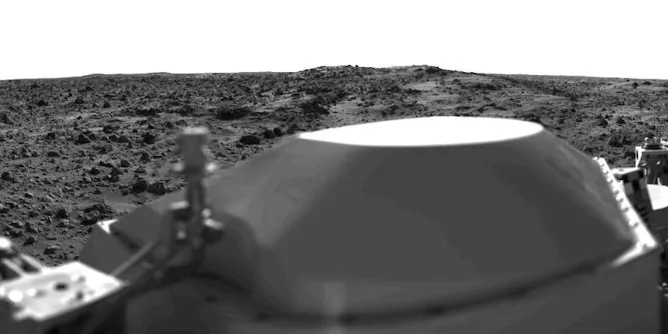
Planetary protection protocols try to make sure we don’t seed places like Mars with life from our planet. An astrobiologist argues they’re misguided – especially with human astronauts on the horizon.
Articles on Mars
Displaying 241 - 260 of 348 articles
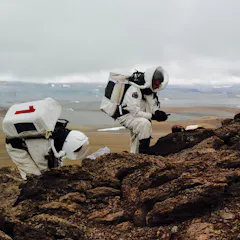
Will humans ever live on Mars? Whoever it is to get there first will benefit from the experiences of those who stayed in simulated Martian missions here on Earth.
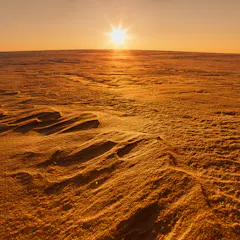
Space exploration is exciting - but there are barriers for humans hoping to visit and even stay on planets. Buried ice on Mars could be a water source for interplanetary visits of the future.
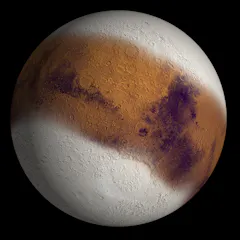
Scientists used to believe that snowfall could never reach the ground.

The volcanoes would be a great place t to search for fossilised microbes.
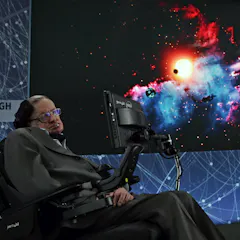
We need a positive vision for humanity, not tech-driven life on Mars.
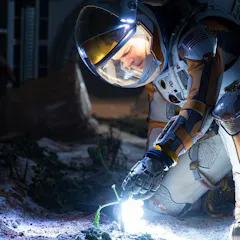
We will one day grow food in conditions as extreme as Mars. Developing the controlled environments required will help not only space explorers but also support our own survival here on Earth.
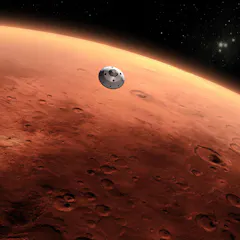
Musk dismisses one of the main technical challenges of being on the Martian surface: the temperature.
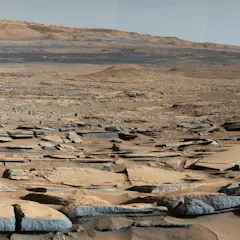
We could learn a lot from any mission to send people to Mars, such as whether there’s life elsewhere in the universe or even the technology for new household appliances.

One of the best ways to find out the challenges of living on Mars is to simulate living on another planet here on Earth. So what’s it like to spend several months living the Martian life?
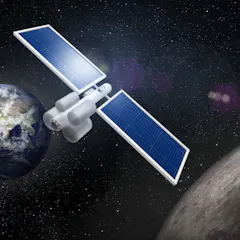
To get us to Mars and beyond, a team of students from around the world has a plan involving lunar rovers mining ice and a space station between the Earth and the moon.
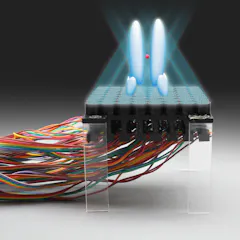
From acoustic holograms to tractor beams.
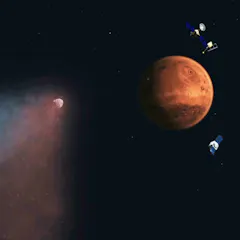
JAXA has announced a mission to visit the two moons of Mars and return a rock sample to Earth.
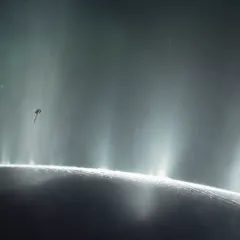
Earth is a relatively dry planet compared to some of the other ocean worlds in our Solar system. Life needs water so what about life on these other places?

A study is being done in Ethiopia’s Danakil Depression - a natural environment like no other on earth - to understand how microbes thrive in extreme environments such as those found on Mars.
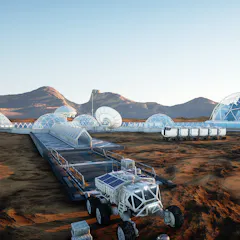
Interplanetary colonisation was once the stuff of science fiction but now there are plans to colonise Mars. How have film-makers and writers dealt with our rapacious Anthropocene age?

The Moon belongs to all of us. Let’s share in its beauty from afar without splashing around $100 million on a showy space trip.

We need Mars-level thinking to solve our energy and climate problems here on Earth.
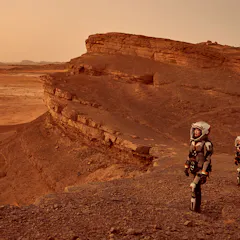
The recently broadcast TV mini-series, “Mars”, combines fiction and nonfiction in a way that places them in balance. This kind of combination is likely to feature in more television series and films.
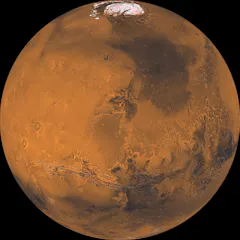
Funding has been agreed for ESA’s ExoMars rover, giving new hope that Europe could find life on Mars.
Top contributors
-

Postdoctoral research associate, University of Oxford
-
Professor of Planetary and Space Sciences, The Open University
-
Professor of Planetary Geosciences, The Open University
-
Professor of Physics, Deputy Director (Solar System) at the Mullard Space Science Laboratory, UCL
-
Senior Lecturer in Physics, Nottingham Trent University
-
Senior Instrument Scientist, Australian Nuclear Science and Technology Organisation
-
Senior Curator (Astronomy), Museums Victoria Research Institute; The University of Melbourne
-
University Distinguished Professor of Astronomy, University of Arizona
-
Scientist, Max Planck Institute for Solar System Research
-
Professor of Strategy and Security Studies, Air University
-
Professor of Planetary Science, University of Leicester
-
Professor in Earth Sciences, Nanyang Technological University, Singapore, and Emeritus Professor of Mineral Physics, University of Cambridge
-
Kevin Orrman-Rossiter is a Friend of The Conversation.
Sterrenkenner, History & Philosophy of Science, The University of Melbourne
-
Earth Sciences Postdoctoral Scientist and Adjunct Associate, Dartmouth College
-
ARC Future Fellow, School of Earth and Planetary Sciences, Curtin University