
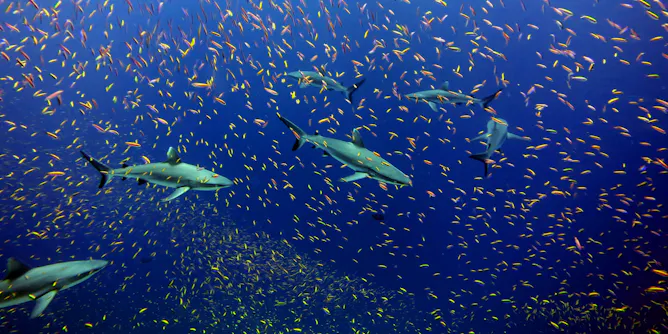
Sharks are much more severely threatened by humans than vice versa. A marine biologist explains how people can help protect sharks and why some strategies are more effective than others.
Articles on Marine biology
Displaying 61 - 80 of 198 articles
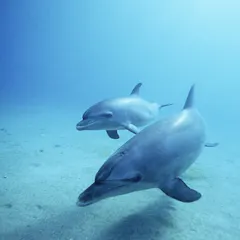
Using urine and signature whistles from other dolphins, a team of scientists has shown that dolphins use signature whistles like names and hold mental representations of other dolphins in their minds.
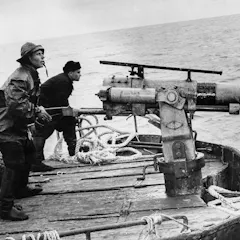
The Soviet Union was a latecomer to industrial whaling, but it slaughtered whales by the thousands once it started and radically under-reported its take to international monitors.

Rising concern about possible environmental damage from the active ingredients in sunscreens could have ripple effects on public health if it causes people to use less of them.
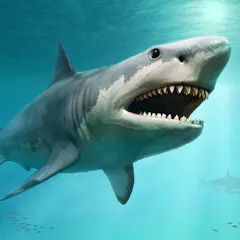
A terrifying sight in ancient waters, the megalodon shark was once the most feared creature in the sea.
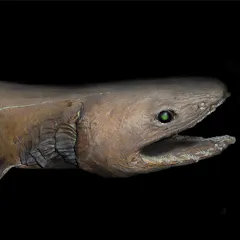
Frilled sharks haven’t changed for about 80 million years! And while they may look a bit like snakes from a distance, they are actually much more similar to other sharks close up.

The ocean is often considered a silent universe. But many recent studies highlight the importance of the soundscape for many marine species, both large and small.
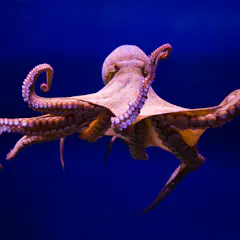
With nine brains, blue blood and a talent for camouflage, the octopus is one of the most fascinating creatures in the sea.
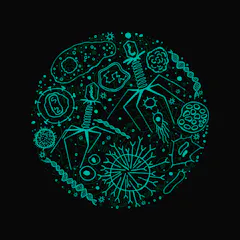
Viruses do more than just cause disease – they also influence ecosystems and the processes that shape the planet. Tracing their evolution could help researchers better understand how viruses work.
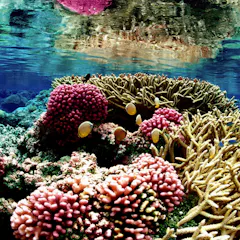
The ocean is naturally noisy. Here’s what all the buzz is about.
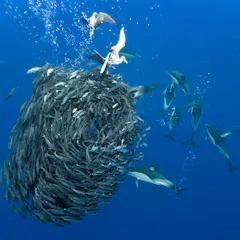
There are some important issues to consider to best help marine species such as Atlantic puffins, bottlenose dolphins and orcas.
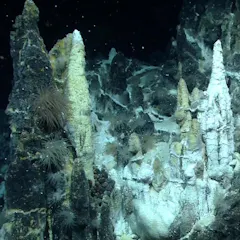
Among the dozens of endangered species, is a spiky snail named after The Clash lead singer, Joe Strummer.
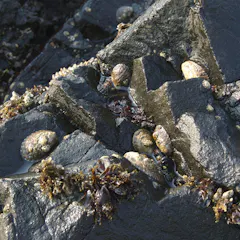
The Blob, a long-lasting mass of warm water, sat off the Pacific coast of North America for years, bringing new species to formerly cold waters. What allows some to survive while others fade away?
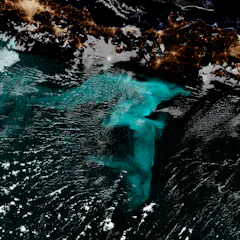
When conditions are just right in some parts of the Indian Ocean, a type of bacteria will multiply and start to glow. Satellites are helping scientists study these milky seas for the first time.
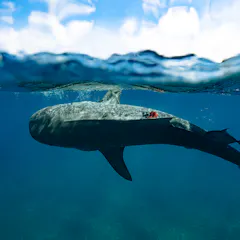
Warm-blooded fish can swim 1.6 times faster than their cold-blooded relatives.
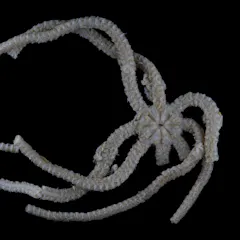
Ophiojura, discovered living on a seamount deep in the Pacific Ocean, is the last known survivor of a unique group of animals that diverged from its closest relatives way back in the Jurassic period.
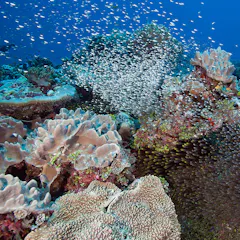
Scientists watched in real time as rising ocean heat transformed the sprawling reef. It was a harbinger for ecosystems everywhere as the planet warms.

If octopuses simply started evolving a smarter brain, what stops them from ruling over humans? Why has this not happened already? An expert explains what these cephalopods might be capable of.
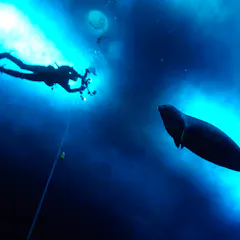
Microphones on the seafloor recorded life under the Antarctic ice for two years – inadvertently catching seal trills and chirps that are above the range of human hearing. Could they be for navigation?
There are more viruses in the ocean than stars in the Milky Way – and they’re fundamental to Earth’s biodiversity.
Top contributors
-

Professor, Macquarie University
-
Senior Curator of Marine Invertebrates, Museums Victoria Research Institute
-
Executive Dean of the College of Arts, Sciences & Education and Professor of Biological Sciences, Florida International University
-
Associate Professor of Biology, Stephen F. Austin State University
-
Faculty Research Associate in Marine Biology, Arizona State University
-
Professor, Marine Biology, Adelaide University
-
Professor of Marine Botany, The University of Western Australia
-
Postdoctoral associate, University of Florida
-
Royal Society University Research Fellow, University of Sheffield
-
Research Marine Biologist, National Oceanic and Atmospheric Administration
-
Associate professor, University of Rhode Island
-
Founding Professor of the Minderoo-UWA Deep-Sea Research centre, The University of Western Australia
-
PhD Researcher in Marine Ecology, University of Exeter
-
Professor of Biology and Director, Kewalo Marine Laboratory, University of Hawaii
-
Professor in marine ecology, UNSW