
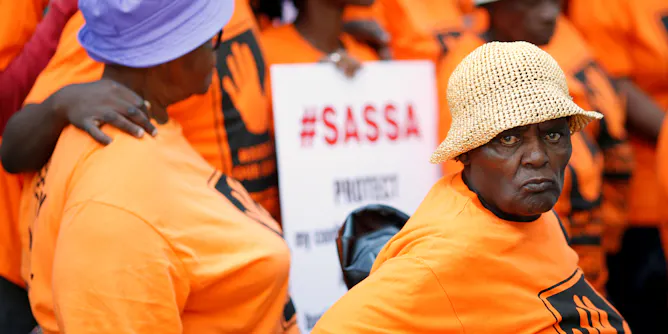
South Africa’s social grants, which benefit a third of the country’s population, are widely celebrated. But these grants fall far short of addressing the country’s malnutrition challenge.
Articles on Malnutrition
Displaying 101 - 120 of 125 articles
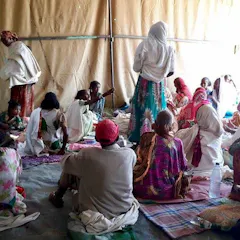
Eritreans are at risk of severe malnutrition – but aid agencies struggle to access those in need.
Running an effective mass immunisation campaign, vaccinating children in Nigeria against measles is a logistical nightmare.
There is no one-size-fits-all answer to global food insecurity except that the West needs to learn to consume, and waste, less.

Scurvy is a historical disease caused by severe and chronic deficiency of vitamin C. Its recent reemergence is a poor reflection of the nation’s diet.

This week, I had the pleasure of sitting with Jessica Renzella - an Australian PhD student with Oxford University and a budding global health shaper. She told me about a new social campaign she’s leading…
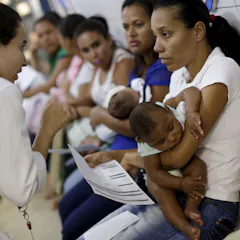
There are several lessons that the world can learn from Brazil about how to rapidly reduce child stunting in 10 years.

Micronutrient deficiencies are not well understood as an aspect of malnutrition. The problem is that such deficiencies increase a range of health risks.
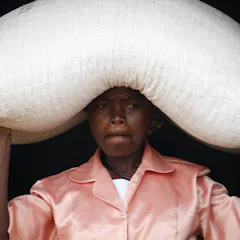
Many people in a large number of low and middle income countries now experience a ‘double burden’ of malnutrition.
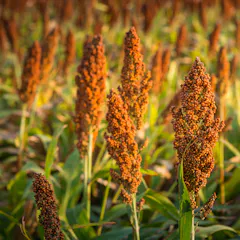
Pulses – or grain legumes – are indigenous foods that can play a massive role in tackling food security on the African continent.
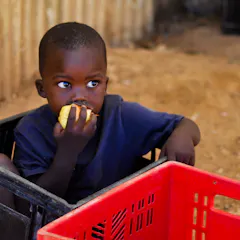
Inequalities in the nutritional status of poor and rich have been mitigated through various social protection policies, but children in South Africa remain at risk of malnutrition.

In many rural areas, poor people are suffering from malnutrition, which takes the form of stunting and obesity. To change this, their food environments must change.

Celebrity chef needs to persuade those in power to change our obesity-causing environment.

People living in rural parts of South Africa lack diversity in their eating because a starch based diet is perceived as cheaper and is very common.
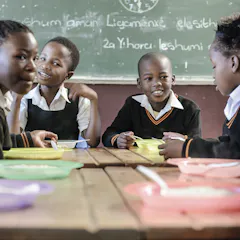
In-school nutrition programmes can reduce the chances of children suffering from childhood obesity.
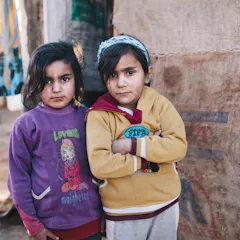
Adults who had a low birthweight or were undernourished as young children are more likely to experience high blood pressure and obesity.

Food insecurity is not only a cause of bad food choices, it is a result of the economics and geographies of the food system.

One in six children in Australia report going to bed hungry – these children are more likely to have mental health problems and be bullied regularly.
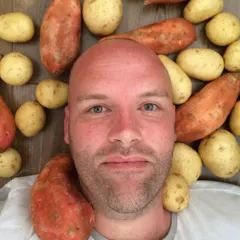
Andrew Taylor has vowed to eat just spuds for a year. What impact will it have on his health?
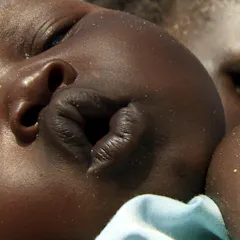
Over the last three years Kenya has seen marked improvements in its nutrition-related targets as a result of a national nutrition plan it has implemented.
Top contributors
-

Director DST-NRF Centre of Excellence in Food Security, University of the Western Cape
-
Professor in Food Security; Head of the Department of Agricultural Economics, Extension and Rural Development, University of Pretoria
-
Researcher, SAMRC/Centre for Health Economics and Decision Science- PRICELESS SA, University of the Witwatersrand
-
Senior Lecturer | Global Health, UNSW
-
Research Fellow, Institute of Development Studies
-
Professor, School of Health Sciences, University of Newcastle
-
Professor of Practice, Human Sciences Research Council
-
researcher, University of Cape Town
-
Professor of Social Development Studies, University of Johannesburg
-
Principle dietitian at the Nutrition Information Centre, Stellenbosch University
-
Post-doctoral fellow, University of British Columbia
-
Research Assistant Professor of Nutrition Science and Policy, Tufts University
-
Lecturer in Comparative Human Biology, University of Cambridge
-
DSTI/NRF Research Chair in Welfare and Social Development, University of Johannesburg
-
Associate Principal Research Fellow, Burnet Institute