
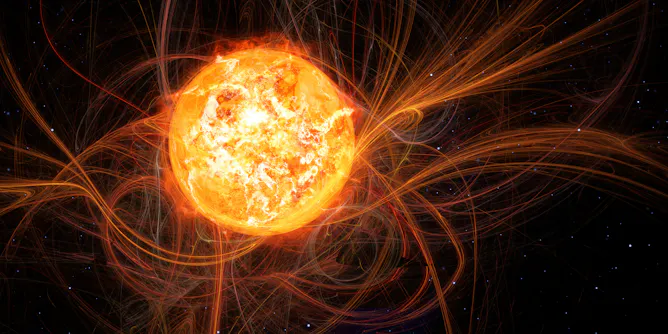
The temperature of the Sun’s surface is about 6,000°C. But higher above the surface, in the atmosphere, it suddenly shoots up to more than a million degrees!
Articles on Magnetic fields
Displaying 21 - 40 of 68 articles
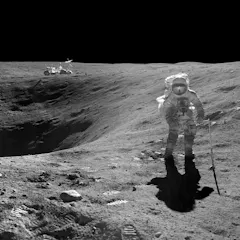
Without a magnetic field, the Moon’s surface is exposed to solar wind. These could have been depositing resources like water and potential rocket fuel on the Moon’s surface for billions of years.
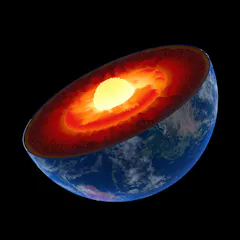
8,000 tonnes of molten iron solidifies in Earth’s inner core every second – but it’s not distributed equally.
Alfvén waves, first proposed 80 years ago, could explain why the sun’s atmosphere is so much hotter than its surface.

It has only been in the past century that weather prediction on Earth has advanced enough to work two weeks in advance. Predicting space weather, however, is only reliable an hour in advance.
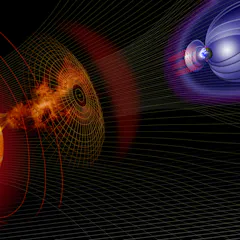
Researchers have found the first Australian evidence of this global event, during which people on Earth would have witnessed a multitude of spectacular auroras.

Some birds may effectively possess an in-built, global GPS system.

Shifting from fossil fuels to electricity is climate-friendly, but serious cooks don’t think much of electric stoves. Will induction cooking finally catch on as an alternative?

Geese honk loudly and point their bills toward the sky when they’re ready to start the migration. Here’s how they know it’s time, how they navigate and how they conserve energy on the grueling trip.

Earth’s magnetic field locks information into lava as it cools into rock. Millions of years later, scientists can decipher this magnetic data to build geologic timelines and maps.
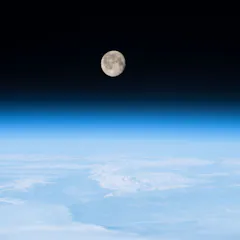
The Earth’s magnetic field was most likely weaker when life evolved on our planet than it is today.

The Earth’s magnetic field is a lot weaker than we would expect around the island of St Helena.

Changes in the Earth’s magnetic field pose a great risk to electronic infrastructure.

Recently, magnetic compasses at Greenwich pointed directly at true north for the first time in 360 years. This is currently happening in Western Australia too. But what does it mean?
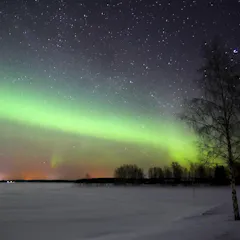
As the Earth’s magnetic north pole heads towards Siberia, concerns have been raised that the northern lights could move with it.

Even fridge magnets have magnetic fields approximately 200 times stronger than Earth’s.
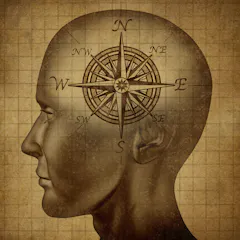
Your brain’s sensory talents go way beyond those traditional five senses. A team of geoscientists and neurobiologists explored how the human brain monitors and responds to magnetic fields.

Scientific inspiration struck a geologist after many walks through the woods in New York and New England. These ruins hold the secret of where the compass pointed north when they were built centuries ago.
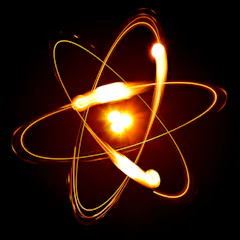
What shape is an electron? The answer, believe it or not, has implications for our understanding of the entire universe, and could reveal whether there are mysterious particles still to be discovered.
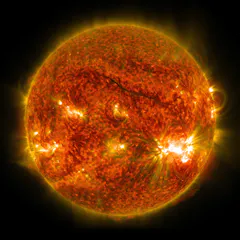
When dozens of US mines planted in waters off the Vietnam coast detonated almost simultaneously in 1972, all eyes turned to the Sun for an explanation.
Top contributors
-

Associate Professor in Theoretical Geophysics, University of Leeds
-
Associate Professor, RMIT University
-
Postdoctoral Scholar, Oregon State University
-
Professor of Animal Behaviour, Bangor University
-
Researcher in Physics and Astronomy, Dartmouth College
-
ARC Future Fellow, Physics, University of Newcastle
-
Professor of Geophysics, University of Rochester
-
Associate Professor of Geophysics, University of Leeds
-
RMIT University
-
Associate Professor of Geophysics, University of Leeds
-
Postdoctoral Associate in Earth and Environmental Sciences, University of Cape Town
-
Professor in Earth Sciences, Nanyang Technological University, Singapore, and Emeritus Professor of Mineral Physics, University of Cambridge
-
Professor of Marine Biology and Aquaculture, The University of Melbourne
-
Senior Lecturer (Astronomy), University of Southern Queensland
-
Pro Vice-Chancellor Flagship Initiatives, Swinburne University of Technology