
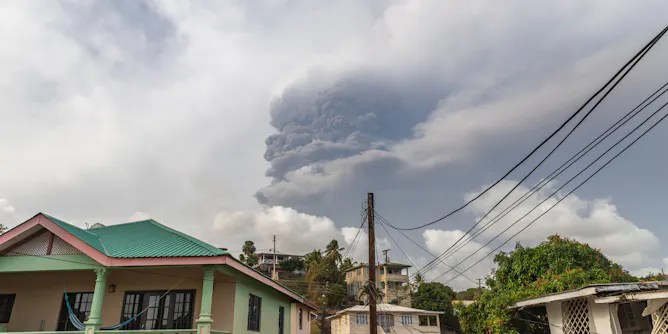
The eruption prompted the evacuation of about 20,000 people, with no casualties.
Articles on Magma
Displaying 21 - 36 of 36 articles
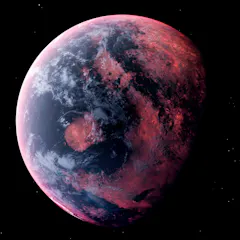
The rocks provide rare evidence of a time when Earth’s surface was a deep sea of incandescent magma.
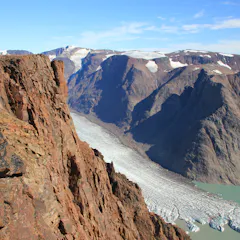
Exploration of ancient magma chambers in fossil volcanoes has the potential to provide new sources of metals that will facilitate environmentally friendly technologies.
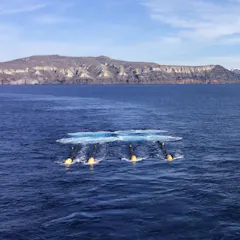
Geophysicists use sound waves to build a picture of the magma and rock beneath this active volcano, most of which is underwater. It’s like CT scanning the Earth.
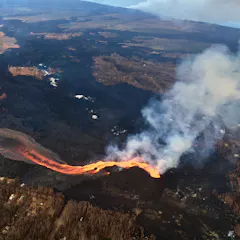
Scientists say they’ve found a new method to help predict when volcanoes will erupt, based on data crunched from an eruption last year in Hawaii.
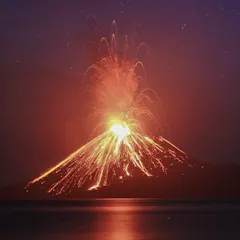
Compared to Earth, more “oomph” is required to bring magma to the surface of Mars, and this is probably why we haven’t seen any recent eruptions on the red planet.
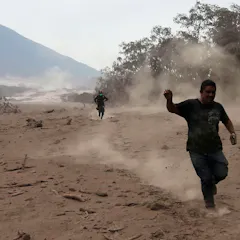
Important points about volcanoes: location matters, explosiveness can be predicted to an extent, and fast-moving flows of volcanic materials (known as pyroclastic flows) are deadly.

The remote Pilbara region of Western Australian formed many billions of years ago when the Earth was much hotter and the crust softer than it is today.
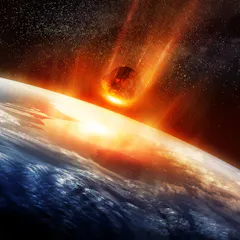
Research suggests a new threat to life on Earth from the meteorite’s crash: Via seismic waves, the impact triggered massive undersea eruptions, as big as any ever seen in our planet’s history.
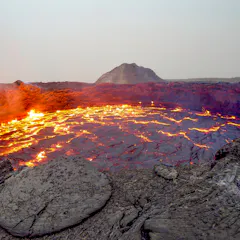
Satellite research in Ethiopia is opening up a new frontier in the hunt for geothermal power.
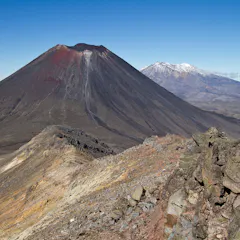
New research shows that satellite measurements of tiny movements of the Earth’s surface can tell scientists what is happening in the deeper layers of our planet.
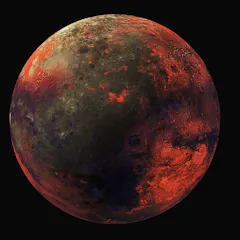
The planet is more similar to Earth than any other – except when it comes to supporting life.
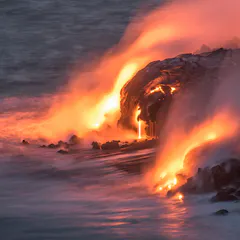
In Iceland, an audacious project to tap into magma deep below the surface may usher in a new era of geothermal power.
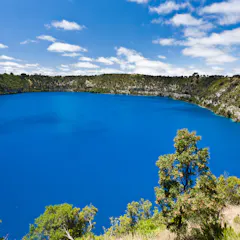
What can we expect Australia’s next volcanic eruption to be like? That depends where and when it happens, and it could be sooner than you think.
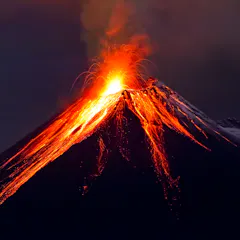
Scientists have found a way to narrow down the best signs that a specific volcano is about to blow.
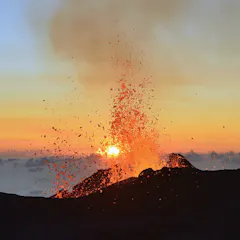
What happens beneath the surface before a volcano erupts? Can we predict when one will blow? And how can typhoons and melting glaciers contribute to big eruptions?
Top contributors
-

ARC Future Fellow and Associate Professor in Igneous Petrology/Volcanology, The University of Queensland
-
Research Fellow, University of St Andrews
-
Senior Curator of Geosciences, Museums Victoria Research Institute; Monash University
-
Postdoctoral Associate of Earth Sciences, University of Minnesota
-
Senior Lecturer in Earth Sciences and Environmental Sciences & the Center for Exoplanet Science, University of St Andrews
-
Assistant Professor of Earth Sciences, University of Oregon
-
Senior Scientific Officer, Earth Science, University of the West of England
-
Senior Instrument Scientist, Australian Nuclear Science and Technology Organisation
-
Emeritus Professor of Geophysics, Te Herenga Waka — Victoria University of Wellington
-
Associate Professor in Geophysics, Te Herenga Waka — Victoria University of Wellington
-
Professor of Earth Sciences, University of Oxford
-
-
Lecturer in Education, Charles Darwin University
-
Assistant Lecturer in Volcanology, Monash University
-
Reader in Earth Sciences, University of Bristol
