
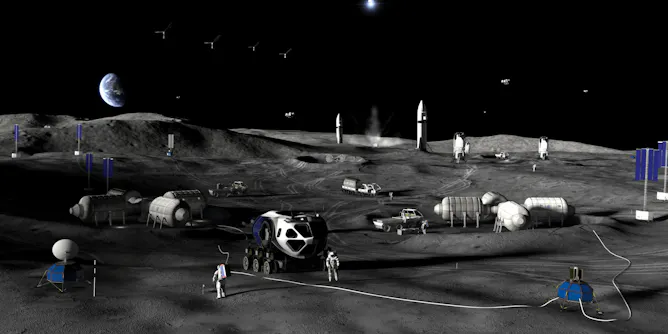
A lunar base could allow for research, economic activities and lunar mining. Such an operation has potential benefits, but lots of challenges await NASA.
Articles on Lunar base
Displaying all articles
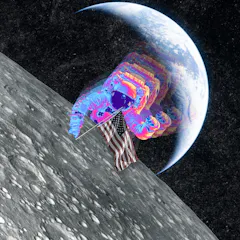
Lunar architecture isn’t just an engineering challenge. At its heart, it is about understanding human experience at the extremes.
It’s about more than just beating China. As a space lawyer puts it, a Moon base would come with strategic, economic and scientific advantages.
If you try to launch or land a spacecraft anywhere close to another object on the lunar surface, that object will get sandblasted with rocks, dust and sand.

The best spots on the Moon for lunar bases are the same spots where scientists want to build telescopes − can these two interests coexist?
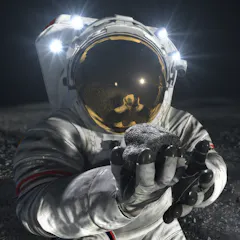
The next generation of spacesuit needs to do more than simply protect an astronaut from the vacuum of space.
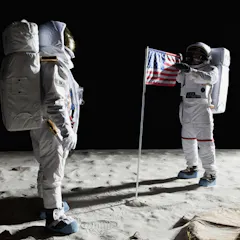
China has invested massively in its space capabilities in recent years and is now a major competitor with the US. But according to a space policy expert, the US still dominates space by most measures.
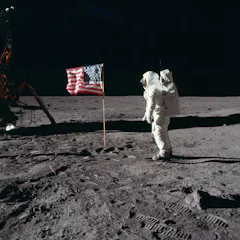
The era of lunar resource use is quickly approaching. But with legal and practical issues still looming, nations are starting to think about sustainable ways to mine and protect the Moon.

Across the solar system, asteroids and comets crash into moons and planets every day. The rocket collision will provide researchers with important data on how these collisions work.

With about 200 orbital launches scheduled and ambitious missions on everything from lunar bases to the search for life in the works, there’s a lot to watch in 2022. An astronomer explains the highlights.

A 10kg rover, due to land on the Moon by 2024, will be fitted with an advanced robotic arm design and manufactured in Australia.

In the coming decades, governments and private companies will set up permanent bases on the Moon and Mars. And at some point, the first galactic baby will be born.
Top contributors
-

Professor of Civil and Environmental Engineering and Earth Sciences, University of Notre Dame
-
Professor of Air and Space Law, University of Mississippi
-
University Distinguished Professor of Astronomy, University of Arizona
-
Senior Astrophysicist, Smithsonian Institution
-
Professor of Robotics, Head of Centre for Robotics Research, King's College London
-
Head, Lunar Architecture Research Group, Andy Thomas Centre for Space Resources, Adelaide University
-
PhD Candidate, Andy Thomas Centre for Space Resources, Adelaide University
-
PhD Candidate, Andy Thomas Centre for Space Resources, Adelaide University
-
Assistant Professor of Astrophysical and Planetary Sciences, University of Colorado Boulder
-
PhD Candidate, Andy Thomas Centre for Space Resources, Adelaide University
-
Assistant Professor of Space and International Relations, Johns Hopkins University
-
Senior lecturer, University of Technology Sydney