
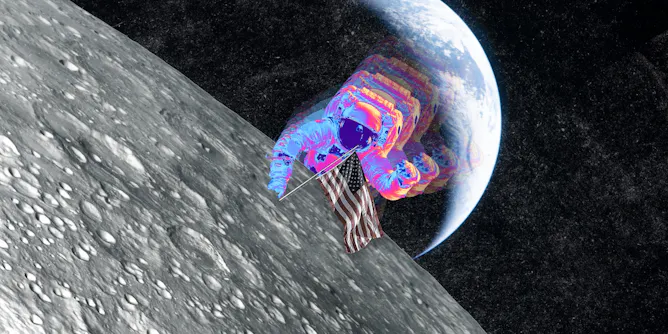
Lunar architecture isn’t just an engineering challenge. At its heart, it is about understanding human experience at the extremes.
Articles on Artemis Accords
Displaying 1 - 20 of 31 articles

Only by fostering a deeper sense of ‘space citizenship’ will everyone benefit from our journeys to the Moon – and beyond.
The US disregards international law on Earth. Is that what we want on the Moon?
Private companies are now major players in space. How can they be held accountable if they damage the property of others or trash the Moon?
The latest ‘space race’ between the US and China aims to get people back on the Moon. But the path to get there doesn’t have to be rife with conflict.

You have the US space program to thank for some of the technology in your phone and laptop.
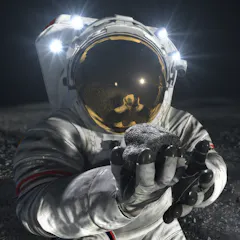
The next generation of spacesuit needs to do more than simply protect an astronaut from the vacuum of space.

Japan’s space agency is landing its first lunar probe this week. This makes the Moon an increasingly busy target for spacefaring nations – with conflicting political stances among them.
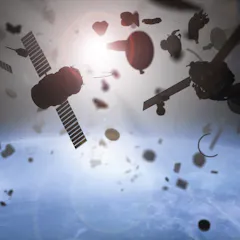
Treaties meant to ensure sustainability in space don’t currently regulate private companies, and not every country has signed on to an agreement for sustainable space exploration.

With commercial space tourism on the rise and NASA planning to return to the Moon, you might think the US space economy is booming – but the data paint a more complex picture.
While a return to the Moon will allow the U.S. to collaborate with other nations interested in space, this endeavor is also complicated by geopolitical tensions.

Côte d’Ivoire’s nanosatellite is the first step towards applications that monitor environmental harm and illegal activities and assist in planning for development.

As signatories, Nigeria and Rwanda are demonstrating their commitment to safe, sustainable use of outer space. This should have multiple benefits.
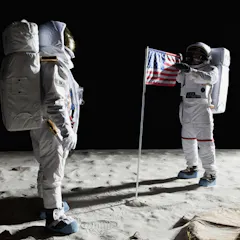
China has invested massively in its space capabilities in recent years and is now a major competitor with the US. But according to a space policy expert, the US still dominates space by most measures.

The Artemis II mission is scheduled for launch in late 2024 and is a critical step towards NASA’s goals of establishing a permanent human presence on and near the Moon.

A US-led coalition and China are both planning to establish bases on the Moon. How the two nations will navigate actions on the Moon and how other countries will be involved is still unclear.
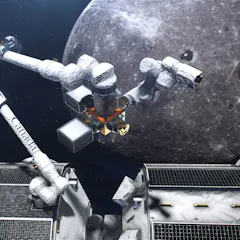
Canadian space technologies and innovations play a significant role in the Artemis missions, and our involvement reflects our growing role in this new era of lunar exploration.
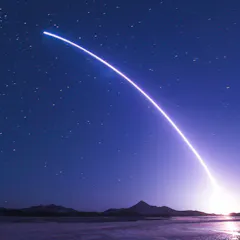
China has completed construction of the Tiangong space station, and science projects are now underway. The station is an important piece of China’s ambitious plans for space activity in coming years.
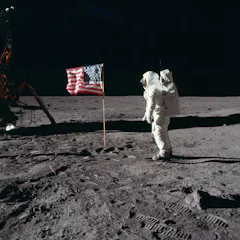
The era of lunar resource use is quickly approaching. But with legal and practical issues still looming, nations are starting to think about sustainable ways to mine and protect the Moon.

A comment by Bill Nelson, the NASA administrator, sparked a strong public response from the Chinese government. But due to legal and practical reasons, no country could take over the Moon anytime soon.
Top contributors
-

Assistant Professor of Space and International Relations, Johns Hopkins University
-
Postdoctoral Fellow, Faculty of Law & Justice, UNSW
-
Chief Executive Officer, Australasian Centre for Space Governance; Associate Expert, National Security College, Australian National University
-
Professor of Air and Space Law, University of Mississippi
-
Professor of Strategy and Security Studies, Air University
-
Professor of Astrophysics, Macquarie University
-
Law lecturer, University of Calabar
-
Associate Science Editor & Co-Host of The Conversation Weekly Podcast, The Conversation
-
Visiting Assistant Professor of Space Governance, Indiana University
-
Assistant Professor of International Affairs, Georgia Institute of Technology
-
Professor of Planetary Science and Exploration, The Open University
-
PhD Candidate at the University of Oklahoma, University of Oklahoma
-
Professor of Business Law and Ethics, Indiana University
-
Full Professor, Former Director, Institute of Air and Space Law, McGill University
-
Enseignant-chercheur, astrophysicien , Université Félix Houphouët-Boigny. Cocody, Côte-d'Ivoire