
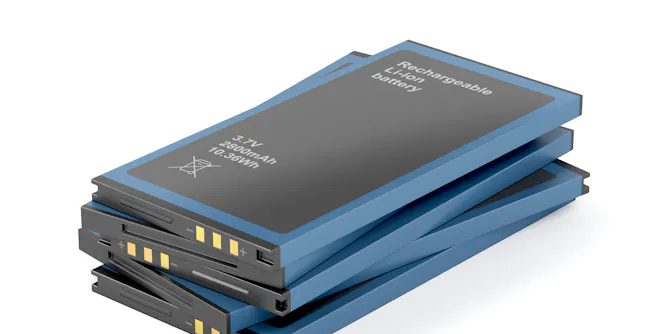
Nobel Prizes in science are usually given for revolutionary ideas that change our perception of the universe. But this year’s chemistry prize was awarded to inventors of a revolutionary device.
Articles on Lithium-ion batteries
Displaying 41 - 60 of 65 articles
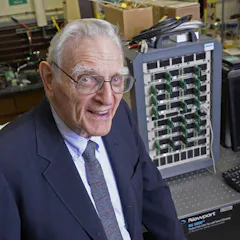
Stanley Whittingham, John Goodenough and Akira Yoshino created a safe, light, rechargeable battery that has revolutionised society and is probably powering the device you’re reading this on right now.
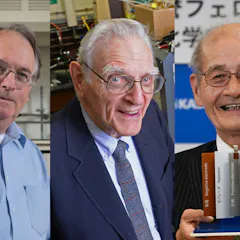
M. Stanley Whittingham, John B. Goodenough and Akira Yoshino made the batteries in our pockets possible.
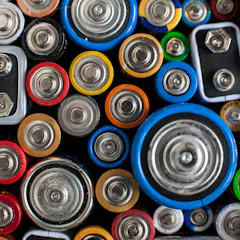
A battery’s power comes from a chemical reaction that happens inside the cell.
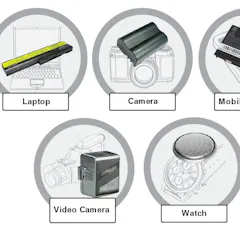
The 2019 Nobel Prize in Chemistry rewarded crucial advances in these small, powerful, easy to charge batteries.
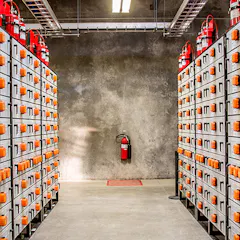
Energy storage could prove an inexpensive way for power companies to handle heat waves and other times when consumers use more electricity than usual.
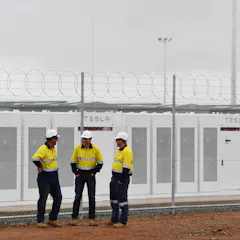
A year ago, the world’s largest lithium-ion battery began dispatching power to South Australia’s grid. It has been a remarkable success but there are some concerns that have so far escaped scrutiny
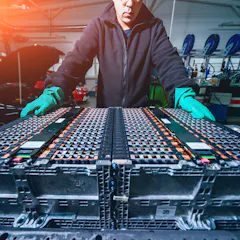
Is it too much to dream of batteries that are part of the structure of an item, helping to shape the form of a smartphone, car or building while also powering its functions?
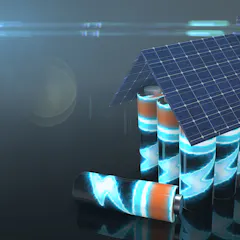
High quality Li-ion batteries could help Africa optimise renewable energy.

We take salt water for granted, and often overlook how important it is for our own lives and in sustaining a healthy planet.
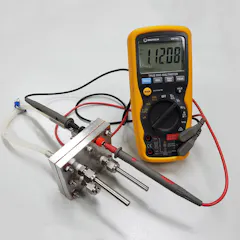
A new rechargeable ‘proton battery’ - made chiefly from carbon and water - promises to outperform conventional lithium-ion batteries, while also being more environmentally friendly.
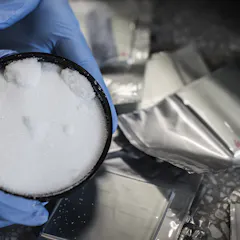
Demand for energy storage is increasing – both in Australia and around the world. But issues with the production of lithium-ion batteries mean the search is on for alternatives.
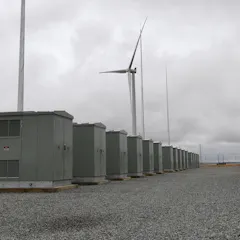
Last week in SA the “world’s largest” lithium ion battery was launched. Will its storage capacity and versatility be a game-changer for Australia’s energy market?
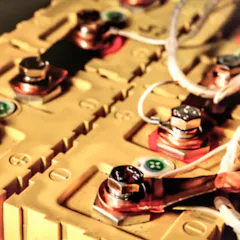
The UK is about to miss an opportunity if it tries to take on the giants of the lithium-ion battery industry.
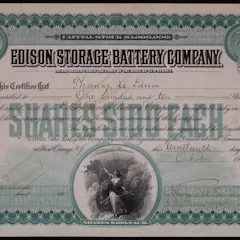
High energy, high power and endless life cycles: not all batteries are created equal.
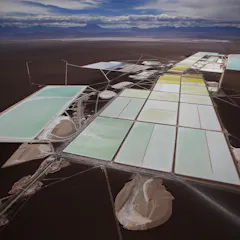
We need to think about the raw materials of batteries – where they come from and their environmental cost.
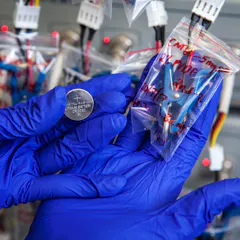
Emerging industries, from energy storage to electric cars, will need longer lasting batteries. Watching batteries in action will help us build them.

They used to be boring. Now they’re little arsonists.
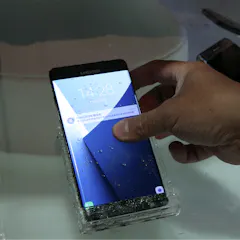
Hundreds of thousands of battery fires in Samsung Galaxy Note 7 handsets is a red hot opportunity to better understand what went wrong.
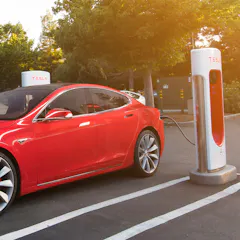
Alternative technologies are already leaving Tesla’s batteries in the slow lane.
Top contributors
-

Director of Energy Lancaster and Professor of Physical Chemistry, Lancaster University
-
Professor, The University of Queensland
-
Senior Lecturer in Operations and Supply Chain Management, Anglia Ruskin University
-
Postdoctoral Fellow in Physics and Astronomy, Clemson University
-
Professor of Geology, Ahmadu Bello University
-
Lecturer, Griffith University
-
Assistant Professor, Department of Chemical Engineering, McMaster University
-
Professor of Bio-innovation and Enterprise, Coventry University
-
Associate Professor of Environmental Engineering, North Carolina State University
-
Assistant Professor of Engineering, University of California, San Diego
-
Associate Professor in Operations & Information Management, Georgetown University
-
Honorary Visiting Senior Research Fellow, University of Bradford
-
Distinguished Professor in Electrical Renewable Energy, Swinburne University of Technology
-
Ph.D. Student in Materials Science and Engineering, University of Washington
-
Principal and Vice Chancellor, Heriot-Watt University