
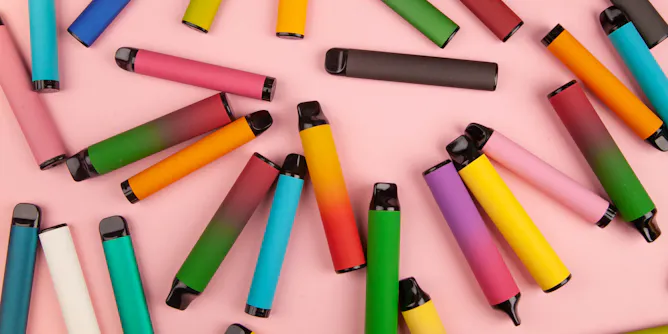
The vaping craze sweeping the globe is leaving a legacy of contaiminated e-waste in landfill while waste management authorities scramble to set up recycling schemes.
Articles on Lithium-ion batteries
Displaying 21 - 40 of 65 articles
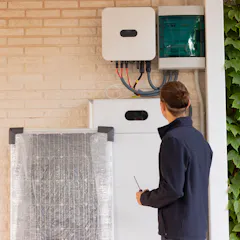
it’s hard to justify buying a battery right now on cost savings alone. If other reasons also matter to you, it’s easier to justify.

Air Canada and United Airlines both have orders for hybrid electric 30-seaters. An aerospace engineer explains where electrification, hydrogen and sustainable aviation fuels are headed.

China controls much of the global EV supply chain, but electric vehicles that use its parts and minerals won’t qualify for new US EV tax credits. Can America build its own supply chain?
Between reuse and recycling, what happens to the batteries of electric vehicles?

For the moment the find in Nigeria simply points to the potential for lithium resource. Full exploration will be necessary.

We have underestimated the energy potential of our ears: deformations in the ear canal could be used to power in-ear technologies.

One species of eel can discharge 860 volts of electricity – that’s 200-fold higher than the top voltage of a single lithium-ion battery.
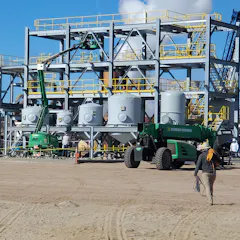
Lithium is essential for batteries that power electric vehicles and store energy from solar and wind farms. A new U.S. source could provide 10 times more lithium than the country uses today.

Heavy goods vehicles predominantly run on diesel. Here are three options for eliminating their emissions.
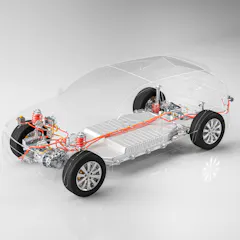
Some lithium-ion batteries can now propel a car 250 miles on a ten-minute charge.
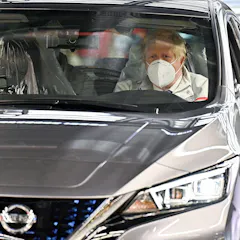
Supplies of batteries and semi-conductors can put the brakes on ambitious developments.
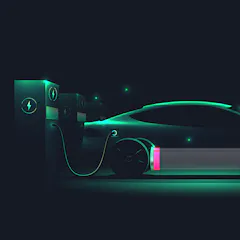
With an average shelf life of nine years, the coming tsunami of waste EV batteries needs action now.
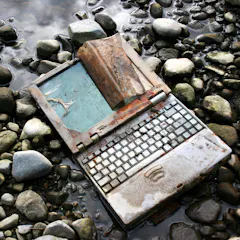
Technical advances are reducing the volume of e-waste generated in the US as lighter, more compact products enter the market. But those goods can be harder to reuse and recycle.

Batteries power much of modern life, from electric and hybrid cars to computers, medical devices and cellphones. But unless they’re made easier and cheaper to recycle, a battery waste crisis looms.

Electric vehicles can have a positive impact on the climate and air pollution levels, but governments should rethink how they electrify the transportation network.
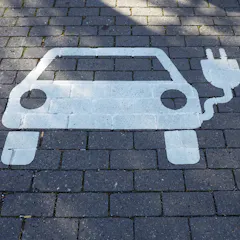
EVs will have lower sticker prices than gas vehicles when batteries are cheaper. Getting there comes down to knowing where to cut costs.
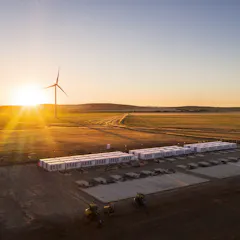
A new technology for rechargeable batteries overcomes many of the problems with the ones we use today.

Bolivia’s huge lithium reserves are isolated and hard to extract, and global uncertainty over electric vehicles is bad for business.
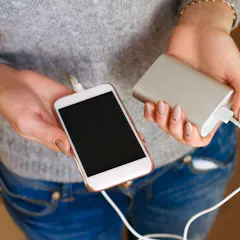
M. Stanley Whittingham was one of three scientists who won the 2019 Nobel Prize in Chemistry for their work developing lithium-ion batteries – used to power mobile phones, laptops and electric cars.
Top contributors
-

Director of Energy Lancaster and Professor of Physical Chemistry, Lancaster University
-
Professor, The University of Queensland
-
Senior Lecturer in Operations and Supply Chain Management, Anglia Ruskin University
-
Postdoctoral Fellow in Physics and Astronomy, Clemson University
-
Professor of Geology, Ahmadu Bello University
-
Lecturer, Griffith University
-
Assistant Professor, Department of Chemical Engineering, McMaster University
-
Professor of Bio-innovation and Enterprise, Coventry University
-
Associate Professor of Environmental Engineering, North Carolina State University
-
Assistant Professor of Engineering, University of California, San Diego
-
Associate Professor in Operations & Information Management, Georgetown University
-
Honorary Visiting Senior Research Fellow, University of Bradford
-
Distinguished Professor in Electrical Renewable Energy, Swinburne University of Technology
-
Ph.D. Student in Materials Science and Engineering, University of Washington
-
Principal and Vice Chancellor, Heriot-Watt University