

Some people like to use their sense of smell to tell if food has gone off. A food safety expert explains why that’s not a good idea.
Articles on Listeria
Displaying all articles

Food safety experts explain the risks of turning the fridge temperature up (or even turning the fridge off) to save energy.

Listeria causes serious illness and food recalls nearly every year.

‘When in doubt, throw it out’ – and more tips to make sure your festive feast won’t make you sick.

Food safety is in the news again, this tiime after reported deaths from listeria after eating smoked salmon. Here’s what we know so far and what you can do to cut your chance of getting sick.
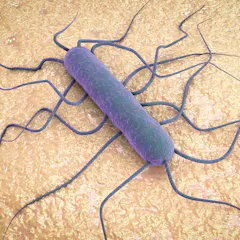
As a hospital outbreak kills nine in England, the future of food safety at least looks brighter.

Millions of people travel during the holidays, eager to spend time with loved ones. That travel, along with exposure to new bacteria, can make you more vulnerable to foodborne illnesses.

The “sniff test” doesn’t work every time, and other food safety tips.
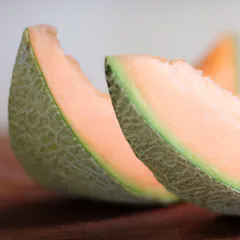
Two people have died after eating rockmelon contaminated with listeria. A total of ten cases have been confirmed in NSW, Queensland and Victoria between Jan 17 and Feb 9, and more are expected.

As the death count in South Africa’s listeriosis outbreak rises, Canadian researchers are isolating bacteria from the microbiome of exotic foods to try to develop a solution.

Reporting science involves talking about risk, but it must be done carefully. There are also certain words and images that should be avoided whenever possible.

We all want to keep our food in tip top condition but very few of us know how to use fridges properly.

We don’t trust bacteria and we don’t trust GM, so putting them together might be controversial. That’s exactly what we’re doing, though.

Soft cheeses made by Jindi were recently recalled in Victoria, after they were linked to the deaths of three adults, a miscarriage, and a score of other cases of “listeriosis”. The case is a reminder of…

2011 saw a couple of unusual outbreaks of food-borne disease, one from a previously unknown pathogen and the other from a well-known one in a food not usually associated with such outbreaks. The outbreaks…
Top contributors
-

Research Fellow, ZERO2FIVE Food Industry Centre, Cardiff Metropolitan University
-
Professor in Food Microbiology, Centre for Food Safety and Innovation, Tasmanian Institute of Agriculture, University of Tasmania
-
Assistant Professor of Microbiology, University of Dayton
-
Associate Professor and Clinical Academic Gastroenterologist, Western Sydney University
-
Microbiologist, CSIRO
-
Professor at University of Melbourne and Research Fellow, Cancer Council Victoria
-
Professor of Food Safety, University of Guelph
-
Associate Dean, College of Agriculture and Life Sciences, Iowa State University
-
Doctoral Researcher, Edinburgh Napier University
-
Senior Lecturer in Medical Microbiology, Edinburgh Napier University
-
Research Scientist; Director, Food Safety Research Network, Quadram Institute
-
Food microbiologist and Food safety specialist, CSIRO
-
Food Microbiologist, CSIRO
-
Theme Leader - Food Safety and Stability, CSIRO