

The founder of the West Virginia Dialect Project hopes to debunk some of the myths about the way Appalachian people speak and instill pride in a rich, oft-maligned culture.
Articles on Linguistics
Displaying 361 - 380 of 458 articles
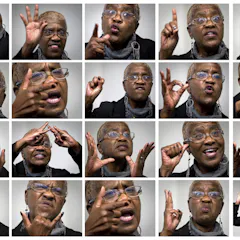
Yes, sign language has grammar – and it goes way beyond what you do with your hands.

Research shows that context matters for understanding what a person’s words mean – especially when power dynamics are involved.

Learning languages rewires the brain and changes how we perceive time.

From cussing McDonald’s Minions to wrongful conviction, mishearing what is said can be funny but also very serious.
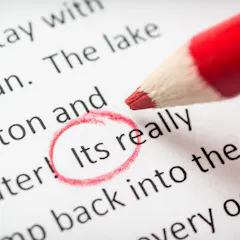
Grammar pedantry recently contributed to the downfall of World Bank chief economist Paul Romer. But ‘grammonds’ are people to be celebrated not vilified.

A linguistics scholar explains why the loss of Arabic in Israel would be a loss of history, culture and possibly human rights.

We use euphemisms about death and dying to soften the blow of the real words, or because we feel awkward being direct. But this can lead to misunderstanding and confusion.

The Conversation’s experts annotate Treasurer Scott Morrison’s 2017-18 budget speech.

Why is the PM constantly repeating this phrase and what impact is it really having on her campaign?

From the Amazon to Nicaragua, there are humans who never learn numbers. What can these anumeric cultures teach us about ourselves?

Cult TV show Gogglebox is more than light entertainment: it shows the diverse reality of Australian English, going beyond stereotypes about what Australians sound like.
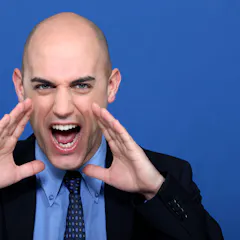
When they start life, clichés are fetching and memorable phrases. But overuse has sucked them of vitality – and now they walk among the living dead.

This Masters degree sets a precedent in South Africa and gives universities that want to be truly inclusive a lot to think about.

The @RoguePOTUSStaff account claims to be a genuine inside source of West Wing dirt, and hundreds of thousands of people seem to trust it.

One of the ways by which Africa can overcome problems of underdevelopment is by using its abundant linguistic and cultural resources.

There are a range of linguistic strategies to build rapport with customers, but using their name is always the fall-back – with detrimental results.

While few people use the language today, many cherish its history.

The belief in the linguistic superiority of the ‘native speaker’ is often based on assumptions of ethnicity.
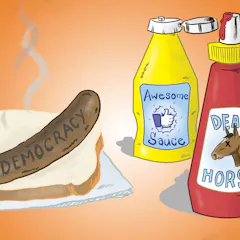
While a lot of slang words come and go (‘good riddance’, ‘amazeballs’), others endure. And exactly why that happens is something of a mystery.
Top contributors
-

Professor of Linguistics, Monash University
-
Senior Lecturer in Linguistics, Monash University
-
Roger J. Kreuz is a Friend of The Conversation.
Associate Dean and Feinstone Interdisciplinary Research Professor, University of Memphis
-
Associate Professor in Linguistics, Macquarie University
-
Associate Professor in Sociolinguistics, University of Cambridge
-
Professor of Linguistics, University of York
-
Professor of Linguistics, University of Nevada, Reno
-
Senior Research Fellow of Linguistics, University of Colorado Boulder; Griffith University; University of New England
-
Professor of Linguistics and English, Florida International University
-
Associate Professor of Linguistics and Director of Language Lab, The University of Western Australia
-
Professor of English Language and Literature, University of Oxford
-
Francesco Perono Cacciafoco is a Friend of The Conversation.
Associate Professor in Linguistics, Xi'an Jiaotong-Liverpool University
-
Professor of Psychology, Cornell University
-
Maïa Ponsonnet is a Friend of The Conversation.
Researcher, Linguistics, Centre national de la recherche scientifique (CNRS)
-
Honorary Associate Professor in Writing, The University of Queensland