
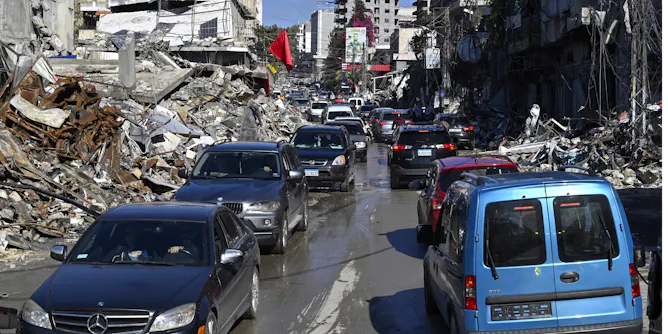
After two months of conflict, Israel and Lebanon have agreed on an initial 60-day ceasefire.
Articles on Lebanon
Displaying 61 - 80 of 220 articles
A close look at the nuts and bolts of the deal show that it could easily be disrupted.

Under the terms of the deal, Israel will gradually withdraw from Lebanon, while Hezbollah isn’t allowed to rebuild near the border. But will the ceasefire hold?
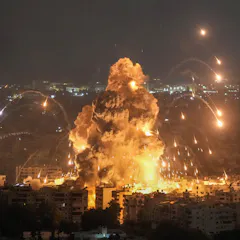
The ceasefire deal is a welcome step, but the lack of specific details raises questions about whether a ‘lasting calm’ can be achieved.
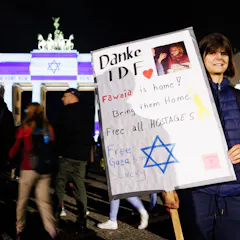
Since World War II, Germany has been uniquely shaped by atoning for the Holocaust. This is reflected in its categorisation of criticism of Israel as antisemitic and its minimal national security.
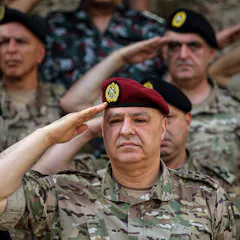
A peace deal on the conflict in south Lebanon is reportedly close.

What is the status of UN peacekeepers and are they protected under international law?
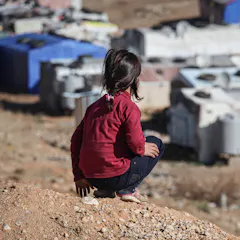
Refugees bring irrefutable economic benefits, but political will for accepting them in Europe is very weak.
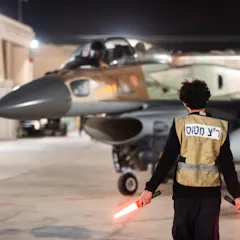
Around 20 military sites across Iran, Iraq and Syria were hit in retaliatory strike. But Israel held back from targets that would have crippled Iran.
Where the MIddle East fits in to theories of conflict escalation.
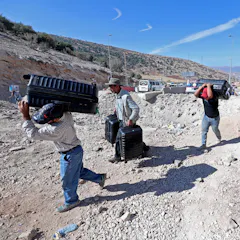
More than 1 million people in Lebanon have fled their homes since a major Israel military operation began in September. For many, it isn’t the first time they have been uprooted.
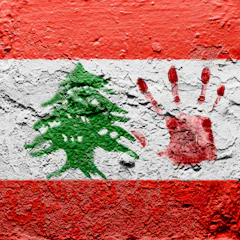
The assassination of sectarian leaders in Lebanon has plunged the country into chaos in the past.
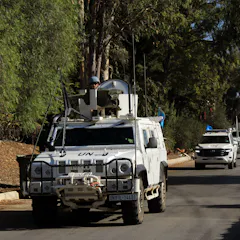
If Israel is considering another zone of occupation in southern Lebanon, it will want to remove UN peacekeepers.
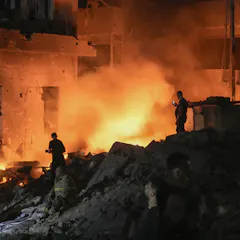
In times like these, validation, human connection and support are some of the best things you can do to protect your own and other people’s mental health.
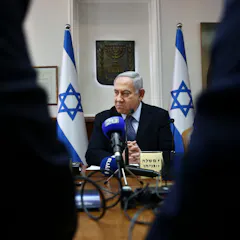
If there is ever to be a more peaceful coexistence between Israel and Palestine, then the position of hardline Israelis has to be recognised.

UN peacekeeping force Unifil is the only international witness to events on the ground in southern Lebanon as the IDF expands its incursion.
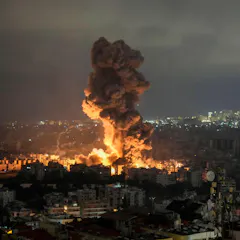
Middle East experts Mireille Rebeiz and Amnon Aran talk to The Conversation Weekly about the recent escalation in the Middle East.
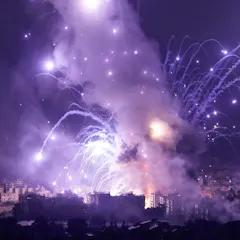
October 7 was a terrible milestone in a conflict that has been raging for nearly eight decades and seems to have no prospect of ending.

A year on from the Hamas attacks and Israel’s continued bombardment of Gaza, new fronts of fighting are creating another generation of displaced people across the region.
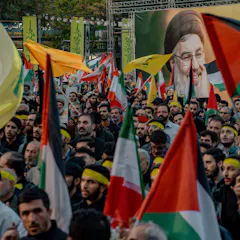
Iran’s ‘axis of resistance’ is looking for Tehran to respond in force as a commitment to regional network of proxies.
Top contributors
-

Director of Dickinson Program in New Zealand & Associate Professor of Politics at the University of Otago, Dickinson College
-
Professor in Sociology, Queen's University Belfast
-
Professor of History and Peace Studies, University of Notre Dame
-
Senior Lecturer, Politics & International Relations, Monash University
-
Emeritus Professor of Middle Eastern Studies, Australian National University; The University of Western Australia; Victoria University
-
Professor of Political Science, Sciences Po
-
Professor of International Politics, Clinton Institute, University College Dublin
-
Lecturer in Comparative Politics, Queen's University Belfast
-
Scholar at Centre for the Study of Ethnic Conflict, Queen's University Belfast
-
Senior Lecturer
-
Associate Professor of Political Science, Aalborg University
-
Research Scholar, Middle East Studies, Australian National University
-
Associate Professor, Department of Political Science, Lund University
-
Postdoctoral fellow at Queen's University's Centre for International Policy and Defence (CIDP), Queen's University, Ontario
-
Assistant Professor of Migration Studies; Director of the Institute for Migration Studies, Lebanese American University