

The Italian leader has positioned Italy as a geopolitical hinge between competing power centers. The Middle East has just given that strategy a new environment.
Articles on Lebanon
Displaying 1 - 20 of 220 articles

Congress never built a path from temporary status to permanent residence, leaving many people facing deportation with little recourse.
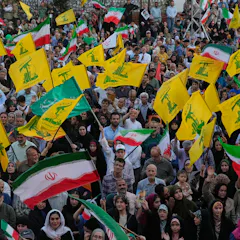
Hezbollah faces an uncertain future as the Lebanese public becomes disillusioned with it. Here are four scenarios for what the group could do next.
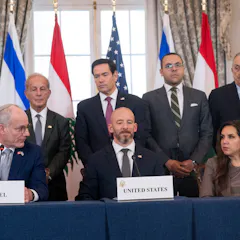
In past agreements, there appeared to be a tacit understanding between Hezbollah and Israel that conflict would eventually resume.
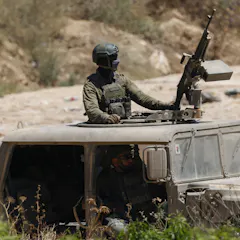
Israel has long sought to gain a military advantage by degrading its adversaries’ military capabilities outside of times of direct conflict.
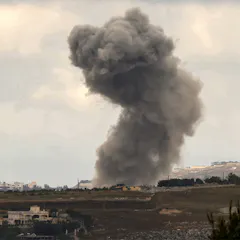
President Donald Trump has talked of a potential role for Syrian forces in fighting Hezbollah – a move that would raise alarm in Lebanon.

The drop in funding has also led donors to prioritize the trend of using aid to control the movement of people – over their needs.
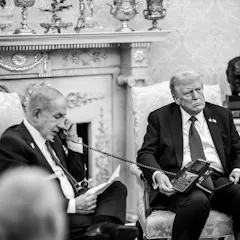
The search for peace in the Middle East is putting a strain on relations between the two leaders.
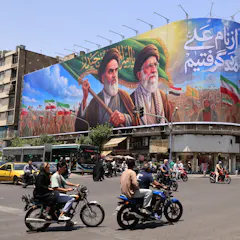
Iran has emerged with its uranium enrichment knowledge intact, its stockpile buried and fresh reason to believe that only a nuclear weapon would have deterred the US-Israel attack.
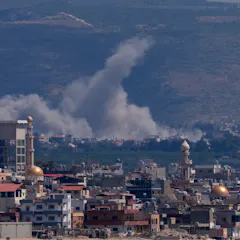
Israel’s airstrikes in the south of the country have damaged ancient Roman ruins, mosques, schools and churches.
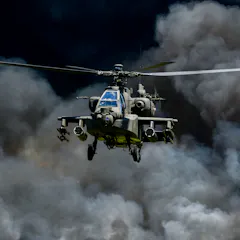
The Middle East risks state of permanent confrontation where violence periodically erupts, diplomacy intervenes and neither changes the underlying reality.
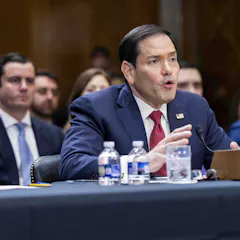
It seems highly doubtful that a comprehensive deal can be reached that adheres to Trump’s proclaimed red lines.
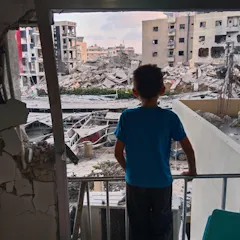
Ordinary Lebanese and Israeli people are caught in the middle of a longstanding conflict between the Israeli government and Hezbollah.

Unable to defeat Iran, Israel shifts its focus to Lebanon, fearing U.S. negotiations with Tehran could limit operations against Hezbollah.
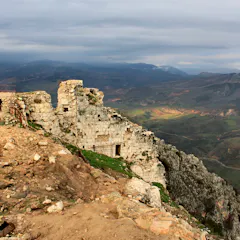
This has historically been a very strategic site, especially during the Crusades.

This is driven by an absence of legal accountability for attacks on civilians, aid workers and journalists in both Lebanon and Gaza.
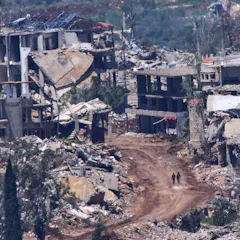
The Israeli prime minister is using the ‘Gaza playbook’ to decimate southern Lebanon, but it won’t eliminate the threat from the militant group.
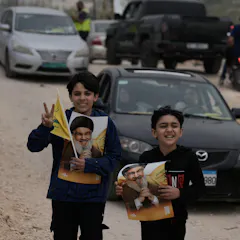
The majority of Lebanese people distrusts Hezbollah, but the Israeli attacks are driving many in the south back into their fold.
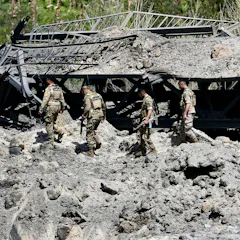
Lebanon and Israel have agreed a ten-day ceasefire, pausing hostilities that broke out in March.
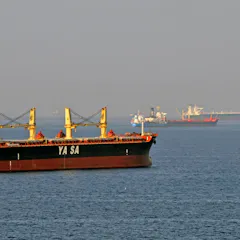
The potential for dangerous escalation has increased with the US decision to pursue any ships anywhere in the world they think may be helping Iran evade sanctions.
Top contributors
-

Director of Dickinson Program in New Zealand & Associate Professor of Politics at the University of Otago, Dickinson College
-
Professor in Sociology, Queen's University Belfast
-
Professor of History and Peace Studies, University of Notre Dame
-
Senior Lecturer, Politics & International Relations, Monash University
-
Emeritus Professor of Middle Eastern Studies, Australian National University; The University of Western Australia; Victoria University
-
Professor of Political Science, Sciences Po
-
Professor of International Politics, Clinton Institute, University College Dublin
-
Lecturer in Comparative Politics, Queen's University Belfast
-
Scholar at Centre for the Study of Ethnic Conflict, Queen's University Belfast
-
Senior Lecturer
-
Associate Professor of Political Science, Aalborg University
-
Research Scholar, Middle East Studies, Australian National University
-
Associate Professor, Department of Political Science, Lund University
-
Postdoctoral fellow at Queen's University's Centre for International Policy and Defence (CIDP), Queen's University, Ontario
-
Assistant Professor of Migration Studies; Director of the Institute for Migration Studies, Lebanese American University