

A surrender plan aims to send a message to Dezi Freeman that he has options open to him to bring things to a peaceful end.
Articles on Law enforcement
Displaying 21 - 40 of 117 articles

Government agencies are contracting with Palantir to correlate disparate pieces of data, promising efficiency but raising civil liberties concerns.

AI that anticipates where crimes are likely to occur and who might commit them has a troubling track record. Democratic accountability could shine a light on the technology and how it’s used.

Corruption in the Tshwane Metropolitan Police Department is more than just a betrayal of public trust, it fuels non-compliance with the law.

Philadelphia’s sanctuary policy remains in place, for now, as Trump vows to terminate federal grants to sanctuary cities.

Many gang members have tattoos to demonstrate their allegiance. But many people with no gang ties will get inked with similar imagery, which can lead law enforcement astray.

Kumasi was once considered among west Africa’s greenest cities.

The Pennsylvania attorney general’s investigation targeted not only the suspected leader of the trafficking ring, but also the alleged financial manager, drivers and customers.

A global study found only 16% of local governments using AI systems had public facing policies about what they were doing.
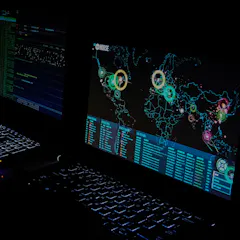
International law enforcement efforts against ransomware groups achieved successes in 2024. More global coordination is needed to keep up with cybercriminals, who are constantly adapting.

There is a long history of sheriffs reinforcing social inequality − both informally and by using formal powers of their office

There’s a widespread argument that ‘poachers’ are responsible for the scarcity of wild ginseng. But a scholar who has interviewed diggers explains that most of them are good stewards.

As police departments across the US and the world adopt real-time crime centers, there’s a need for better public understanding of how these centers work.
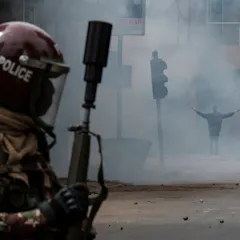
Reforms have failed to transform an authoritarian police force into a democratic one.

In a major homelessness ruling, the Supreme Court holds that cities and municipalities can punish people for sleeping outside, even when they have nowhere else to go.

At the core of sovereign citizen beliefs is the denial of the legitimacy of the government. They do not believe they must obey any laws, nor that they can be held to account for lawbreaking.
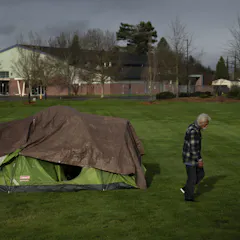
Legal precedents hold that criminalizing someone for their status, such as being homeless, is cruel and unusual punishment. But what if that status leads to actions like sleeping in public spaces?

Giraffes are vulnerable to extinction, mainly due to habitat loss and killing for bushmeat markets. The good news is human actions can alleviate that danger.
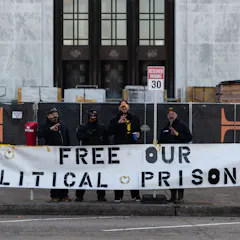
The promise of pardons to offer criminal sanctuary likely undermines the rule of law and increases the risks of political violence.
By declaring a ‘constitutional county,’ local leaders assert they are creating a refuge from anti- or unconstitutional actions undertaken by an overzealous state or federal authority.
Top contributors
-

Associate Professor in Criminal Justice and Criminology, Bond University
-
Professor of the Practice of Law, University of Southern California
-
Professor of Sociology and Criminology, Villanova University
-
Ph.D. Candidate in Geography and Assistant Director at the Center for Refugee Studies, Indiana University
-
Postdoctoral Researcher of Law and Public Administration, University of Virginia
-
Professor Emeritus of Criminal Justice, University of Alabama at Birmingham
-
Founders Professor of Criminology and Criminal Justice, University of Missouri-St. Louis
-
Associate Professor in Criminology, Deakin University
-
Professor of Sociology, Lancaster University
-
Assistant Professor, Sociology, Memorial University of Newfoundland
-
Associate Professor of Journalism, The University of Texas at Austin
-
Postdoctoral Fellow, Cyber Security Project, Belfer Center for Science and International Affairs, Harvard University
-
Professor of Law, Suffolk University
-
Professor of International Security, University of Bradford
-
Senior Lecturer in human-centred computing & human-computer interaction, Western Sydney University