

Schools can focus on collaboration between teachers and students to wrap a system of support around children who need it the most.
Articles on Language learning
Displaying 61 - 80 of 136 articles

There’s no perfect teaching approach guaranteed to prepare student teachers to teach subjects in English in a multilingual environment. But there are things universities can do to prepare them.

A post-lesson diary is a promising teaching tool which helps students reflect on language connections and replay their learning steps.

Experts disagree on what makes someone truly bilingual, and how the human brain accesses multiple languages.

Learning a language to speak adequately requires a minimum of around 870 hours. Some Australian states mandate around 1,000 hours through secondary school, but others require less than half that time.

Many migrant parents are hesitant to pass their language accent onto their children. They fear this may lead them to experience discrimination. But speaking two languages has many advantages.

Watching a foreign film or TV show doesn’t automatically teach you the language – but there are ways to make it stick.

How we teach languages has not evolved much from the traditional grammar-based mode of instruction, and this approach alone marginalizes students’ existing knowledge and communication abilities.

While staying at home during the pandemic, foreign language learners can improve their vocabulary and comprehension by watching films and television shows in the language they are studying.
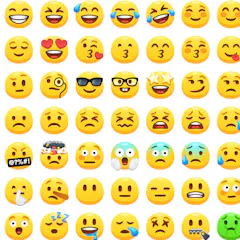
The conventions used in texting and tweeting are fundamentally altering how people communicate, but many language apps still rely on old-school English-language grammar.

Education in Gaelic is hugely valuable in keeping the language alive in Scotland.

A free, open-access repository of multilingual children’s stories is one response to the United Nations’ urgent call to promote equitable education on the International Day of Education, January 24.

After analysing posts from 100,000 Twitter users, our research used big data, machine learning and artificial intelligence to reveal the hidden personality traits underpinning thousands of jobs.

Uganda’s English language policy is at odds with the situation on the ground in the country’s rural schools.

South African parents want their children be taught in English despite the fact that research shows that academic progress is hindered if a child is taught in a language they aren’t proficient in.

Adults aren’t the only language teachers: six-year-olds still produce sounds differently than adults, but toddlers are extremely good at understanding the speech of children six years and older.

Could mating preferences, like females preferring males who sing complex songs, affect the evolution of learning? Insights from birds could have clues for how people learn throughout their lives.

Wales’s schools mostly teach in English at present but its new curriculum will make Welsh language part of every lesson in all schools.

Research shows babies in bilingual environments can track the precursors to words, known as word forms, in two languages.

Even if only 130 Australians of non-Chinese heritage can speak Mandarin fluently, there are many more if you count those of Chinese heritage. And a level of fluency is not the only measure of success.
Top contributors
-

Lecturer in Languages Education, University of Sheffield
-
Professor of Linguistics, University of York
-
Professor of Language Education and Linguistics, University of Leeds
-
Honorary Associate Professor of Applied Linguistics, University of Southern Queensland
-
Senior Research Fellow of Linguistics, University of Colorado Boulder; Griffith University; University of New England
-
Director del Centro de Investigación Nebrija en Cognición (CINC) y Director de la International Chair in Cognitive Health (ICCH) en la Universidad Nebrija, Universidad Nebrija
-
Professor of ESOL, University of South Wales
-
Researcher in TESOL & Literacy, University of Notre Dame Australia
-
Course Leader of Insessional English (EAP), University of Bath
-
Reader, Department of Language and Linguistics, University of Essex
-
Associate Professor in English Language and Linguistics, University of Portsmouth
-
Chair of Applied Linguistics, University of Southampton
-
Deann of Research and Innovation, Arts, Humanities and Social Sciences, Cardiff University
-
Professor of French Studies, School of Modern Languages, University of Bristol
-
Senior Lecturer in Education, The University of Queensland