

Northern Ireland is the only part of the UK where primary school pupils do not have to learn another language.
Articles on Language learning
Displaying 81 - 100 of 136 articles

Across the English-speaking world, boys tend to drop out of foreign language study as soon as it is not mandatory.

This explains why some aspects of English can be hard to learn for speakers of other languages.

The ability of multilingual children to learn and advance academically from pre-primary has little to do with their English proficiency.

Young people from working class backgrounds in socially deprived areas are far less likely to choose, or have the opportunity, to study languages at secondary school, than their more affluent peers.

Educational mobile gaming can offer students a way to practice language while taking away the pressures of typical face-to-face communication.

A study of Polish children in Glasgow reveals how they successfully navigate complex social rules relating to language to blend in with their peers.

The language learning approach called “plurilingualism” empowers people to draw on many languages and cultural modes of communicating.

To sustain geo-political relations with French-speaking Pacific nations in the future, we need to change the way French is taught to young Australians.

The ability to speak more than one language informs many writers of fiction, but analysis of Booker Prize shortlists suggests this is not so important any more.

Learning languages early makes multilingualism “normal” in classrooms and playgrounds, and builds curiosity and even modest mastery.

Can you become fluent with just a language app? Here’s what the research says.

Ethical decisions deliver less emotional impact when presented in a second language, study finds.

Coverage of a new study suggests it’s impossible to become fluent in a foreign language after age ten. But that’s deeply misleading – and not what the study found.

For South Korea, hosting the Winter Olympics is a great opportunity to engage the world with Korean language and culture.
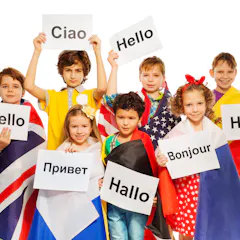
Young children have little time set aside to learn a foreign language. They must make the most of it.

The crisis in modern language teaching.

There is usually a historical reason why schools teach certain languages. But as new economies emerge, such languages may no longer be the best ones to learn.

Students from South Africa’s public school system battle to cope with the rigorous demands of any university degree without genuine, committed support.

The classroom setting is better for early teenagers, while self-guided language learning is better for adults.
Top contributors
-

Lecturer in Languages Education, University of Sheffield
-
Professor of Linguistics, University of York
-
Professor of Language Education and Linguistics, University of Leeds
-
Honorary Associate Professor of Applied Linguistics, University of Southern Queensland
-
Senior Research Fellow of Linguistics, University of Colorado Boulder; Griffith University; University of New England
-
Director del Centro de Investigación Nebrija en Cognición (CINC) y Director de la International Chair in Cognitive Health (ICCH) en la Universidad Nebrija, Universidad Nebrija
-
Professor of ESOL, University of South Wales
-
Researcher in TESOL & Literacy, University of Notre Dame Australia
-
Course Leader of Insessional English (EAP), University of Bath
-
Reader, Department of Language and Linguistics, University of Essex
-
Associate Professor in English Language and Linguistics, University of Portsmouth
-
Chair of Applied Linguistics, University of Southampton
-
Deann of Research and Innovation, Arts, Humanities and Social Sciences, Cardiff University
-
Professor of French Studies, School of Modern Languages, University of Bristol
-
Senior Lecturer in Education, The University of Queensland