

Try to figure out why learning a language is important to you.
Articles on Language learning
Displaying 41 - 60 of 136 articles

The US is home to more international migrants than any other country. But even though immigration is an actively debated topic, immigrants are poorly understood.

Although English to speakers of other languages (Esol) is treated like any other subject, it can offer far more to those learners.

The number of students studying languages in UK universities has plummeted in recent years but some creative thinking may help to reverse that trend.

A new, extensive database of language grammars from around the world indicates an alarming trend of global language loss.

It depends on whether you are learning as a baby or not.

Language-learning research in the Netherlands has determined that using a foreign language rather than just memorizing its grammar can transform how students progress.

Linguists have long considered grammar to be the glue of language, and key to how children learn it. But new prose-writing AIs suggest language experience may be more important than grammar.

Research shows sleep-learning can complement, but never replace, learning while awake.

The brain holds on to language knowledge for decades.

Year-round academic and extracurricular opportunities that encourage cultural exchange between international students, their peers and the wider society are important.

Babies who remain in silence hours after birth have different brains to those who listen to sounds.

It takes time and sustained effort to learn a language. Students need to find enjoyment to sustain their learning – and that’s how songs can make a difference.

A study of students across Canada between 2004 and 2015 provides an estimate of anxiety symptoms in kindergarteners, and can serve as a baseline for comparing children’s anxiety after COVID-19.

A study of 25 heritage language schools in Edmonton shows how schools met the needs of migrant and front-line workers, resisted racism and built community for immigrants.

Language electives have fewer enrolments compared to other subjects in Australia. New research suggests students are interested in studying languages, but can’t.

This National Indigenous Languages Day, let’s celebrate the community-led initiatives that focus on building capacity and sustainability for future generations.

Contact languages are widely spoken by many First Nations children. These languages must be recognised and valued in the classroom to better meet students’ learning needs.
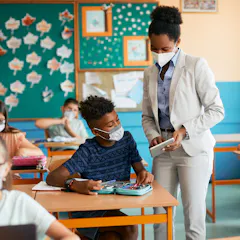
Teachers wearing wireless microphones that amplify their voices could be one solution to ensuring children can hear — and saving teachers’ voices from strain, particularly in the pandemic.

When schools honour and learn from immigrant parents’ knowledge, they support more opportunities to enhance young children’s linguistic, cultural and social experiences.
Top contributors
-

Lecturer in Languages Education, University of Sheffield
-
Professor of Linguistics, University of York
-
Professor of Language Education and Linguistics, University of Leeds
-
Honorary Associate Professor of Applied Linguistics, University of Southern Queensland
-
Senior Research Fellow of Linguistics, University of Colorado Boulder; Griffith University; University of New England
-
Director del Centro de Investigación Nebrija en Cognición (CINC) y Director de la International Chair in Cognitive Health (ICCH) en la Universidad Nebrija, Universidad Nebrija
-
Professor of ESOL, University of South Wales
-
Researcher in TESOL & Literacy, University of Notre Dame Australia
-
Course Leader of Insessional English (EAP), University of Bath
-
Reader, Department of Language and Linguistics, University of Essex
-
Associate Professor in English Language and Linguistics, University of Portsmouth
-
Chair of Applied Linguistics, University of Southampton
-
Deann of Research and Innovation, Arts, Humanities and Social Sciences, Cardiff University
-
Professor of French Studies, School of Modern Languages, University of Bristol
-
Senior Lecturer in Education, The University of Queensland